Anúncios
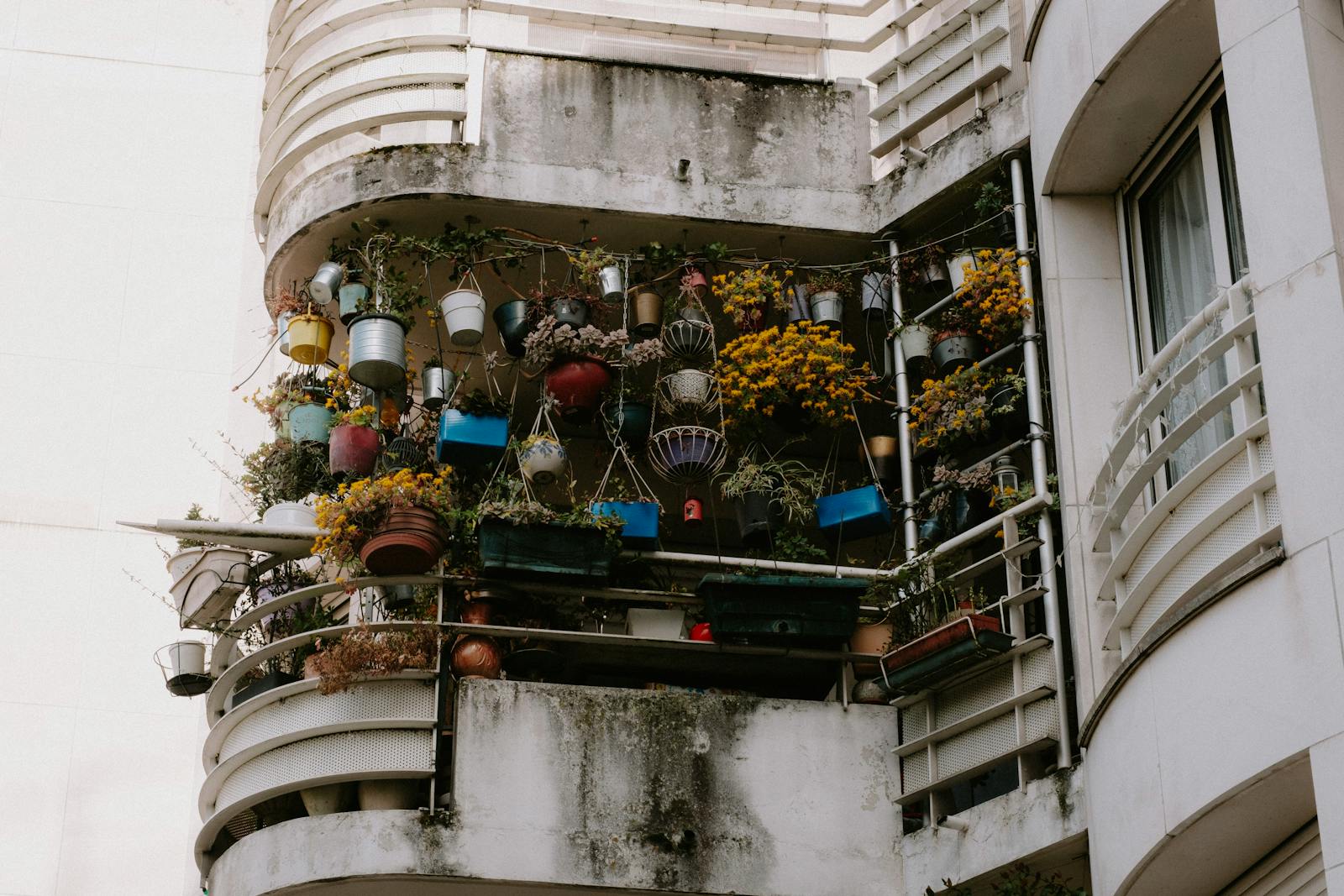
The Pinterest balcony gardens never mention wind. The reality of growing anything above the third floor is that wind shows up as a separate variable – separate from sun, separate from heat, separate from rain. It dries out pots in hours. It topples tall plants. It shreds tender leaves. It blows over the prettiest ceramic pot on a Saturday morning when you’re not home to catch it.
This is the working playbook for wind-prone balconies. It’s not glamorous, but it’ll save you a small fortune in dead plants and replacement pots.
Anúncios
What wind actually does to plants
Three damaging effects, in rough order of importance:
- Dries out pots. Wind constantly pulls moisture from leaves and soil. A balcony pot in steady wind can dry out 2-3x faster than the same pot in a sheltered garden.
- Physical damage. Strong gusts shred tender leaves (basil, lettuce, fresh tomato foliage), break thin stems, and topple top-heavy plants.
- Stunts growth. Plants in constant wind put energy into structural strength rather than upward growth. They stay shorter and bushier than the same plant in a sheltered spot. That’s not always bad – just worth knowing.
Choose wind-tolerant plants
The single biggest move. Some plants are built for wind:
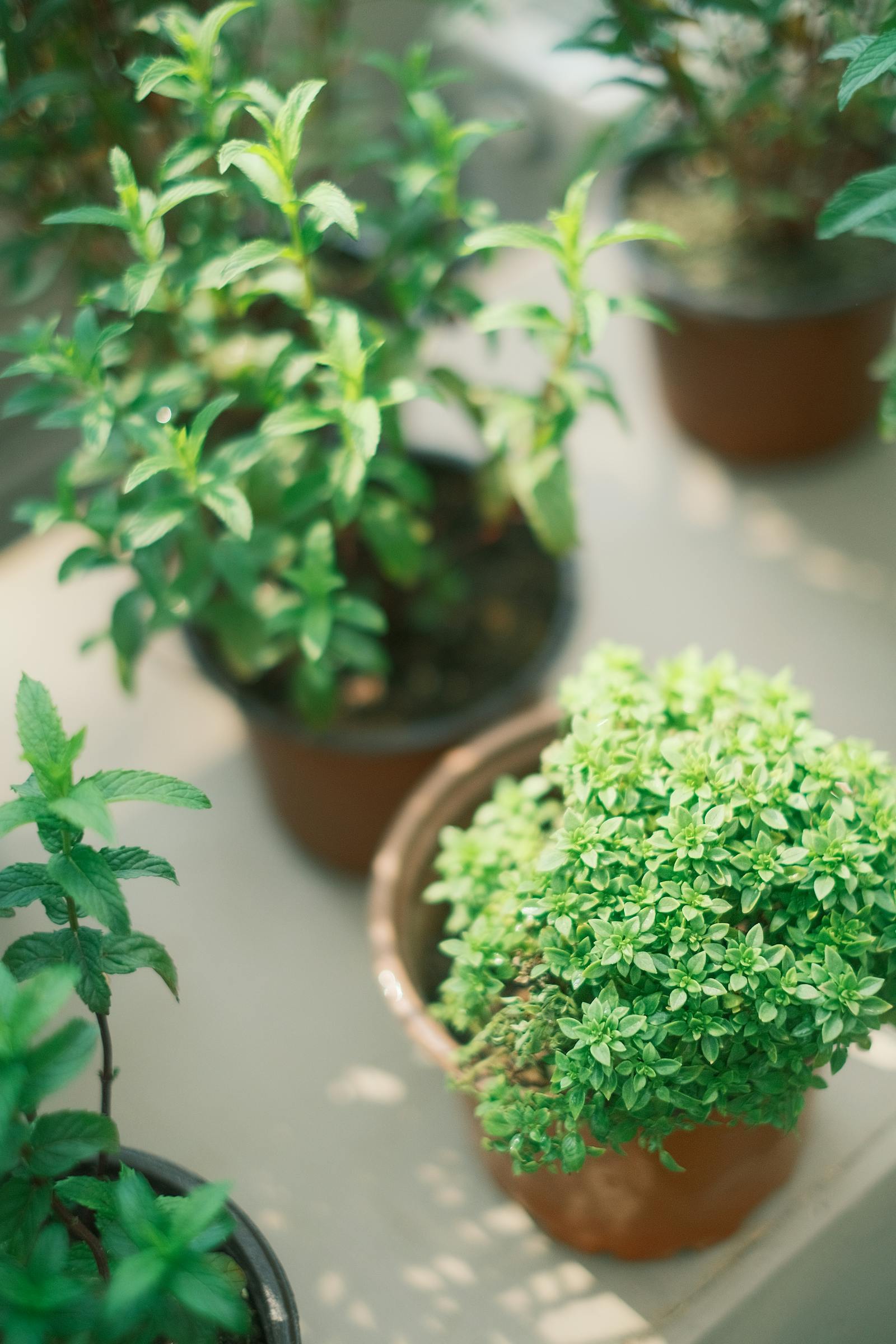
- Low and compact: sedums, sempervivums, low ornamental grasses, thyme, oregano, marigolds. Wind passes over them.
- Tough, woody, or fibrous: rosemary, lavender, dianthus, small juniper. Built to flex without breaking.
- Heavy-leafed evergreens: ivy, sedge grasses, hardy heucheras.
- Bushy growth habit: compact petunias, marigolds, geraniums with sturdy stems.
Plants to avoid in windy spots:
Anúncios
- Tall, top-heavy plants (full-size tomatoes without secure staking)
- Large soft-leafed plants (basil, lettuce in delicate stages, hostas)
- Anything that needs to grow tall and thin (cosmos, sunflowers without support)
- Most tender flowering plants (impatiens shred in steady wind)
Secure your pots
This is the boring part beginners skip until something falls over. Strategies:
- Use heavy pots. Glazed ceramic, thick terracotta, or concrete planters are far less likely to tip than light plastic. The trade-off: weight matters on small balconies (see balcony setup guide for weight notes).
- Cluster pots together. A tight cluster braces against itself. A single pot in the open is far easier to knock over.
- Position against walls. Pots against a wall (or in a corner) get partial shelter from prevailing wind directions.
- Add weight to lightweight pots. A flat stone in the bottom or wider, weighted bases keep light pots planted.
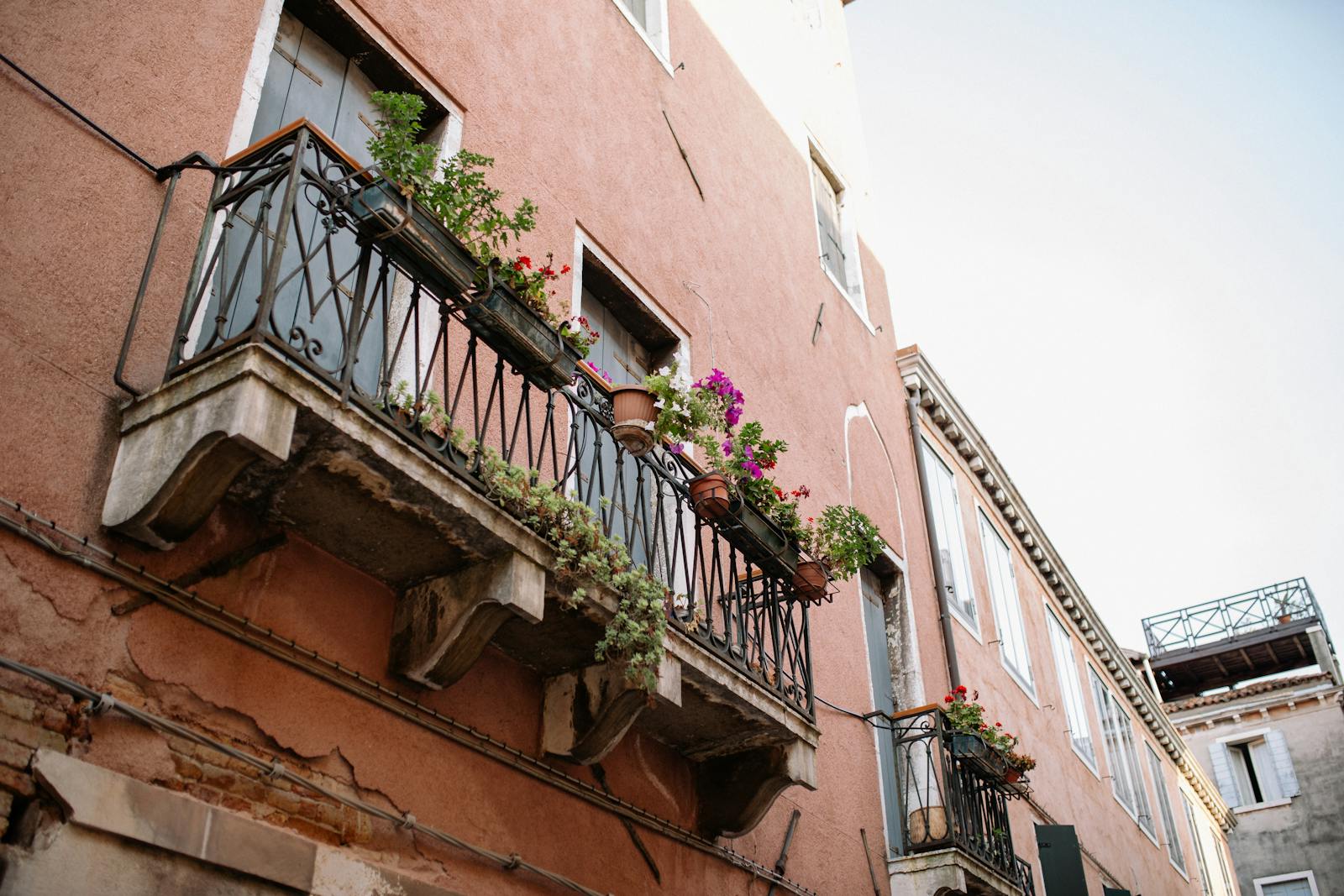
- Avoid the railing. A pot perched on the rail outside the balcony is more visible but more dangerous – if it falls, it falls to the street. Railing planters that clip securely on the inside are safer.
- Tie taller pots to the balcony rail. Discreet jute twine around a tomato pot and the railing prevents tip-overs.
Build a windbreak
You don’t need a wall. A partial windbreak takes 30-50% off wind velocity, which is enough to transform what you can grow.
Options that work without modifying the balcony structure:
- Bamboo screens. Roll up from any hardware store. Zip-tie to the railing. Inexpensive, breathable (which is actually better than a solid wall – solid walls create downstream eddies).
- Reed or willow fencing. Similar to bamboo. Soft material that takes wind without straining attachments.
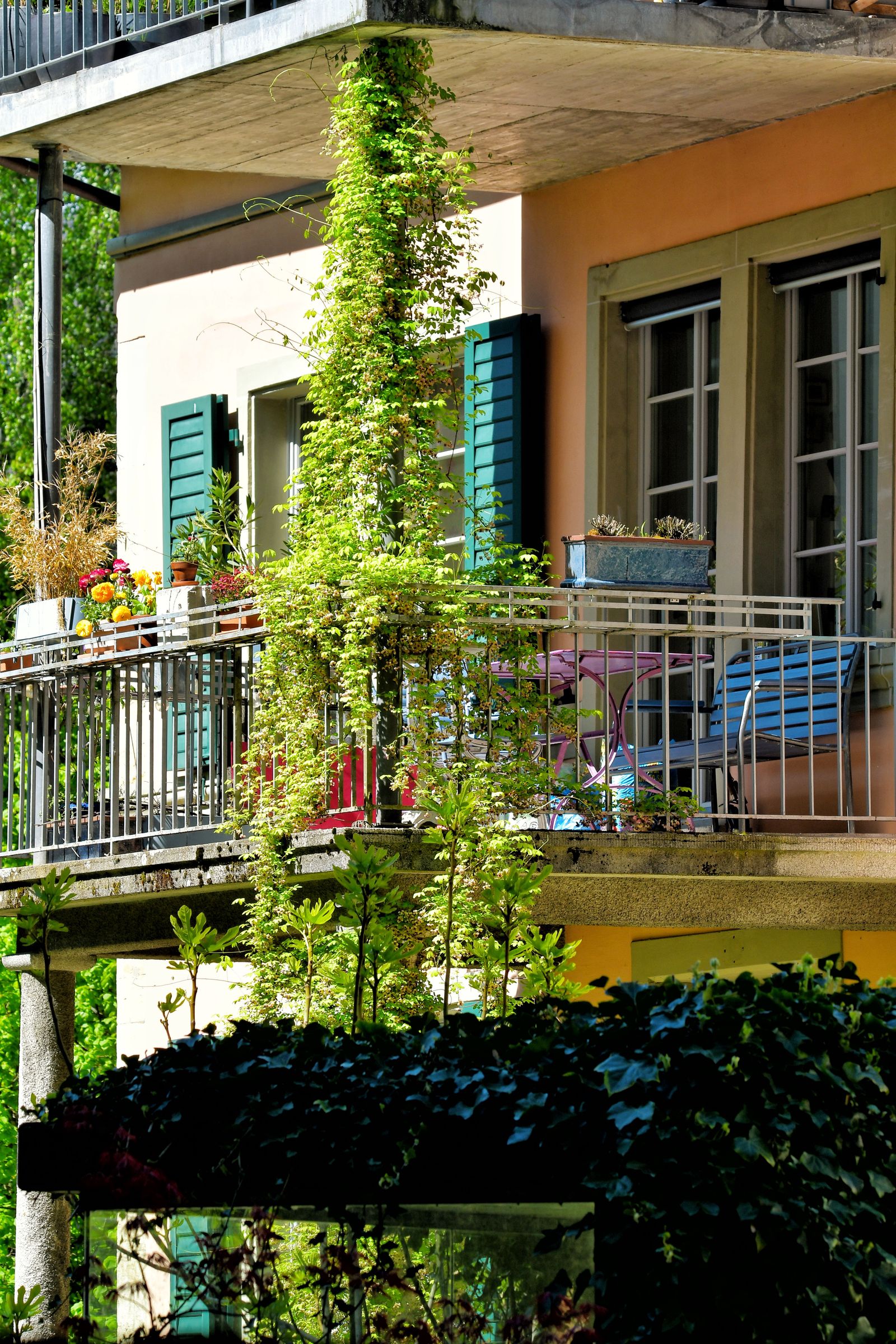
- Living windbreak. A row of tough, taller plants – small juniper, hardy fuchsia, ornamental grasses – on the windward side shields shorter, more tender plants behind them.
- Mesh balcony cover. Outdoor mesh sold for greenhouses cuts wind without blocking light. Easy to install, easy to remove.
Check your building or rental rules before attaching anything to the balcony structure. Most things zip-tie to the railing without modification.
Watering strategy for windy balconies
Wind dries soil fast. The watering routine has to adapt:
- Water more deeply, less often. A deep watering encourages roots to grow downward where they’re less affected by surface drying.
- Water early morning. Reduces evaporation losses; gives plants a full day of moisture in their tissues.
- Mulch the soil surface. A 1-inch layer of small pebbles, bark, or shredded leaves dramatically slows evaporation.
- Use larger pots. More soil = more buffer against drying. A 12-inch pot dries far slower than a 6-inch one.
- Self-watering containers. The reservoir-fed design is excellent for windy balconies. Plants draw water as needed; you refill weekly rather than scrambling daily.
Staking and structural support
For taller plants (tomatoes, peppers, even bushy basil), provide support before you need it:
- Bamboo or metal stakes 3-4 feet tall, pushed deep into the pot (8+ inches into the soil for stability).
- Tomato cages for cherry tomatoes – the wire frames brace the plant from all sides.
- Soft ties (twine, soft fabric strips) between plant and stake. Avoid wire that cuts into stems.
- Tie loosely. Plants need to move slightly in wind – that’s how they build strength. Tight tying defeats the purpose.
Sample setup for a very windy balcony
- One 12-inch pot of compact rosemary (perennial, evergreen, wind-tolerant)
- A pot of low-growing thyme along the front edge
- A cluster of three 8-inch pots in a sheltered corner: parsley, chives, oregano
- Two compact geraniums for colour, securely placed against a wall
- A bamboo screen along the windward side, zip-tied to the railing
- A self-watering window box with mixed sedums – low and bulletproof
This setup survives weather that would destroy a less-thought-out balcony. The plants are matched to the conditions, the screen reduces direct wind, and the layout shelters tender pots behind tougher plants.
What to do during actual storms
For predicted high winds (50+ mph gusts), even prepared balconies are at risk:
- Bring pots inside if possible.
- If they can’t come inside, move them into the most sheltered corner.
- Lay tall plants on their sides temporarily.
- Remove or secure any loose item (signs, decorations, light pots that can become projectiles).
The short version
Wind is the variable that separates Pinterest balcony gardens from real ones above the third floor. The good news: a few practical adjustments – tough plant choices, secure pots, a permeable windbreak, smart watering – turn a windy balcony from a disaster zone into a productive small garden. Just don’t pretend the wind isn’t there.
For the broader balcony setup, see our balcony garden guide. For specific plant recommendations matched to your conditions, see best plants for a small balcony.