Anúncios
A balcony herb garden is the single highest-value beginner project. Per square foot, herbs save more money, taste better than store-bought, and reward you faster than almost anything else you can grow. A $3 packet of basil seeds becomes $40 worth of fresh herbs over a summer. You snip them at dinner. You cook things you wouldn’t have cooked otherwise. It’s the kind of small life upgrade that makes gardening feel worth the effort within weeks.
This guide is the practical setup – which herbs, in which pots, with which habits. No filler.
Anúncios
The seven herbs worth growing on a balcony
These cover roughly 95% of what most home cooks actually use. Skip the rest until you’ve kept these alive.
1. Basil
The headline herb. Sun-loving, fast-growing, productive. A single well-cared-for plant gives you basil all summer for pesto, tomato dishes, salads. Needs at least 5-6 hours of direct sun. Pot at least 6 inches deep. See our full how to grow basil guide for the details.
2. Mint
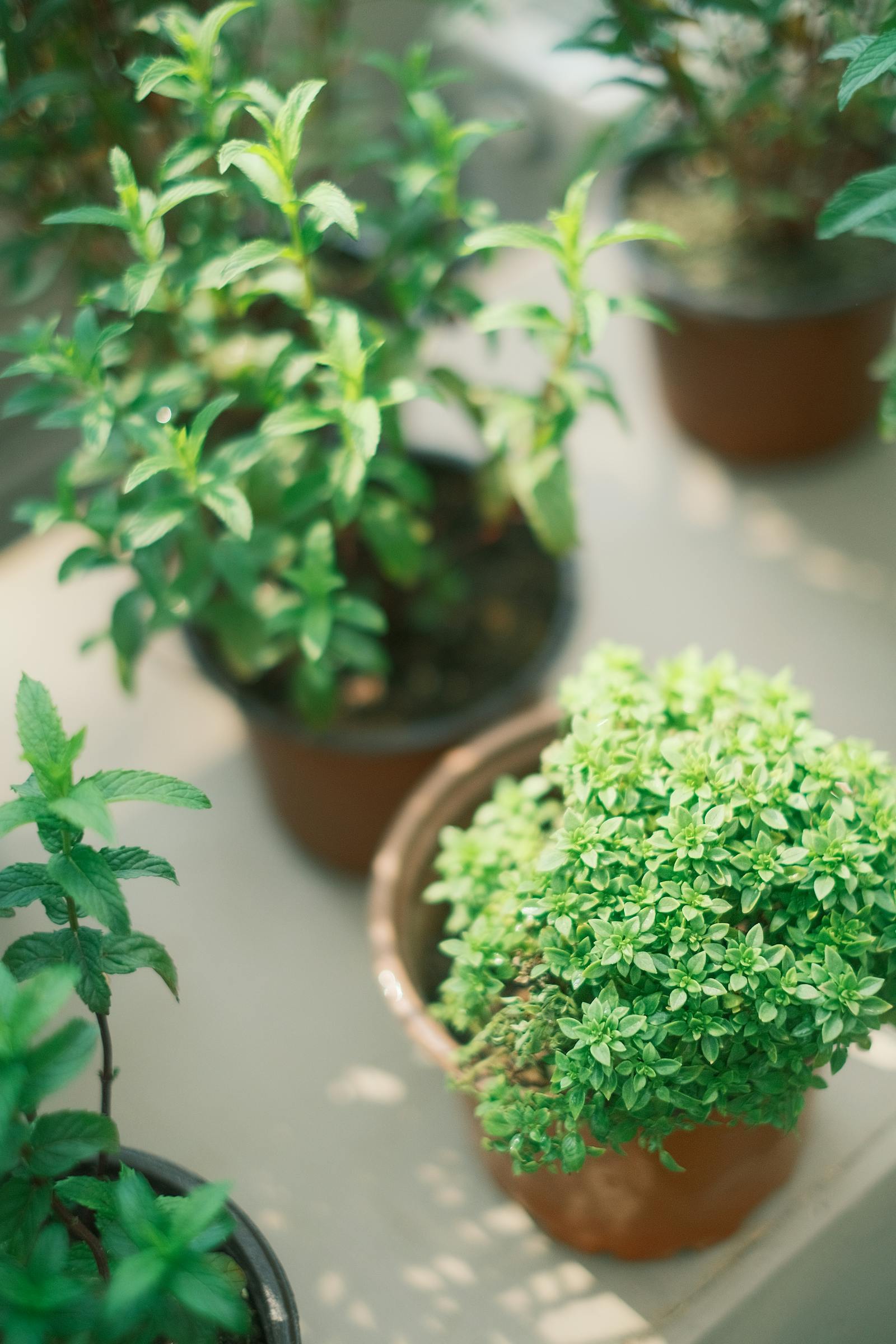
The most forgiving herb of all. Tolerates almost any sun, irregular watering, and aggressive harvesting. The one rule: always grow mint in its own pot. It will take over any shared container within a season. A 6-8 inch pot, partial sun, water when the top inch is dry. Pinch back regularly.
Anúncios
3. Parsley
Slow to start, then incredibly productive. Tolerates partial sun better than basil. Grow flat-leaf (Italian) for cooking, curly for garnish. A 6-8 inch pot is fine. Harvest outer stems first; new growth comes from the centre. Lasts a full season and often comes back for a second year.
4. Thyme
Low, woody, perennial. Almost impossible to overwater into rot if your pot has good drainage. Loves sun and tolerates wind. One plant lives for years. Snip whole sprigs as needed; it bushes back quickly.
5. Rosemary
Another Mediterranean perennial. Wants full sun, well-drained soil, and not too much water. Becomes a small woody shrub over time. In cold climates, bring it indoors for winter or accept it as an annual. A 10-12 inch pot gives it room to develop.
6. Chives
Perennial, fast-growing, almost zero maintenance. Comes back from the ground every spring once planted. Snip with scissors as needed. The purple flowers are edible and beautiful in salads. Six-inch pot, partial to full sun.
7. Oregano
Spreads horizontally, perennial, prefers full sun. Wonderful with tomatoes, eggs, and pizza. Tolerates drought well. Pot at least 8 inches deep so it has room to root.
How to set up the pots
The easiest mistake to make: too many herbs in too small a pot. Each plant needs space for roots. A “kitchen herb planter” with five seedlings crammed into a 12-inch trough always disappoints. Two herbs per medium pot, or one per small pot. That’s it.
| Herb | Minimum pot size | Light needed | Lifespan |
|---|---|---|---|
| Basil | 6 inch deep | Full sun (5-6+ hrs) | One season (annual) |
| Mint | 6 inch (own pot!) | Partial to full sun | Perennial – returns every year |
| Parsley | 6-8 inch | Partial to full sun | Biennial – sometimes 2 years |
| Thyme | 6 inch shallow | Full sun | Perennial – 3-5 years |
| Rosemary | 10-12 inch | Full sun | Perennial – many years |
| Chives | 6 inch | Partial to full sun | Perennial |
| Oregano | 8 inch | Full sun | Perennial |
Soil: any standard potting mix works for all of these. Drainage holes are non-negotiable – herbs hate sitting in water more than almost any other plant family.
Where to put them on the balcony
Sun-loving herbs (basil, thyme, rosemary, oregano) go in your sunniest spot. Tougher, shade-tolerant herbs (mint, parsley, chives) can go in shadier corners.
Grouping pots together creates a small microclimate – the cluster shelters each plant from wind and slows evaporation. A single sad pot on a windy balcony looks lonely and dries out twice as fast.
For more on figuring out which part of your balcony gets the right light, see our guide to plant sunlight needs.
Watering balcony herbs
Herbs in pots on a balcony dry out faster than herbs in the ground. Wind, sun, small soil volume – they all add up. In summer, this can mean watering every day for small pots in full sun.
The rule, as always: check before watering. Push a finger an inch into the soil. Dry? Water until it runs out the drainage holes. Damp? Wait until tomorrow.
The exceptions:
- Basil wants consistent moisture – check daily in summer.
- Mint and parsley tolerate slightly drier conditions than basil.
- Mediterranean herbs (thyme, rosemary, oregano) prefer to dry out between waterings. They actively dislike soggy soil. Overwater these and they rot fast.
Harvesting (and the most important habit)
The single thing that separates a productive herb garden from a sad one: harvest aggressively and often.
Most beginners are too gentle. They snip a leaf or two when they cook, leaving the plant to bolt to flower in late summer and become bitter. The herb’s productive life is way shorter than it needs to be.
Instead:
- For leafy herbs (basil, mint, oregano): pinch off the top growing tip every couple of weeks. Each pinch causes the plant to branch and become bushier.
- For stem herbs (rosemary, thyme): snip whole sprigs as you cook. New shoots emerge from below the cut.
- For chives: cut with scissors to within an inch of the soil; they regrow within 2-3 weeks.
- For parsley: harvest the outermost stems first, letting new ones grow from the centre.
- Always remove flower buds. Once herbs flower, the leaves turn bitter and growth slows.
The “I’m not sure I can cut so much” feeling is the single biggest barrier to a productive herb garden. Cut more. The plant responds with more growth, not less.
Fertilizing
Herbs in pots run out of nutrients eventually because the small soil volume can only hold so much. A light feeding every 3-4 weeks during the growing season keeps them productive.
Use a diluted liquid fertilizer at half the recommended strength. Or top up the soil with a thin layer of compost once or twice a season.
Don’t over-fertilize – excess nitrogen makes herbs grow fast but bland. The intense flavours we cook with come from herbs grown in slightly lean conditions.
Overwintering perennials
Several herbs on this list are perennial: thyme, rosemary, oregano, chives, mint. In mild climates they overwinter outside in pots without much help. In colder climates (anywhere with hard freezes), you have options:
- Move pots into a cold but unheated space (a garage, a shed). They stay dormant but don’t freeze.
- Bring tender perennials indoors. Rosemary, in particular, needs to come inside in cold climates. Put it in a sunny window.
- Wrap pots with bubble wrap, burlap, or old blankets to insulate roots if you can’t move them.
- Accept some loss. Rosemary in particular is fussy through cold winters. Some gardeners simply treat it as an annual and buy a fresh plant each spring.
Common problems
| What’s happening | Likely cause | Fix |
|---|---|---|
| Tall, leggy stems with sparse leaves | Not enough light or no pinching | Brighter spot; pinch tops to encourage branching |
| Yellow lower leaves | Overwatering, especially Mediterranean herbs | Let soil dry out; check drainage |
| Flower spikes on basil/oregano/mint | Plant about to go to seed | Pinch flower buds immediately; flavour comes back |
| Wilting in afternoon heat, recovering in evening | Hot pot, marginal watering | Move pot to partial afternoon shade; size up to a bigger pot |
| Bitter flavour | Plant has flowered, or stress | Pinch flowers; harvest more aggressively |
The bottom line
A balcony herb garden is one of the best returns in beginner gardening. Pick three to five herbs matched to your light, pot them individually in 6-10 inch containers, water based on soil dryness not the calendar, and harvest aggressively. Most months you’ll be cooking with fresh herbs from your own balcony.
For specific deep-dives on individual herbs, our how to grow basil guide covers the most common starter. The wider balcony garden setup guide goes into pots, soil, wind, and sun. And if you’re just starting out with general plants, the 7 easiest plants for beginners includes other forgiving options.
See also: the most common reasons herbs keep dying.