Anúncios
You can spend money on a soil test kit. You can mail samples to a university extension lab. Or you can do five quick tests with stuff in your kitchen and find out almost everything you need to know in about an hour.
This guide covers the simple, repeatable tests beginner gardeners can do at home – what to look for, what each result means, and how to fix the problems you find.
Anúncios
Test 1: The squeeze test (texture)
What you learn: whether your soil is mostly sand, mostly clay, or a balanced loam.
- Grab a handful of slightly damp (not wet) soil.
- Squeeze it in your fist.
- Open your hand and observe.
What it means:
- The soil holds its shape, slightly crumbles when poked: loam (best). Holds moisture and nutrients while still draining.
- The soil falls apart immediately: too sandy. Drains fast but won’t hold nutrients or water.
- The soil forms a tight ball that won’t crumble: too much clay. Holds water (often too much) and resists drainage.
For container gardening, the soil bag determines this – you’re rarely working with native soil. For in-ground beds, the squeeze test is the quickest read on what you’re working with.
Anúncios
Test 2: The jar test (composition)
What you learn: the proportions of sand, silt, and clay in your soil.
- Fill a clear glass jar 1/3 full with soil.
- Add water until the jar is 3/4 full.
- Cap and shake vigorously for 1 minute.
- Set the jar aside and don’t disturb it for 24-48 hours.
Particles settle by size:
- Bottom layer (within minutes): sand.
- Middle layer (within hours): silt.
- Top layer (within 1-2 days): clay.
- Floating debris on the water surface: organic matter – the good stuff.
An ideal garden soil is roughly 40% sand, 40% silt, 20% clay. Way off in any direction means amending the soil with compost (if too sandy or too clayey) or adding more drainage materials (if too clayey).
Test 3: The drainage test
What you learn: whether water moves through the soil at a reasonable speed.
- Dig a hole 12 inches deep and 6 inches wide (in a garden bed) or use a pot full of soil.
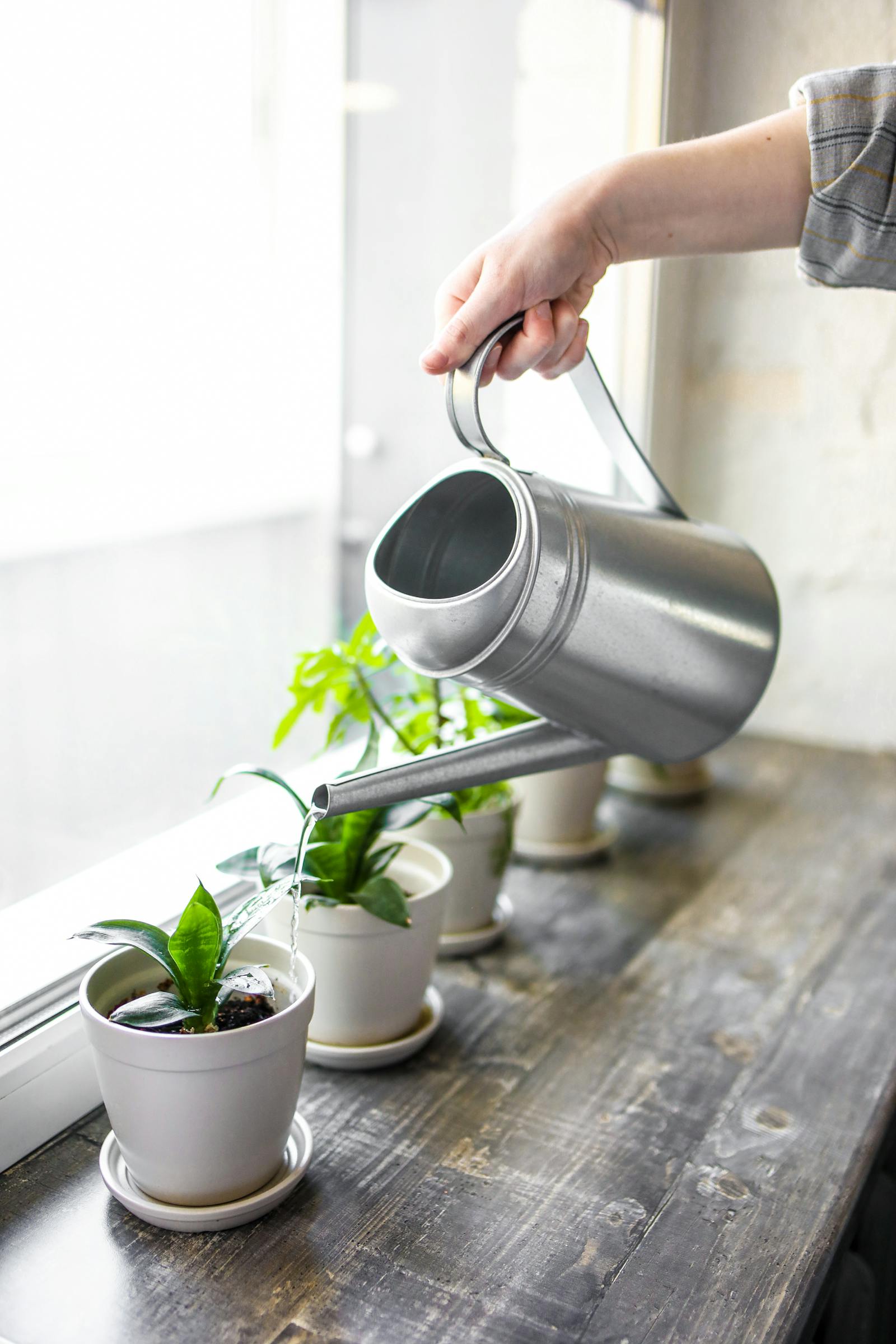
- Fill the hole with water and let it drain completely. This soaks the surrounding soil.
- Fill the hole with water again.
- Time how long it takes to drain.
Results:
- Drains in 1-3 hours: good drainage.
- Drains in 3-6 hours: acceptable, slightly heavy.
- Drains overnight (8+ hours): poor drainage; consider raising beds or heavy amendment.
- Drains in under an hour: too fast – sandy soil that won’t hold nutrients.
Test 4: The earthworm count
What you learn: whether your soil is biologically healthy.
- Dig a hole roughly 12 × 12 × 12 inches in your garden bed.
- Spread the soil on a sheet or tarp.
- Count the earthworms.
What’s normal:
- 10+ worms: healthy, biologically active soil.
- 3-9 worms: okay; could benefit from compost.
- 0-2 worms: poor; soil needs serious organic matter improvement.
This doesn’t apply to container gardening obviously – bagged potting mix shouldn’t have worms in it. It’s an in-ground test only.
Test 5: The vinegar and baking soda pH check
What you learn: roughly whether your soil is acidic, alkaline, or neutral.
- Take two small samples of soil, about a tablespoon each.
- Add 1/2 cup of distilled water to each and stir.
- To one sample, add 1/2 cup of vinegar. If it fizzes – your soil is alkaline (pH above 7).
- To the other sample, add a pinch of baking soda. If it fizzes – your soil is acidic (pH below 7).
- If neither fizzes – your soil is roughly neutral.
Most vegetables and ornamentals prefer slightly acidic to neutral soil (pH 6.0-7.0). The kitchen-chemistry test gives you a directional answer, not a precise number. If you need an exact pH, buy a $5 test kit from a garden centre.
What to do with what you learn
The most useful interventions for problem soils:
| Problem | Fix |
|---|---|
| Too sandy | Mix in 2-4 inches of compost |
| Too clayey | Mix in 2-4 inches of compost + coarse sand if very heavy |
| Poor drainage | Compost amendment, or build raised beds |
| Very acidic (pH below 6) | Add garden lime (follow label) |
| Very alkaline (pH above 7.5) | Add sulphur or peat moss |
| Few worms / dead soil | Annual compost addition, stop tilling, mulch |
Compost is the universal solution. It improves sandy soil (helps hold water), improves clay soil (improves drainage), feeds microbes (encourages worms), and gently buffers pH.
For container gardeners
Most of this matters less if you’re growing in pots, because you control the soil entirely – it’s whatever you bought. The relevant tests for container growers are:
- The drainage test for any pot before planting.
- Compaction check: if old potting mix has become hard and dense, replace it.
- Salt build-up check: white crust on the surface means flush the pot or replace soil.
For more on choosing the right mix, see our potting soil vs garden soil guide.
The bottom line
Five simple tests, an hour of effort, and you know more about your soil than 90% of beginner gardeners. The squeeze and jar tests tell you the structure. The drainage test reveals problems before they cost you plants. The worm count and pH check round out the biological picture.
For in-ground gardens, this hour saves seasons of struggle. For container gardens, the drainage test alone is the most useful piece. Either way, knowing what’s actually in your soil is a small upgrade that pays back across every plant you grow.
Reading your garden’s history through soil
Soil tells you what’s been happening in your garden for years. After running the basic tests, look for patterns:
- Compacted clay soil: often the result of heavy foot traffic or running machinery on wet soil.
- Very sandy soil with little organic matter: common in newly built developments where topsoil was stripped during construction.
- Strong acid or alkaline pH: can be inherited from the parent rock or from years of specific amendments (e.g. lots of pine needles increases acidity).
- Lots of earthworms: healthy biological activity, usually means consistent organic matter over years.
None of these is a problem you can’t address – just useful context for what amendments your soil actually needs.
The smell test (yes, really)
Healthy soil has a distinctive earthy smell – sometimes described as “petrichor” or simply “fresh dirt.” This is geosmin, produced by soil bacteria. It’s a sign of biological activity.
Soil that smells off:
- Sour or vinegar-like: anaerobic conditions, often from waterlogged soil. Drainage issue.
- Rotten egg smell: sulphur-reducing bacteria in saturated soil. Same root cause.
- No smell at all: very low biological activity. Add compost.
The smell isn’t a precision test but it’s free and surprisingly informative.
Re-testing after amendments
If you’ve added compost, lime, sulphur, or other amendments, retest in 6-12 months. Changes take time:
- Compost: noticeable improvement in soil structure within 6 months; major changes in 1-2 years.
- Lime (to raise pH): 6-12 months for full effect.
- Sulphur (to lower pH): 6-12 months.
- Sand (to improve clay): immediate physical improvement but only helps when added in significant quantities.
Soil health is a long-term project. The good news: each year of attention compounds, and a garden bed amended properly for 3-5 years is dramatically different from year-one soil.
When to call for a professional test
DIY tests are enough for most home gardeners. Consider a paid lab test if:
- You’re starting a serious vegetable garden or fruit trees.
- Your DIY tests suggest extreme pH and amendments aren’t working.
- You suspect heavy metal contamination (older urban properties, near industrial sites).
- Plants are failing and you’ve ruled out the obvious causes.
Your local county extension office (in the US) or equivalent agricultural service usually offers low-cost soil testing for $15-30. They test for nutrients, pH, organic matter, and sometimes contaminants.