Anúncios
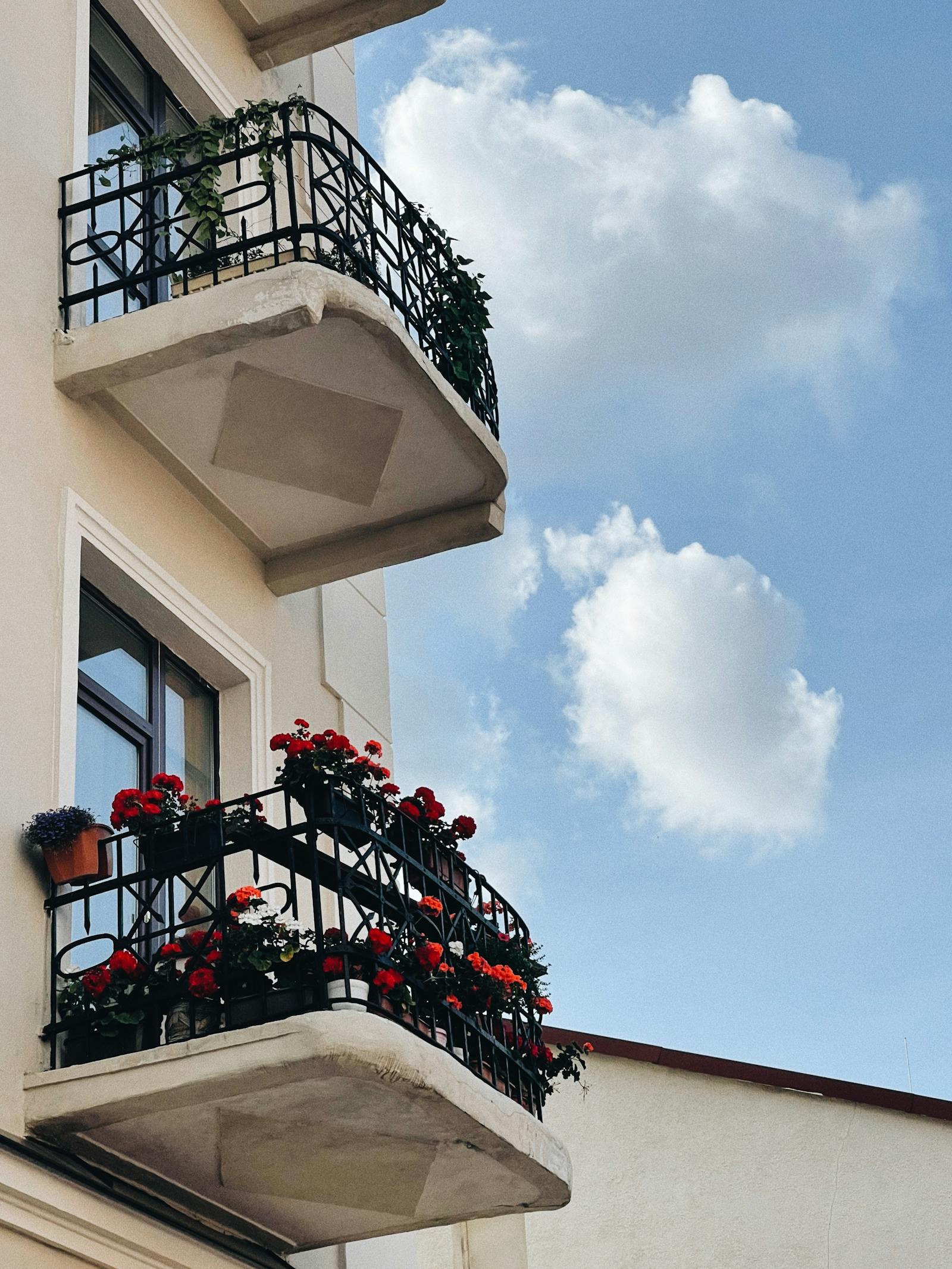
Railing planters are the secret weapon of small balcony gardening. They use space you can’t otherwise use – directly above the railing – without taking up any of your already-limited floor area. Done right, they hold herbs, salad greens, flowers, and even some compact vegetables.
Done wrong, they fall to the street.
Anúncios
The types
1. Saddle-style (over-the-rail)
Most common. Two compartments connected by a saddle that drapes over the railing. The pot hangs on both sides.
Pros: no drilling or mounting required, easy to move, widely available.
Cons: can swing in wind; weight distribution can be tricky if you plant only one side.
Anúncios
2. Hook-on (single-sided)
Hooks over the railing with the planter on the inside (your side) only. Stays put with metal hooks.
Pros: doesn’t extend outside the railing (safer if you worry about things falling); easier to water from inside.
Cons: requires a flat-top railing to hook onto; less stable in heavy wind than saddle types.
3. Clamp-on / bracket-mounted
Adjustable brackets that clamp to the railing and hold a separate planter.
Pros: very secure when fitted properly; can be adjusted for different railing thicknesses.
Cons: requires assembly; some clamp designs scratch railing paint.
4. Wall-mounted railing planters
Mounted to a wall or fence near the balcony rather than on the railing itself.
Pros: very secure if anchored properly into solid material.
Cons: drilling required; usually not allowed in rentals.
Material choices
- Plastic: light, cheap, durable in sun. Most railing planters are plastic.
- Metal: sleeker look but heats up in direct sun and can rust over years.
- Fabric (grow bag style): very light, excellent drainage, but dry out fast.
- Wood: attractive; needs lining and care to prevent rot.
- Self-watering plastic: built-in reservoir reduces watering frequency. Best option for sunny windy balconies.
What to plant in railing planters
Best:
- Salad greens (lettuce, spinach, arugula) – shallow rooted, perfect width
- Herbs (basil, parsley, chives, mint – mint in its own planter only)
- Strawberries (trail attractively)
- Compact flowers (petunias, marigolds, lobelia)
- Trailing flowers (sweet potato vine, calibrachoa, ivy)
- Radishes (fast crop, shallow root)
Skip:
- Tomatoes (too heavy, too tall)
- Deep-rooted vegetables (carrots, parsnips)
- Tall plants that catch wind
- Plants that will outgrow the small soil volume quickly
Hanging safely
This is where 90% of railing planter mistakes happen.
- Check your railing’s load capacity. Most concrete or metal balcony railings handle 20-30 lbs at a single point easily. Wooden railings can be more variable.
- Use the right hook type for your railing. Round railings need a different hook than flat-top railings.
- Test the fit empty first. Hang the planter empty and tug it firmly in different directions. If it shifts at all, it’s not secure enough.
- Plant the inside (your side) heavier than the outside. Counterweight against the wind pulling things over the railing.
- Add a safety strap. A discreet strap or cord from the planter to the inside railing prevents catastrophic falls in storms. Strongly recommended for upper-floor balconies.
Watering railing planters
Small soil volume + sunny location + wind = fast drying. Strategies:
- Self-watering railing planters with built-in reservoirs are the easiest solution.
- Check daily in summer; expect to water every day to every other day.
- Mulch the soil surface with small pebbles to slow evaporation.
- Use a long-spout watering can to reach without leaning over the railing.
Width and sizing
Standard sizes:
- 16-18 inches: fits 1-2 small plants. Good for a few herbs.
- 24-32 inches: the sweet spot. Fits 4-6 small plants or 2-3 medium ones.
- 36+ inches: heavy when full. Make sure your railing can support it.
Storage in winter
In cold climates, plant-filled railing planters left out all winter often crack from freeze cycles. Empty soil, store the planter indoors or in a shed until spring.
The bottom line
Railing planters effectively double your balcony’s growing capacity without taking floor space. Choose a secure mounting style, verify your railing’s load capacity, add a safety strap, and stick to plants suited to small soil volume. For wider balcony setup advice, see how to start a balcony garden.
Securing planters in wind-prone locations
The biggest concern with railing planters is them falling. Above the third floor, a falling planter can seriously injure someone below. Safety practices:
- Test the hook fit empty first. Hang the planter empty and tug it firmly in different directions. If it shifts at all, it’s not secure enough.
- Use a safety strap. A discrete strap or cord from the planter to the inside railing prevents catastrophic falls in storms. Strongly recommended for upper-floor balconies.
- Balance weight inside vs outside. If the planter saddles over the railing, distribute weight so the inside is slightly heavier (counterweights against wind pull).
- Check after every storm. Wind, ice, and snow can shift hooks. Quick visual inspection after weather events.
What to do about the visual block
Railing planters take up some of your view from inside the apartment. Considerations:
- If you sit at a window, planters at railing height block the lower portion of your view.
- Choose shorter plants (lettuces, low herbs) for areas you want to see over.
- Save tall plants for railing sections you don’t look through.
- Consider hanging planters from above the railing instead – they don’t block the view from inside.
Watering railing planters without flooding neighbours below
Water draining from railing planters falls onto whatever is below – usually another balcony or a sidewalk. Solutions:
- Use planters with built-in saucers that catch drainage.
- Self-watering railing planters – the reservoir keeps drainage minimal.
- Water in the early morning when neighbours are unlikely to be on their balcony.
- Water more slowly and less in volume, more frequently.
Drips from above are a real source of neighbour disputes – worth addressing proactively.
Railing planter material in different climates
| Climate | Best material | Why |
|---|---|---|
| Hot dry summer | Plastic with self-watering | Retains moisture in evaporating conditions |
| Mediterranean / mild winter | Terracotta | Breathes, attractive, doesn’t crack |
| Cold winter (freezing) | Frost-resistant plastic or resin | Terracotta cracks in freeze-thaw cycles |
| Coastal / salt air | Powder-coated metal or fabric | Resists corrosion better than untreated metal |
| Very windy | Heavy-duty resin with locking clips | Lightweight enough to lift, heavy enough to stay put |
Match the planter material to your actual conditions, not what looks nicest in catalogues.