Anúncios
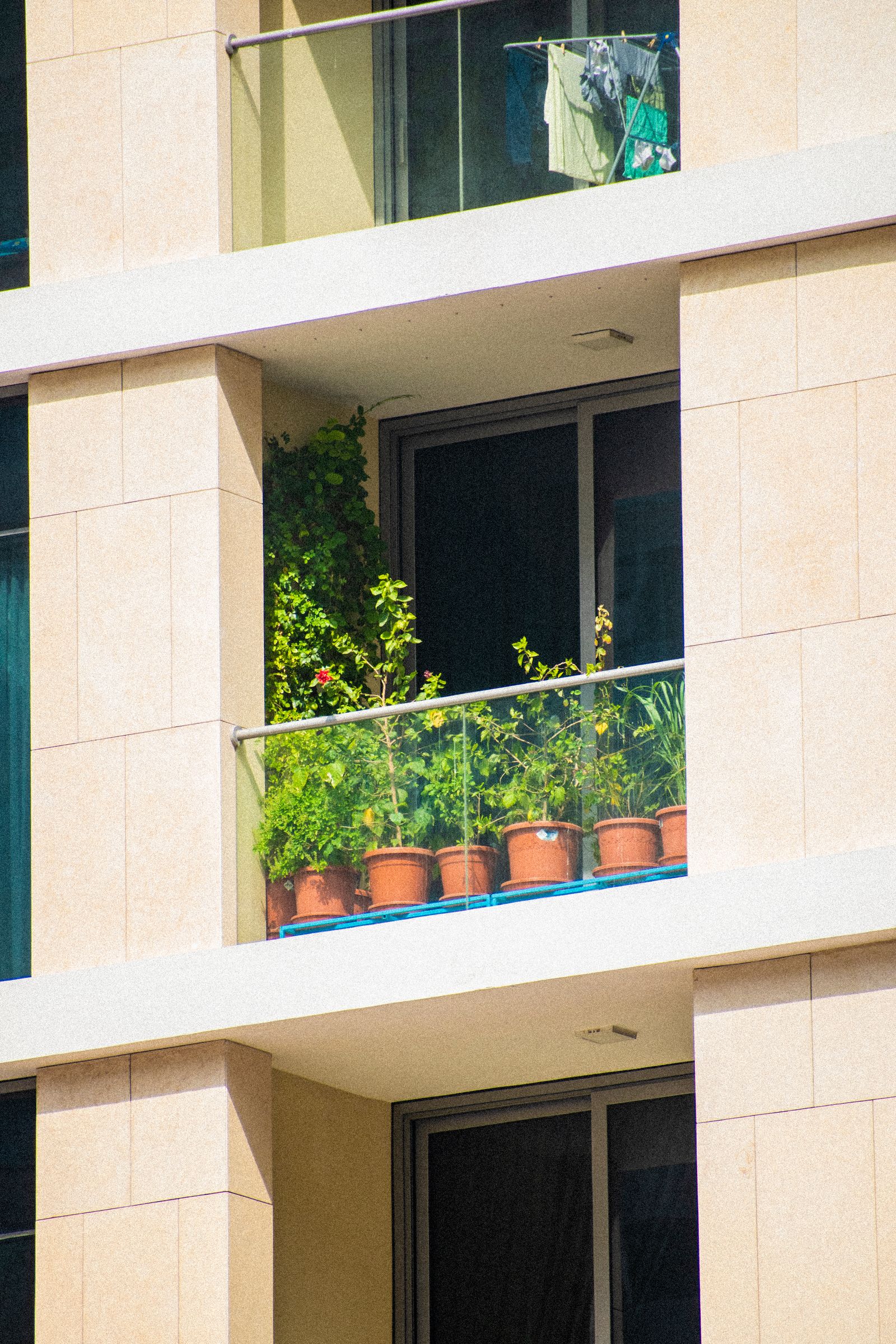
A south- or west-facing balcony in midsummer is a different growing environment from an east-facing one – and definitely from a shaded garden. Heat builds against the building wall. Pots dry out in hours. Tender leaves crisp by 3 p.m. Many of the plants on generic “balcony” lists struggle here.
The plants below are picked specifically for sun-baked, heat-trapping balconies. They want this. Plant them, water deeply, and you’ll have a balcony garden that improves in summer rather than collapsing.
Anúncios
The herbs
Mediterranean herbs evolved in dry, sun-drenched conditions. They love a hot balcony.
- Rosemary. Tough, woody, perennial. Wants well-drained soil and plenty of sun. Stays compact in a pot. One plant lasts years.
- Thyme. Low and spreading, drought-tolerant. Both common thyme and lemon thyme thrive on sunny balconies. Great in shallow pots.
- Oregano. Spreads horizontally, perennial, almost impossible to kill in full sun.
- Sage. Slightly fuzzy leaves that handle heat well. Beautiful purple flowers in early summer.
- Lavender. Technically more of an ornamental herb. Loves heat, drainage, neglect.
- Basil. Tropical not Mediterranean, but loves sun. Needs more water than the others – daily on a hot balcony.
For setup specifics, see our balcony herbs guide.
The vegetables
Fruiting vegetables need the most sun of any food crop. A hot, sunny balcony is their happy place.
Anúncios
- Cherry tomatoes. Compact varieties like ‘Tumbler’ or ‘Tiny Tim’ thrive in 10-12 inch pots. Need deep regular watering and full sun.
- Bush peppers and chillies. Less needy than tomatoes. Compact varieties stay manageable.
- Eggplant (mini varieties). Needs strong sun and warmth. Compact varieties like ‘Patio Baby’ work for containers.
- Bush beans. Quick to grow, productive, easy.
- Okra. Loves heat. Stays compact in containers.
- Strawberries. Sun-loving, productive in hanging baskets or strawberry pots.
The big things to avoid on a sunny balcony: lettuce, spinach, kale (bolt fast in heat – see growing lettuce in containers for cooler-weather alternatives).
The flowers
Heat-tolerant flowers that don’t sulk in summer:
- Marigolds. Bright, productive all summer, cheap from seed.
- Geraniums (pelargoniums). The classic sunny-balcony flower. Bloom continuously through summer.
- Petunias. Annual, but bloom heavily until frost. Need regular deadheading.
- Verbena. Heat-tolerant, blooms in clusters, trails attractively.
- Lantana. Drought-tolerant, attracts butterflies, blooms for months.
- Portulaca (moss rose). Succulent flowers, loves hot and dry conditions.
- Zinnias. Fast from seed, drought-tolerant, range of colours.
- Sunflowers (dwarf varieties). 18-24 inch sunflowers in pots are wildly underrated.
Succulents and Mediterranean tough plants
For low-maintenance backbone plants:
- Sedums. Hardy, ground-hugging, dramatic in shallow pots.
- Sempervivums (hens and chicks). Rosette-forming succulents that handle heat and cold.
- Agave (small varieties). Architectural, drought-tolerant, dramatic.
- Cacti. Genuinely happy on a south-facing balcony. Need overwintering indoors in cold climates.
- Yucca (compact varieties). Hardy, architectural, perennial.
For the full breakdown on succulent care, see succulent care for beginners.
Watering rules for hot balconies
Sunny balconies dry out fast. Daily watering is normal in summer; sometimes twice daily for small pots. Strategies that reduce the burden:
- Bigger pots. A 12-inch pot dries out half as fast as a 6-inch one.
- Glazed ceramic or plastic pots. Terracotta breathes too much and dries the soil rapidly. Stick to terracotta only for plants that actively want fast drying (Mediterranean herbs, succulents).
- Mulch the soil surface. A 1-inch layer of small pebbles, bark, or shredded leaves slows evaporation.
- Group pots tightly. Clusters create a humid microclimate. A single pot dries faster than three together.
- Self-watering planters. The reservoir buffers the dry-fast swings. Excellent for tomatoes and basil.
- Water early morning. Less evaporation, more goes to the roots.
See best time of day to water for more on timing.
Sample setup for a small sunny balcony
- One 12-inch pot with a cherry tomato
- One 10-inch pot with a bush pepper
- Two 8-inch pots with rosemary and thyme
- A 24-inch window box with mixed marigolds and zinnias
- One large shallow pot with mixed sedums
That covers food, perennial herbs, summer colour, and low-maintenance backbone – all on a balcony of around 30-40 square feet, with maybe 30-40 minutes of weekly care plus daily watering in summer.
What about midsummer wilting?
Most plants on a hot balcony will wilt slightly in midafternoon heat even when adequately watered. The leaves are conserving water by closing their stomata. If they recover by evening, no action needed – they’re just hot. If they’re still wilted in the morning, that’s a watering issue.
For the diagnostic, see overwatering vs underwatering signs.
The bottom line
A hot, sunny balcony is a productive space if you plant the right things – heat-loving Mediterranean herbs, fruiting vegetables, drought-tolerant flowers, and tough succulents. The mistake most beginners make is treating a sunny balcony like an indoor windowsill: too-small pots, daily light watering, sensitive species that prefer partial shade. Switch the mental model. Bigger pots, deep watering, plants that want the sun.
For the full setup guide, see how to start a balcony garden. And for the right plants in shadier conditions, our plants for a shady balcony guide is the companion piece.
Heat mitigation for sun-loving plants
Even sun-loving plants can struggle in extreme heat (95°F+). Mitigations:
- Larger pots dry slower and stay cooler in the root zone.
- Lighter coloured pots reflect more heat than dark ones.
- Mulch the soil surface with light-coloured pebbles or fine bark.
- Move pots into partial afternoon shade during heat waves.
- Group pots together to create a humid microclimate.
- Water deeply in early morning to set up plants for the heat of the day.
Late-summer planning
The end of summer is when full-sun balconies tip from productive into stressed. Plan ahead:
- Begin transitioning to fall crops in late summer (lettuce, kale, pansies).
- Refresh soil in containers that produced heavily.
- Replace any plants that are clearly declining.
- Add slow-release fertilizer for fall growth.
- Move tender perennials toward sheltered locations as nights cool.