Anúncios
Flowers are how a balcony stops looking like a storage zone and starts looking like a garden. The trick is choosing species that bloom for months, not for a week, and that don’t demand obsessive care.
Best flowers for a sunny balcony
1. Geraniums (Pelargoniums)
The classic balcony flower for a reason. Bloom from spring to first frost. Tolerate heat and irregular watering. Available in red, pink, white, purple, and salmon.
Anúncios
2. Petunias
Trail beautifully off railing planters. Bloom heavily through summer if you deadhead. The “wave” series are self-cleaning – no deadheading required.
3. Marigolds
Bright orange and yellow. Bloom continuously. Cheap to start from seed. Also help deter some garden pests as a bonus.
4. Zinnias
Fast from seed. Available in nearly every colour. Long-lasting cut flowers if you want to bring them inside.
Anúncios
5. Verbena
Heat-tolerant trailing flowers. Lavender, pink, white, red. Excellent in hanging baskets.
6. Lantana
Drought-tolerant, attracts butterflies, blooms through summer in clusters of changing colours.
7. Portulaca (moss rose)
Succulent flowers that bloom in hot, dry conditions. Vivid colours. Perfect for hot sunny balconies that bake other plants.
8. Sunflowers (dwarf varieties)
Compact varieties stay 18-24 inches. Drama without the height issues of full-size sunflowers. From seed.
Best flowers for partial-sun balconies
1. Pansies and violas
Cool-season flowers. Bloom heavily in spring and fall. Less productive in summer heat. Available in many colours including unusual purples and blues.
2. Begonias
Many varieties prefer partial sun. Wax begonias and tuberous begonias both work in containers. Bloom for months.
3. Snapdragons
Tall vertical flowers in many colours. Cooler-season; can be re-sown in fall.
4. Lobelia
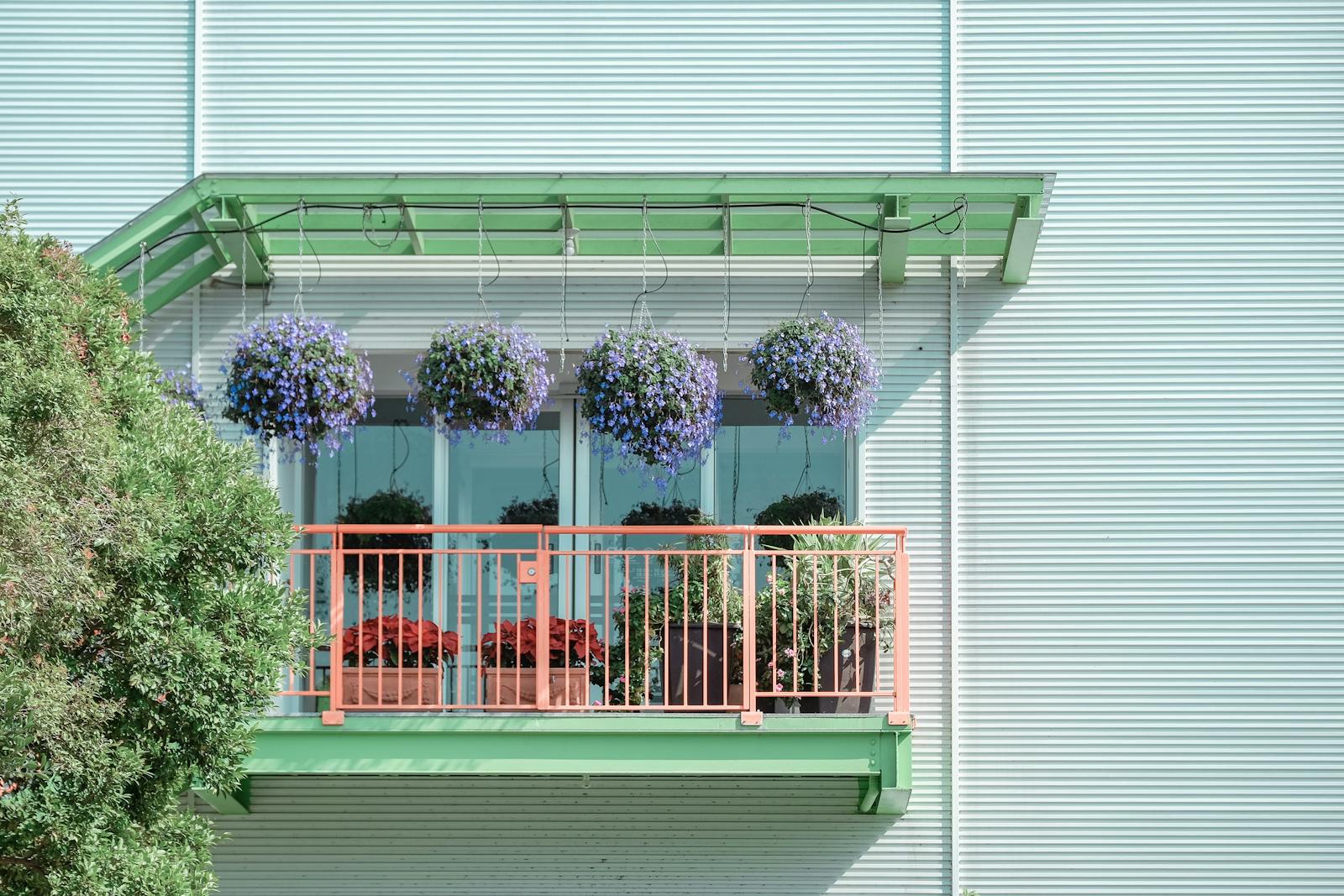
Trailing blue, white, or purple flowers. Excellent in hanging baskets. Prefers cooler, partially shaded spots.
5. Calibrachoa (million bells)
Looks like miniature petunias. Bloom heavily with minimal care. Available in unusual colour combinations.
Best flowers for shaded balconies
1. Impatiens
The classic shade flower. Bloom continuously from spring through first frost. Available in white, pink, red, purple, orange.
2. Wax begonias
Tolerate shade better than tuberous types. Compact, glossy leaves, continuous bloom.
3. Fuchsia
Hanging fuchsia baskets are iconic for shaded porches. Pink, purple, and red dangling flowers. Need consistent moisture.
4. Coleus
Grown for foliage rather than flowers, but the leaves are so dramatic they fill the same visual role. Many varieties tolerate deep shade.
Long-blooming combinations
A few proven container combinations that look great and bloom continuously:
- “Sunny classic”: geraniums + trailing petunias + lobelia in a window box.
- “Hot color”: marigolds + zinnias + verbena in a large pot.
- “Cottage style”: snapdragons (tall) + calibrachoa (mid) + lobelia (trailing).
- “Shade elegance”: impatiens + coleus + ivy in a container under partial cover.
Annual vs perennial choices
Most balcony flowers above are annuals – they bloom one season and die. A few perennials worth considering for long-term beauty:
- Lavender (sunny balconies): years of bloom and fragrance.
- Hardy geraniums (not the same as pelargoniums): true perennials, return every year.
- Echinacea (sunny balconies): summer perennial flowers.
- Heuchera (shade): grown for foliage but produces delicate flower spikes.
Watering balcony flowers
Most flowers want consistent moisture, especially during peak bloom. In summer, daily watering for window boxes and hanging baskets is normal. Self-watering planters reduce the burden significantly.
Fertilizing for more flowers
Use a “bloom” fertilizer (higher in phosphorus and potassium, lower in nitrogen) at half strength every 2-3 weeks during the blooming season. High-nitrogen fertilizer produces lush leaves and fewer flowers. See why your plant isn’t flowering.
The bottom line
Balcony flowers give the highest visual impact per dollar in any container garden. Start with one or two reliable bloomers matched to your sun, deadhead regularly, and accept that most are annuals. The result is months of colour for less than the cost of a single bouquet.
For overall balcony plant lists, see best plants for a small balcony.
Continuous bloom strategy
The trick to a balcony that’s always in bloom isn’t one super-flower – it’s overlapping bloom periods. Examples:
- Spring (March-May): pansies, violas, primroses.
- Late spring through summer: petunias, geraniums, marigolds, lobelia.
- Summer (peak heat): lantana, verbena, portulaca, zinnias.
- Fall (September-November): mums, ornamental kale, dwarf asters.
By planting 2-3 plants from each season’s category, you have continuous colour from March to first frost. Many balcony gardeners do major plant swaps in spring and fall, keeping perennial backbone plants and rotating annual fillers.
The deadheading habit (the secret to long bloom)
Most balcony flowers bloom indefinitely if you remove spent flowers. Without deadheading, the plant shifts to seed production and slows new bloom output. The 5-minute weekly habit:
- Scan plants for faded or browning flowers.
- Pinch or snip them off at the base of the flower stem.
- For mass deadheading (marigolds, calibrachoa), give the plant a light shearing every 2-3 weeks instead of individual flower removal.
This single habit extends bloom season by weeks or months. Worth doing.
Self-cleaning varieties (deadheading-free)
If deadheading sounds tedious, some varieties drop spent flowers naturally:
- ‘Wave’ petunias: bred to drop spent blooms automatically.
- Calibrachoa (million bells): self-cleaning, blooms heavily.
- Lobelia: tiny flowers self-shed.
- Begonias: minimal deadheading needed for continuous bloom.
Mixing some self-cleaning varieties with traditional plants reduces the maintenance load while still allowing variety.
Container size for flowering plants
Flowers need adequate root space to support continuous blooming. Minimum sizes:
| Plant | Minimum pot size |
|---|---|
| Petunias (single) | 6 inches |
| Geraniums | 8-10 inches |
| Marigolds (single) | 6 inches |
| Mixed combination pots | 14-16+ inches |
| Hanging baskets with 3-5 plants | 14-16 inches |
| Window boxes (mass planting) | 24-36 inches long, 8 inches deep |
Too-small pots stress the plant and reduce bloom production. When in doubt, go bigger.