Anúncios
Summer turns a balcony into a hostile environment for plants. Sun bakes pots from above. Wind pulls moisture out. Heat absorbed by walls and floor traps warmth around the plants. A pot that needed water every five days in spring may need it daily in July – sometimes twice daily.
Here’s the system that keeps plants alive through hot summers.
Anúncios
Watering frequency in summer
Rough guide for typical container plants on a sunny balcony:
| Conditions | Frequency |
|---|---|
| 6-inch pots, full sun, 85°F+ | Twice daily (morning and evening) |
| 8-inch pots, full sun, 75-85°F | Daily |
| 10-12 inch pots, full sun | Every 1-2 days |
| Larger pots (14+ inches), full sun | Every 2-3 days |
| Any size, partial shade | Every 2-4 days |
| Mediterranean herbs (rosemary, thyme) | Every 3-5 days even in heat |
Always check soil before watering. The chart is a starting point – your balcony’s exposure determines the actual frequency.
Timing
Water in the early morning – ideally before 9 a.m. Reasons:
Anúncios
- Less evaporation before the heat builds.
- Plants enter the heat of the day already hydrated.
- Wet leaves dry quickly (preventing fungal disease).
If you can’t water in the morning, early evening (4-6 p.m.) is the next-best option. Water the soil only, not the leaves, to prevent overnight mildew.
Avoid midday watering – 30%+ of the water evaporates before reaching roots.
Watering technique
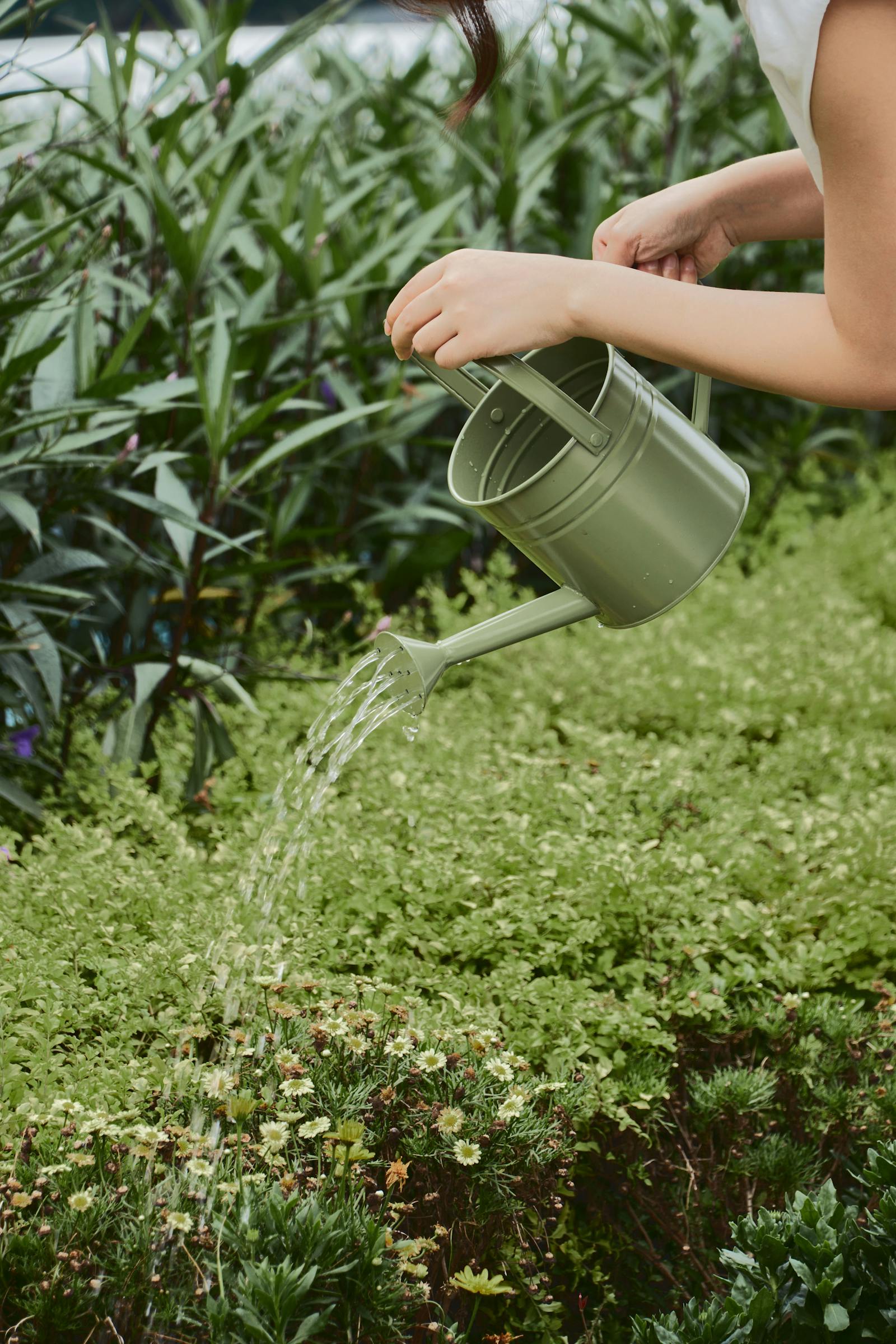
Deep, not shallow. Water until it runs out the drainage holes. Shallow watering encourages shallow roots that bake faster.
For pots that are very dry:
- Initial pass: water lightly to rehydrate the surface.
- Wait 10 minutes.
- Second pass: water deeply until it runs through.
This prevents water from rolling off hydrophobic dry soil.
Strategies to reduce watering load
1. Bigger pots
The single biggest move. A 12-inch pot needs water half as often as a 6-inch pot. If you’re watering daily in summer, size up.
2. Self-watering planters
Built-in reservoir slowly feeds water to the plant. Reduces watering frequency to once every 5-7 days even in heat. Worth the investment for any sunny balcony.
3. Mulch the soil surface
A 1-inch layer of small pebbles, fine bark, or shredded leaves on top of the soil slows evaporation dramatically. See what is mulch.
4. Group pots together
A tight cluster creates a humid microclimate. Single pots in the open dry twice as fast as the same pot grouped with others.
5. Use saucers
A saucer underneath catches drainage water and the plant can absorb some of it back through the bottom over the next few hours.
6. Pot material matters
Plastic and glazed ceramic retain moisture longer than terracotta. For sunny windy balconies, reserve terracotta for plants that actively want dry conditions (succulents, Mediterranean herbs).
Reading the plant in summer
Common summer signals:
- Afternoon wilt that recovers in evening: heat stress, not thirst. Plant is fine, just hot.
- Persistent wilting through evening and morning: actually thirsty. Water immediately.
- Crispy leaf edges: chronic underwatering or salt buildup.
- Yellowing leaves with damp soil: too much water – even in heat.
- White crust on soil surface: fertilizer or mineral buildup. Flush with plain water.
Vacation strategies
Leaving for a week in summer is a high-risk move for balcony plants. Options:
- Self-watering planters with full reservoirs (5-10 days of water depending on plant).
- Drip irrigation with a timer (more setup, but reliable).
- Plant sitter who waters every 2-3 days.
- Move plants into a bathtub or large tray with a few inches of water – they’ll draw from below.
- For shorter trips: deep water before leaving, move pots into shade.
The bottom line
Summer balcony watering is daily work. Larger pots, self-watering containers, mulching, and clustering pots together all reduce the workload. Water deeply in the morning, check plants in the evening, and don’t panic at midday wilting – most plants recover when temperatures drop.
For more on watering, see how often to water plants and best time of day to water.
Setting up summer watering for travel
Summer travel is when balcony gardens die. The longest gap most plants can tolerate during a heatwave is 3-5 days for medium containers, less for small ones. For longer trips:
- Self-watering containers: built-in reservoir provides 5-10 days of water. Best single upgrade for summer travel.
- Drip irrigation kit with a timer: $30-50 setup waters daily on autopilot. Connects to an outdoor tap.
- Plant sitter: a neighbour or friend who waters every 2-3 days during your absence.
- Move plants into shade: direct sun absence cuts water needs roughly in half.
- Wick watering: string from a water reservoir into the pot delivers slow continuous moisture. Works for 1-2 weeks for many plants.
Heat-stress signs that mimic thirst
In extreme heat, plants wilt even when adequately watered. The clue: wilting that recovers in the evening as temperatures drop, with the soil still moist. This is heat stress, not thirst. Watering doesn’t help – in fact, it can make things worse by adding moisture stress.
What helps:
- Temporary shade during peak heat (cardboard, umbrella, move pot).
- Grouping pots together for a humid microclimate.
- Mulching the soil surface to slow evaporation.
- Watering deeply early morning before heat builds.
The morning watering routine
For summer balcony gardens, early morning watering is essentially mandatory. Practical timing:
- Aim for 6-9 a.m. before sun intensity peaks.
- Water at soil level, not on leaves.
- Water deeply – enough to soak the full root zone.
- Empty saucers after 15-20 minutes to prevent standing water.
If morning isn’t possible, late evening (after 6 p.m.) is the next-best option. Avoid midday watering – 30%+ evaporates before reaching roots.
Twice-daily watering: when it’s needed
Some conditions require watering twice a day:
- Small pots (6 inches or less) in full sun above 90°F.
- Hanging baskets in wind-exposed locations.
- Plants in fabric grow bags (which dry fast).
- The day before a heat wave forecast.
Twice-daily watering pattern: morning (6-9 a.m.) and evening (after 6 p.m.). Don’t water both at the same time of day – that’s just one big watering. The point of twice-daily is to bridge the dry midday heat.
For deeper context, see best time of day to water plants and how often to water plants.