Anúncios
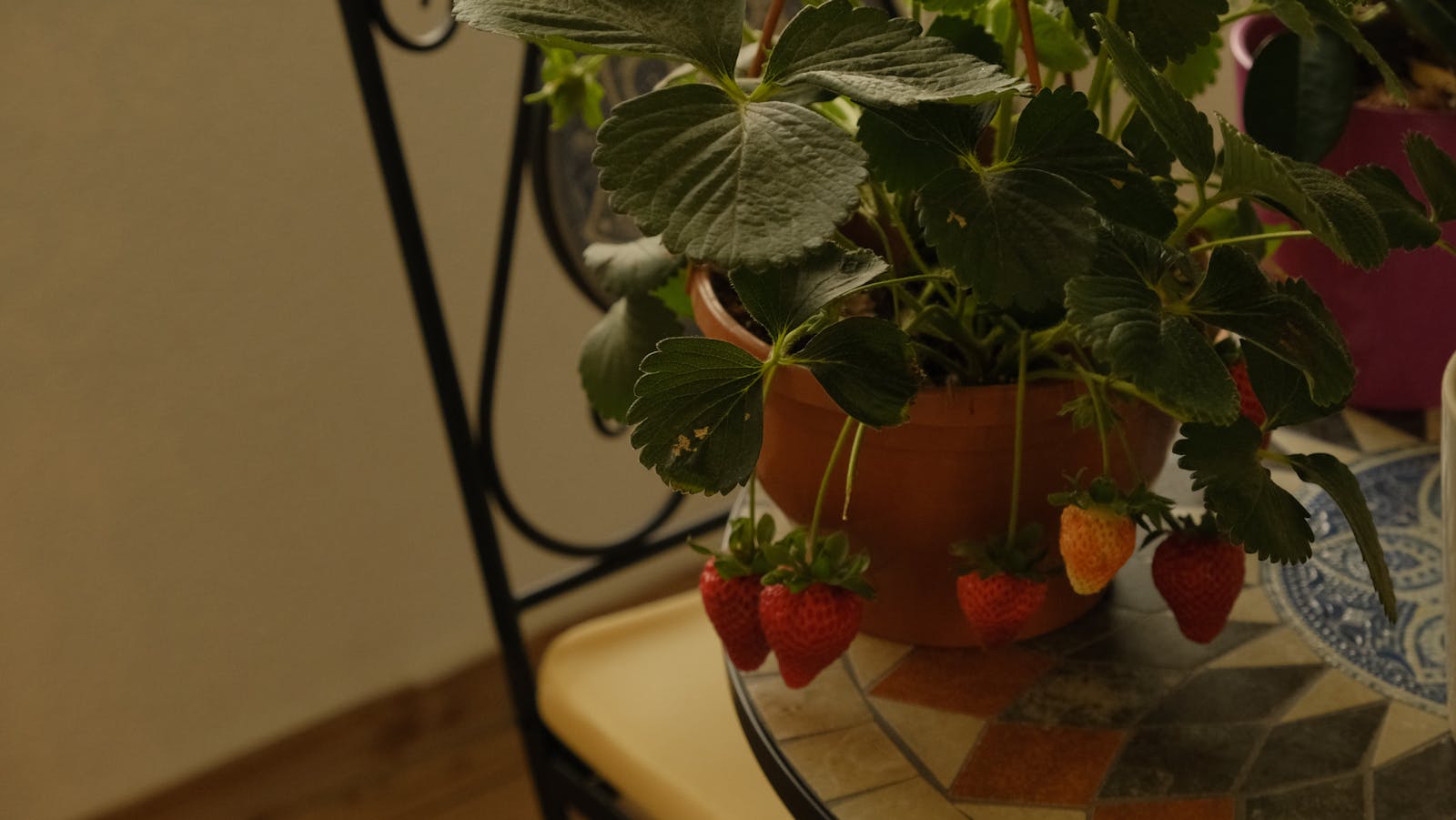
Strawberries in pots reliably outperform supermarket strawberries on flavour and aroma. The fruit ripens in your own sun, picked at peak sweetness, no shipping required. With the right setup, a few container plants produce enough to snack on regularly through summer.
The variety decision
Strawberries fall into three flowering types:
Anúncios
- June-bearing: one big crop in early summer. Largest fruit but only 2-3 weeks of harvest.
- Everbearing: 2-3 harvest waves spring through fall. Smaller berries.
- Day-neutral: produce continuously from spring to frost. Best for containers.
For container gardens, day-neutral varieties are usually best – steady production all season rather than one big flush.
Recommended day-neutral varieties:
- ‘Albion’ – large fruit, good flavour
- ‘Seascape’ – excellent for containers
- ‘Tristar’ – smaller berries but heavy yield
- ‘Mara des Bois’ – small intensely fragrant fruit
Containers that work
- Standard pots: 6-8 inches per plant in 8-12 inch wide pots.
- Strawberry pots: tall vertical pots with side openings – fit 8-12 plants in a small footprint.
- Hanging baskets: attractive cascading habit. 1-3 plants per basket.
- Window boxes: long boxes 6+ inches deep fit several plants.
- Grow bags: fabric strawberry grow bags with multiple pockets work brilliantly.
Drainage is essential – strawberries hate wet roots.
Anúncios
Sun
Strawberries want full sun – at least 6 hours of direct sun daily. Less means fewer and smaller fruits.
If your space is partly shaded, day-neutral varieties tolerate it slightly better, but fruit production drops significantly.
Planting
- Buy bare-root crowns or potted plants from a nursery in early spring.
- Soak bare roots in water for an hour before planting.
- Plant so the crown (where leaves meet roots) sits at soil level – not buried, not exposed.
- Space 6-8 inches apart in containers.
- Water in well.
- Mulch the soil surface lightly (avoid covering the crowns).
Watering
Consistent moisture is essential for strawberries:
- Water when the top inch of soil is dry.
- Container strawberries in full sun usually need daily watering in summer.
- Inconsistent watering causes split, deformed, or small fruit.
- Mulch with straw or pebbles to retain moisture.
Fertilizing
Strawberries are moderate feeders:
- Feed with a balanced liquid fertilizer at half strength every 2-3 weeks during active growth.
- Switch to a bloom/tomato fertilizer (higher P and K) once flowers appear.
- Slow-release fertilizer at planting time gives a steady base.
Pinching runners
Strawberries send out “runners” – long stems with baby plants at the ends. For maximum fruit production:
- In the first year, pinch off all runners and flowers. This builds strong root systems.
- In subsequent years, allow some runners to root in nearby pots if you want new plants. Pinch off the rest.
This sacrifices the first season’s fruit for stronger plants and better future harvests. If patience isn’t your strong point, let some flowers and runners go in year one – just expect smaller plants long term.
Pest and bird protection
Strawberries attract birds. Once fruits start to ripen, you may need to:
- Drape light netting over plants.
- Cover with cloches or wire frames.
- Use shiny reflective tape to deter birds.
Slugs and snails also love strawberries. Slug pellets (organic options exist), beer traps, or copper tape around pots help.
Common problems
| Problem | Cause | Fix |
|---|---|---|
| Small, deformed fruit | Poor pollination or inconsistent watering | Hand-pollinate flowers (gentle brush); water consistently |
| Soft, mouldy fruit on plant | Wet foliage; fungal disease | Water at soil level; remove affected fruit immediately |
| Yellow leaves | Overwatering or nutrient deficiency | Check drainage; light fertilizer |
| Few flowers, lots of leaves | Too much nitrogen | Reduce fertilizer; switch to bloom formula |
| Birds eating fruit | Visible ripe berries | Netting or cover |
Overwintering
Strawberries are perennial. To overwinter container plants:
- Mild climates: leave outside, mulch heavily, water minimally.
- Cold climates: move pots to an unheated garage or shed; insulate with bubble wrap; water sparingly.
- Plants resume growth in spring.
Replace plants every 2-3 years as productivity declines.
The bottom line
Container strawberries are one of the most rewarding crops for small-space gardeners. Day-neutral varieties produce all summer, container choice flexibility, real noticeable flavour improvement over store-bought. Treat them well and you’ll have your own berries from spring through fall.
For broader balcony food production, see balcony vegetable garden and best plants for a small balcony.
The first-year discipline (and why most people skip it)
In year one, traditional advice is to pinch off all flowers and runners. This sacrifices the first season’s berries to build a stronger root system for years 2 and 3.
Most home gardeners can’t do it. The flowers are exciting, the impulse to harvest is strong. Realistic compromise:
- Pinch the first 3-4 flowers (the earliest ones).
- Let later flowers fruit normally.
- Pinch all runners in year one (they steal energy from fruit production).
- Accept smaller first-year harvest but stronger long-term plant.
This gives you some berries while still investing in plant health.
Why container strawberries decline after 2-3 years
Strawberry plants peak in productivity in years 2 and 3, then decline:
- Year 1: building roots, modest fruit production.
- Year 2: peak fruit production.
- Year 3: still strong production.
- Year 4+: declining yield, more disease susceptibility.
The fix: replace plants every 3 years. The good news is strawberry runners produce new plants for free – if you let them grow in late summer/early fall of year 2, they root in adjacent pots and become your year-3 (or year-4) replacement plants.
Variety selection by your situation
| Your goal | Best variety type |
|---|---|
| Continuous summer fruit on a balcony | Day-neutral varieties (Albion, Seascape) |
| One big harvest for jam-making | June-bearing varieties (Allstar, Earliglow) |
| Small-space hanging basket | Compact varieties (Tristan, Tristar) |
| Maximum berry size | Standard June-bearing (Honeoye, Jewel) |
| Intense flavour over size | Alpine strawberries (Mignonette, Rugen) |
The bird problem
Strawberries on balconies and patios attract birds, who often eat fruit just as it ripens. Protection:
- Light netting draped over plants (most effective).
- Hardware cloth cages for permanent installations.
- Reflective tape strips between plants (mild deterrent).
- Pick berries as soon as they’re red – don’t leave them on the plant for “extra ripening.”
Maximizing yield in small containers
To get the most strawberries from limited space:
- Choose day-neutral varieties for continuous production.
- Use a strawberry pot (vertical stacked pot with side openings) to fit 8-12 plants in a small footprint.
- Hang baskets above ground-level pots to maximize vertical use.
- Feed regularly with bloom-focused fertilizer (every 2 weeks during fruiting).
- Mulch with straw to keep berries clean and reduce disease.
- Pollinate manually with a small paintbrush if your balcony has few bees.
For overall balcony fruit production strategies, see balcony vegetable garden.