Anúncios
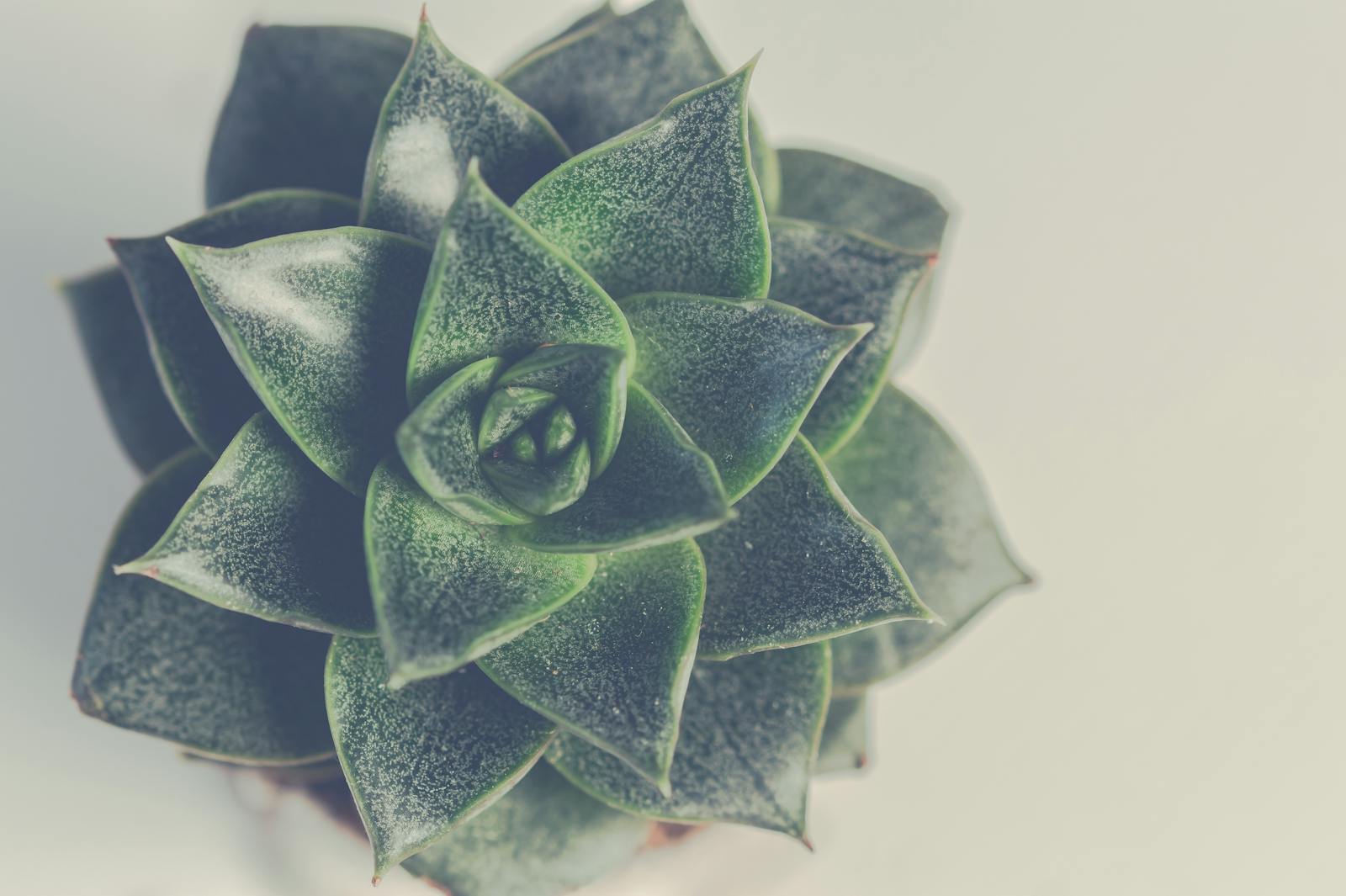
A healthy succulent forms a compact rosette – leaves clustered tightly. A stretched succulent has leaves spaced far apart along an elongated stem, reaching upward for more light. This is etiolation. It’s not deadly, but it permanently changes the shape – unless you intervene.
What causes etiolation
One thing: not enough light. Succulents need bright direct sun for at least 4-6 hours daily. When light is insufficient, they stretch toward whatever source they can find.
Anúncios
The new growth comes in pale, with longer internodes (space between leaves), and the rosette form is lost.
Common scenarios:
- Succulent on a windowsill that doesn’t get enough direct sun.
- Succulent in a “bright room” without actual direct sunlight.
- Plants moved from a nursery (where they had perfect light) to typical home conditions.
- Winter, when sun angles change and light intensity drops.
Can you reverse etiolation?
No – the stretched portion stays stretched. Once succulent stem tissue has elongated, it doesn’t shrink back. But you have two paths forward:
Anúncios
- Accept the new shape and prevent further stretching.
- Behead the rosette and start fresh with a compact form.
Path 1: Stop the stretching
To prevent more etiolation:
- Move the plant to a sunnier location immediately – south or west-facing window.
- Add a grow light if natural light is insufficient.
- Rotate the pot weekly so the plant grows evenly rather than leaning.
The new growth will come in compact again, but the existing stretched section remains. The plant becomes a tall stem with a normal rosette on top.
Path 2: Behead and restart
The dramatic fix. You cut off the top rosette and start a new compact plant from it. The bottom stem can also produce new offshoots.
How to behead
- With clean scissors or a knife, cut the stem about 1-2 inches below the rosette.
- Set the cut rosette aside.
- Strip the lower leaves from the cut piece, leaving about 1 inch of bare stem.
- Let the cut end callous over for 3-5 days in a dry shaded spot.
- Plant the calloused rosette in fresh dry succulent mix, with the bare stem buried.
- Don’t water for a week.
- After a week, water lightly. Roots develop in 2-4 weeks.
The result: a compact, normal-looking succulent restored to its original beauty.
What about the bottom?
The original pot with the stem still in it isn’t garbage:
- Place in good light and water as usual.
- Within weeks, small offshoots emerge from the stem and base.
- These can be separated and grown as new plants once they have roots.
One stretched succulent can become 3-5 new plants this way.
Preventing etiolation in the first place
- Light first. Place succulents in your sunniest spot – south or west-facing window, or outdoors in warm months.
- Add a grow light if natural light is marginal. A cheap LED grow bulb prevents most stretching.
- Rotate weekly to encourage even growth.
- Watch for early signs: the first new leaves coming in slightly farther apart is the early warning. Move the plant before it gets bad.
Which succulents are most prone
- Echeveria: stretch easily, very visible when etiolated.
- Sedum: stretches dramatically.
- String of pearls / hearts: stretches lengths of stem.
More tolerant of marginal light:
- Haworthia
- Snake plant
- Aloe vera (somewhat)
- Jade plant (slowly stretches but stays manageable)
The bottom line
Etiolation is a light problem with two solutions: prevent more stretching by improving light, or behead the rosette and restart. The cutting roots easily in fresh soil and you have a normal-shaped succulent again within weeks. The “ruined” stretched plant becomes propagation material – one plant becomes many.
For more on succulent care, see succulent care for beginners and jade plant care.
The light requirements specifics for succulents
“Bright light” isn’t precise enough. Succulents need:
| Light level | What it produces |
|---|---|
| Low (under 100 foot-candles) | Severe etiolation, plant declines |
| Medium indirect (200-500 fc) | Slow etiolation over months |
| Bright indirect (1000-2000 fc) | Slow growth, compact shape maintained |
| 4-6 hours direct sun | Healthy growth, classic rosette shape |
| 6+ hours direct sun | Optimal growth, sometimes blushing colours |
For reference, a south-facing window in summer reaches 1000-3000 fc near the glass. Office fluorescent lighting is 50-100 fc – far too low for succulents long-term.
The early warning signs of etiolation
By the time succulents are visibly stretched, they’ve been light-starved for weeks. Catch it earlier by watching for:
- New leaves coming in slightly farther apart than previous leaves.
- Plant tilting toward the light source.
- Slightly paler leaf colour than usual.
- Loss of any red or purple colour (succulents in bright light often blush; that colour fading is an early signal).
- Slower growth than normal.
Catching it early lets you increase light before serious stretching, preserving the plant’s appearance.
Beheading: the dramatic but reliable rescue
If a succulent is severely stretched, the only way to restore the compact form is to behead and replant. Detailed process:
- With clean scissors or a sharp knife, cut the stem about 1-2 inches below the rosette.
- Set the rosette aside; the bottom stem stays in the original pot.
- Strip the lower 1-1.5 inches of leaves from the cut piece, leaving a bare stem section.
- Set the cut piece in a dry shaded location for 3-5 days to callous over.
- Plant the calloused rosette in fresh dry succulent mix with the bare stem buried.
- Don’t water for 1 week.
- After a week, water lightly to encourage rooting.
- Roots develop in 2-4 weeks.
The result: a compact succulent with normal proportions, ready to start over.
The bonus: free new plants from leaf propagation
When you strip leaves from the bottom of the cutting, save them:
- Set leaves on dry potting mix.
- Place in bright indirect light.
- Mist lightly every 3-4 days.
- In 4-8 weeks, tiny roots and a baby succulent emerge from the base of each leaf.
- Plant the babies once they’re 1/2 inch across.
A single stretched succulent can become a dozen new plants this way. The original plant’s lower stem also often produces offshoots over the following months.
Setting up to prevent re-etiolation
Once you have a compact succulent again, prevent the problem from recurring:
- Move to a south-facing window or add a grow light.
- Rotate the pot weekly so all sides get equal light.
- Check for early stretching signs monthly.
- If your space genuinely can’t provide enough light, consider switching to lower-light tolerant succulents (haworthia, snake plant) instead of demanding species like echeveria.
For more on succulent care, see succulent care for beginners.