Anúncios
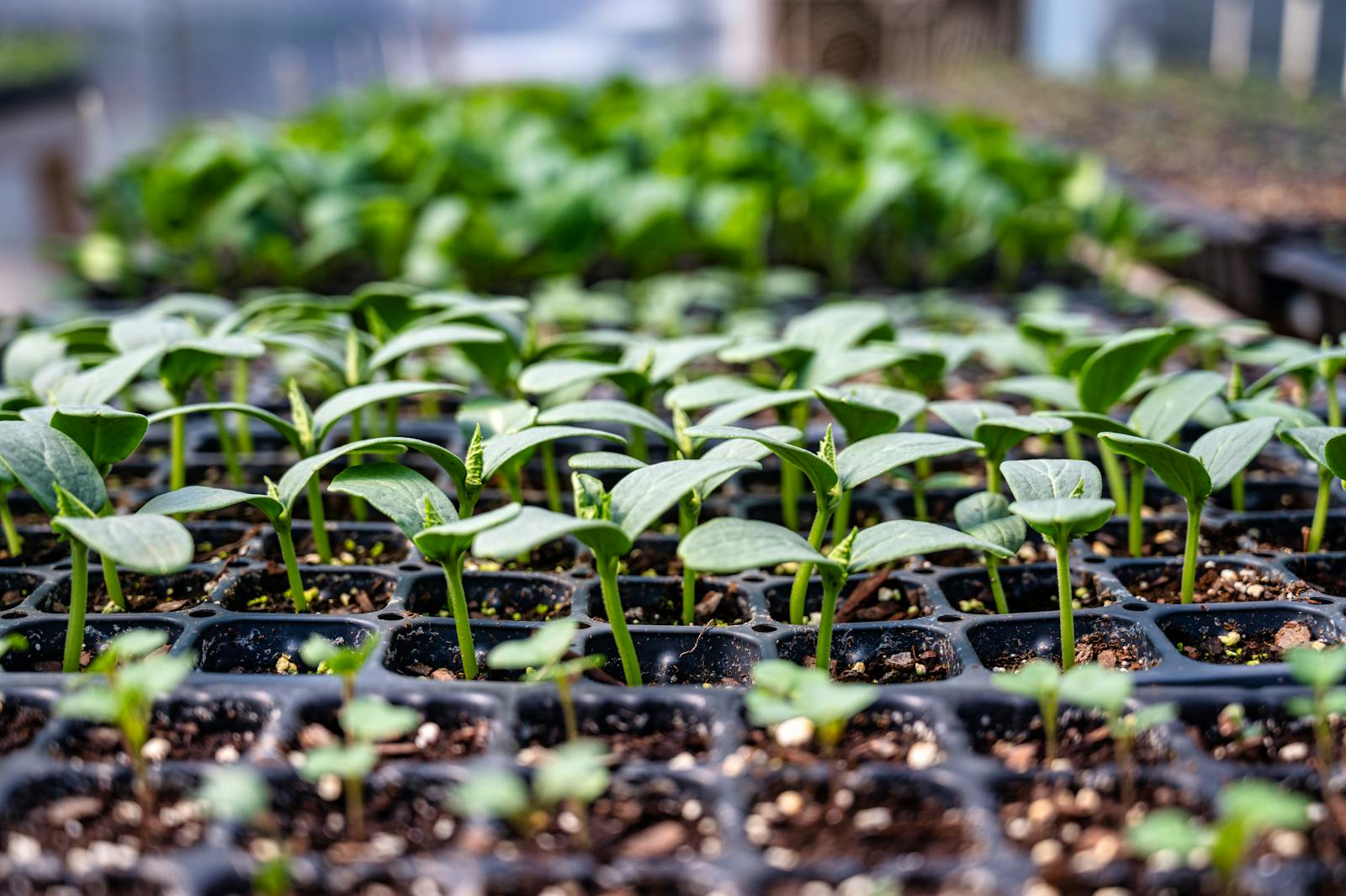
You start seeds indoors. They grow into healthy young seedlings. One sunny weekend you move them straight outside, full sun, all day. By Sunday evening half of them are bleached, wilted, or dead.
That’s transplant shock plus sun scorch plus wind damage all at once. The solution is hardening off – a gradual transition that prepares indoor-raised seedlings for outdoor conditions.
Anúncios
What hardening off actually does
Indoor seedlings have grown up in a sheltered environment – steady temperatures, no wind, filtered light. Outside, they encounter direct sun (much brighter than indoor light), wind (which they’ve never experienced), temperature swings, and cooler nights.
Hardening off lets the plant adapt to each of these gradually:
- Leaves develop thicker cuticles to resist sun and wind.
- Stems strengthen against wind movement.
- Roots adapt to cooler soil.
- The plant builds tolerance for temperature swings.
The week-long schedule
The classic approach. Adjust by 1-2 days if you have time pressure.
Anúncios
| Day | Outdoor time | Conditions |
|---|---|---|
| 1 | 1-2 hours | Shaded, sheltered from wind |
| 2 | 2-3 hours | Shade, light breeze okay |
| 3 | 3-4 hours | Partial sun (morning ideal), sheltered |
| 4 | 4-5 hours | Partial sun, exposed to gentle wind |
| 5 | 5-6 hours | Direct sun for part of day |
| 6 | 6-8 hours | Mostly normal outdoor conditions |
| 7 | Full day | Outdoors all day; bring in overnight if cool |
| 8+ | Plant out | Ready to transplant or stay outside |
Bring seedlings back indoors each evening for the first 4-5 days. By day 6-7 they can usually stay outdoors overnight if temperatures are mild (above 50°F / 10°C).
How to do it practically
- Pick a stretch of mild, predictable weather. Avoid heatwaves, storms, or cold snaps.
- Choose a sheltered outdoor spot for early days – a porch, under an overhang, against a wall.
- Set seedlings out in their current pots (don’t transplant yet).
- Check on them midway through each session – wilting means bring them in.
- Water if soil dries faster than indoors (it usually does).
- Increase exposure each day per the schedule.
Signs hardening off is working
- Leaves go slightly darker green and look sturdier.
- Stems thicken and become woodier.
- The plant tolerates wind without bending dramatically.
Signs you’ve moved too fast
- White or yellow bleached patches on leaves: sun scorch. Move back to shade for 2-3 days.
- Wilting that doesn’t recover with water: root or stress damage. Back to shelter.
- Broken or bent stems: wind damage. Use a windbreak for the next attempt.
- Plants visibly shrinking: general stress. Restart the schedule from day 1.
Special cases
- Tomatoes and peppers: heat-loving but very sensitive to scorch. Stick to the full week.
- Basil: hates cold and wind. Don’t harden off until nights are reliably above 55°F.
- Brassicas (kale, broccoli): tolerate cooler conditions. Can harden off in cool weather; less prone to scorch.
- Lettuce and salad greens: often grown outdoors from the start; less hardening needed.
If you skip hardening off
Expect:
- 50-80% loss of tender seedlings (tomatoes, basil, peppers).
- Survivors will be visibly stressed for weeks.
- Plants that survive often grow slower for the first month.
The week of hardening saves the crop. Don’t skip it.
The bottom line
Hardening off is unglamorous and slow, but it’s the difference between healthy outdoor seedlings and a tray of dead leaves. For 7-10 days of patience, you get plants that establish well and produce all season. For more on the rest of seed starting, see how to read a seed packet and why your seedlings are leggy.
What goes wrong without hardening off
If you’re tempted to skip the process, here’s what typically happens. Indoor seedlings moved directly to full outdoor sun and wind:
- White or pale bleached patches appear within hours from sun scorch.
- Leaves curl tightly or droop dramatically from heat and water loss.
- Stems break or bend in even moderate wind.
- Half to most of the seedlings die within a week.
- Survivors are visibly stressed and grow slowly for weeks afterward.
This is preventable. The week of hardening is genuinely the difference between most seedlings dying and most seedlings thriving.
Hardening off in less-than-ideal weather
The classic 7-day schedule assumes mild, stable conditions. Real weather doesn’t cooperate. Adjustments:
- Unexpected cold snap: bring all seedlings inside immediately. Resume hardening when temperatures recover above 50°F at night.
- Heatwave: harden off in the morning and evening only, keeping seedlings shaded during peak midday heat.
- Storms forecast: bring seedlings in 24 hours ahead. Heavy rain and wind can destroy a week of progress.
- Cool but stable: hardening off works fine in 55-70°F daytime weather. The plant just needs gradual exposure – not necessarily warm exposure.
Crops with shorter hardening windows
Some crops are hardier and need less acclimation:
- Lettuce, spinach, kale, brassicas: 3-4 days of partial sun usually enough. They prefer cooler conditions anyway.
- Pansies and violas: tolerate cool conditions; quick hardening fine.
- Cabbage family: usually 4-5 days adequate.
The full 7-10 day schedule is most critical for tender warm-season crops: tomatoes, peppers, eggplant, basil, melons.
Transplant day – what to do after hardening
Once seedlings are hardened, transplant on a cloudy or overcast day if possible. Direct sun on the day of transplant adds stress on top of the move. Other tips:
- Water seedlings the morning before transplanting.
- Transplant in the evening so plants have a cooler overnight settling period.
- Water them in immediately after planting.
- Provide light shade for the first 1-2 days (cloches, row cover, or even just a piece of cardboard propped up).
Most plants settle in within 3-5 days and resume normal growth.