Anúncios
Root rot is the silent houseplant killer. It starts invisibly underground, presents as confusing above-ground symptoms (yellow leaves, drooping despite damp soil), and often kills the plant by the time the cause is identified. Understanding it is the difference between a thriving plant collection and a slow rotation of replacements.
What root rot actually is
Plant roots need oxygen. They get it from air pockets in the soil between watering. When soil stays saturated for too long, roots are deprived of oxygen and start to suffocate. Anaerobic bacteria and fungi then attack the weakened roots, causing them to decay.
Anúncios
Once a significant percentage of roots have rotted, the plant can no longer take up water (despite sitting in moist soil) and starts to fail above ground.
The causes
- Overwatering (by far the most common). Watering on a schedule rather than checking soil first.
- Pots without drainage holes. Water has nowhere to escape.
- Pots sitting in saucers of standing water. Effectively no drainage.
- Heavy soil that doesn’t drain. Garden soil in a pot, or compacted old potting mix.
- Pots too large for the plant. Excess soil holds excess water.
- Cold conditions slow water uptake. Winter overwatering is a common pattern.
The warning signs
- Yellow lower leaves that soften and drop.
- Drooping even though soil is damp.
- Slow or stopped growth during active season.
- Sour or earthy smell from the soil.
- Soft, blackening base of the plant.
- Mushy stems near the soil.
- Fungus gnats appearing (they breed in damp soil).
By the time multiple signs appear, the root system is significantly damaged.
How to check the roots
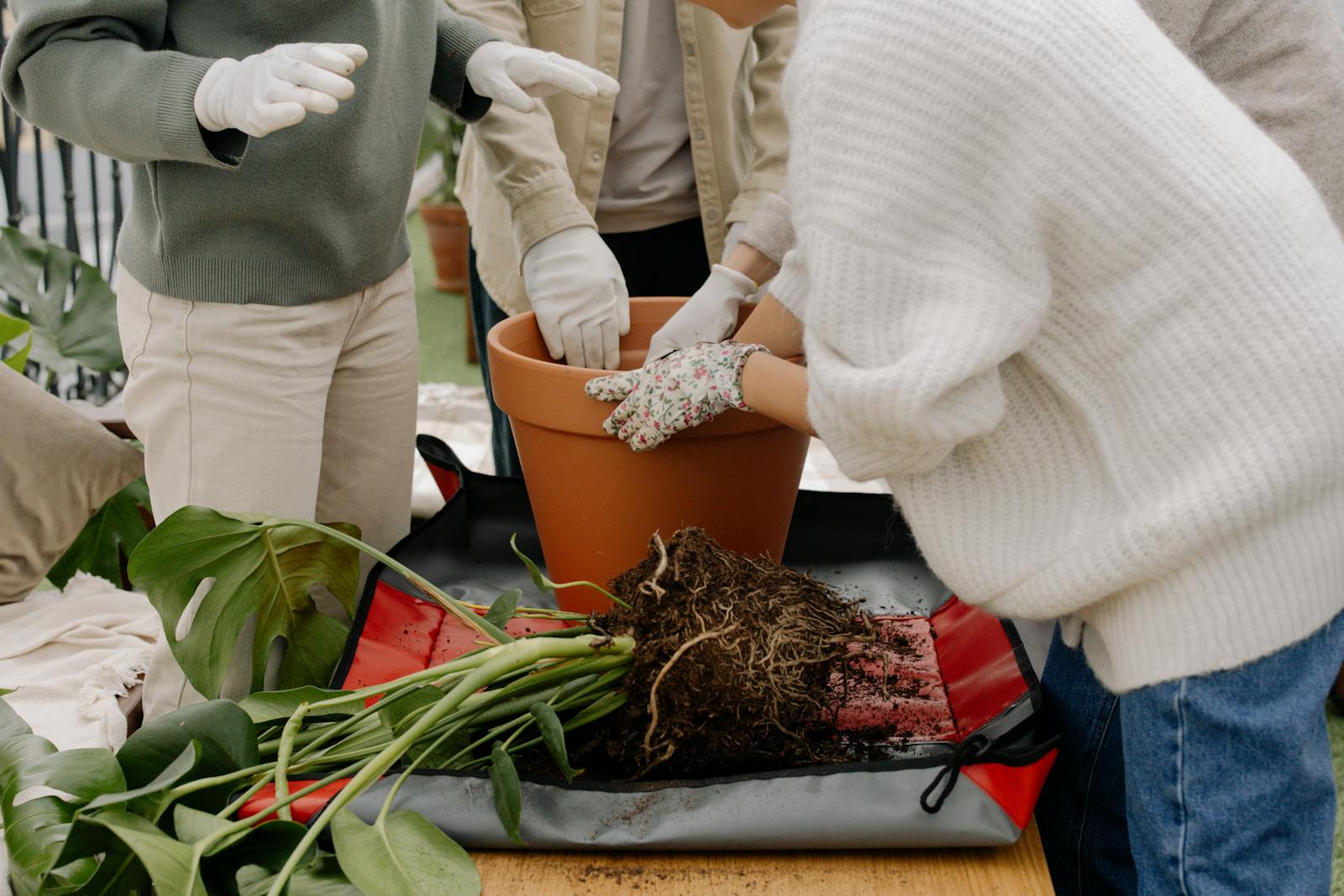
- Carefully unpot the plant – squeeze the sides of the pot to loosen, then tip sideways and slide out.
- Gently knock or wash off the old soil to expose roots.
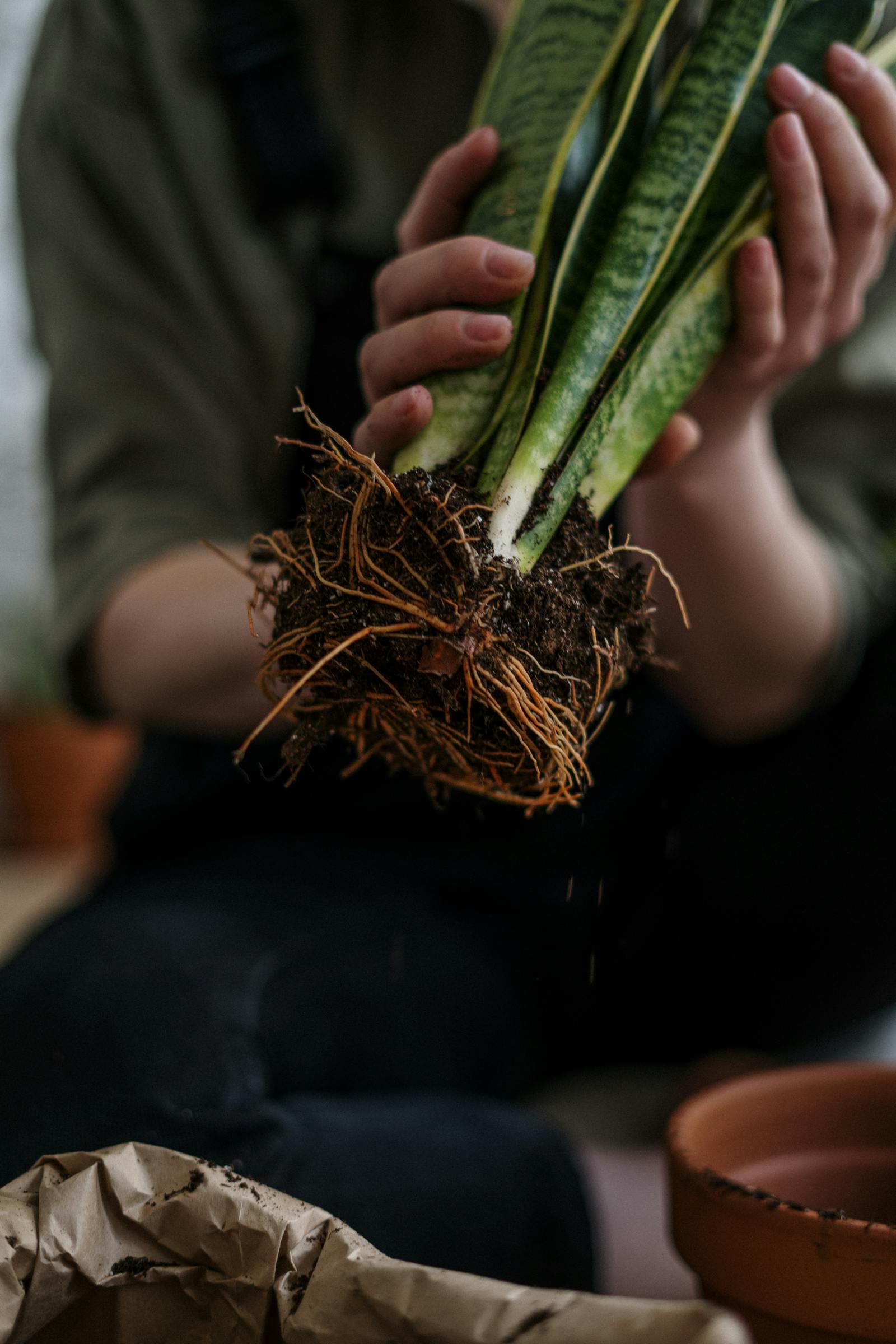
- Examine the roots:
- Healthy roots: firm, white or pale tan, smell earthy and neutral.
- Rotted roots: brown, black, mushy, slimy, smell sour or like rot.
Saving a plant with root rot
Recovery depends on how much of the root system is healthy.
Anúncios
Mild rot (50%+ healthy roots)
- Unpot the plant.
- Rinse off old soil.
- Cut away all rotted roots with clean scissors. Cut back to firm, healthy tissue.
- Trim any soft or rotting stems.
- Let the plant air-dry for several hours.
- Repot in fresh, dry potting mix in a clean pot (often smaller than before, since root mass is reduced).
- Don’t water for 3-5 days.
- Then water lightly. Resume normal watering only when you see new growth.
Recovery takes 4-8 weeks. The plant may lose more leaves during recovery – this is normal.
Severe rot (less than 50% healthy roots)
Recovery is uncertain. Your best bet:
- Take cuttings of any healthy upper growth (for plants that propagate from cuttings).
- Root the cuttings in water or fresh soil.
- Compost the original plant if it doesn’t recover.
This sometimes saves the species even when the original specimen dies.
Preventing root rot
Five habits that prevent almost all root rot:
- Check soil moisture before watering. Push a finger 1-2 inches in. If damp, wait.
- Use pots with drainage holes. Always.
- Empty saucers after watering. Don’t let pots sit in water.
- Match pot size to root ball. Don’t over-pot.
- Reduce watering in winter. Plants use far less water during dormancy.
Following these prevents 95% of root rot cases.
Plant-specific vulnerability
| Plants particularly prone to root rot | Notes |
|---|---|
| Succulents and cacti | Need their soil to dry completely between waterings |
| Snake plant and ZZ plant | Store water in rhizomes; overwatering rots them fast |
| Rosemary, lavender, thyme | Mediterranean herbs that hate wet feet |
| Orchids | Need air around roots; standard soil suffocates them |
| African violets | Crown rots if water sits at the base |
The bottom line
Root rot is preventable. Check soil before watering. Use pots with drainage. Don’t over-pot. When in doubt, wait another day. For plants already affected, unpot quickly, trim rotted roots, repot dry, and wait before watering again. Many plants recover if caught early.
For more on watering correctly, see how often to water plants and overwatering vs underwatering.
Recognizing root rot before it kills the plant
Root rot has a progression. Earlier intervention = better outcomes:
| Stage | Above-ground signs | Recovery odds |
|---|---|---|
| Early | Soil stays wet too long; minor yellowing | Excellent (90%+) if addressed |
| Developing | Multiple yellow lower leaves; mild drooping | Good (70%) with prompt action |
| Advanced | Soft stems near soil; drooping doesn’t recover | Moderate (40%) – need to act fast |
| Severe | Whole plant collapsing; sour smell from soil | Low (under 20%); take cuttings if possible |
The hydrogen peroxide rinse
For early-stage root rot, hydrogen peroxide kills pathogenic bacteria while sparing healthy tissue:
- Mix 1 part 3% hydrogen peroxide with 4 parts water.
- Unpot the plant and rinse off old soil.
- Soak the roots in the diluted peroxide for 5-10 minutes.
- Trim any visibly rotted roots.
- Repot in fresh dry soil in a clean pot.
- Don’t water for 3-5 days, then water lightly.
This isn’t a guarantee but improves outcomes for moderately affected plants.