Anúncios
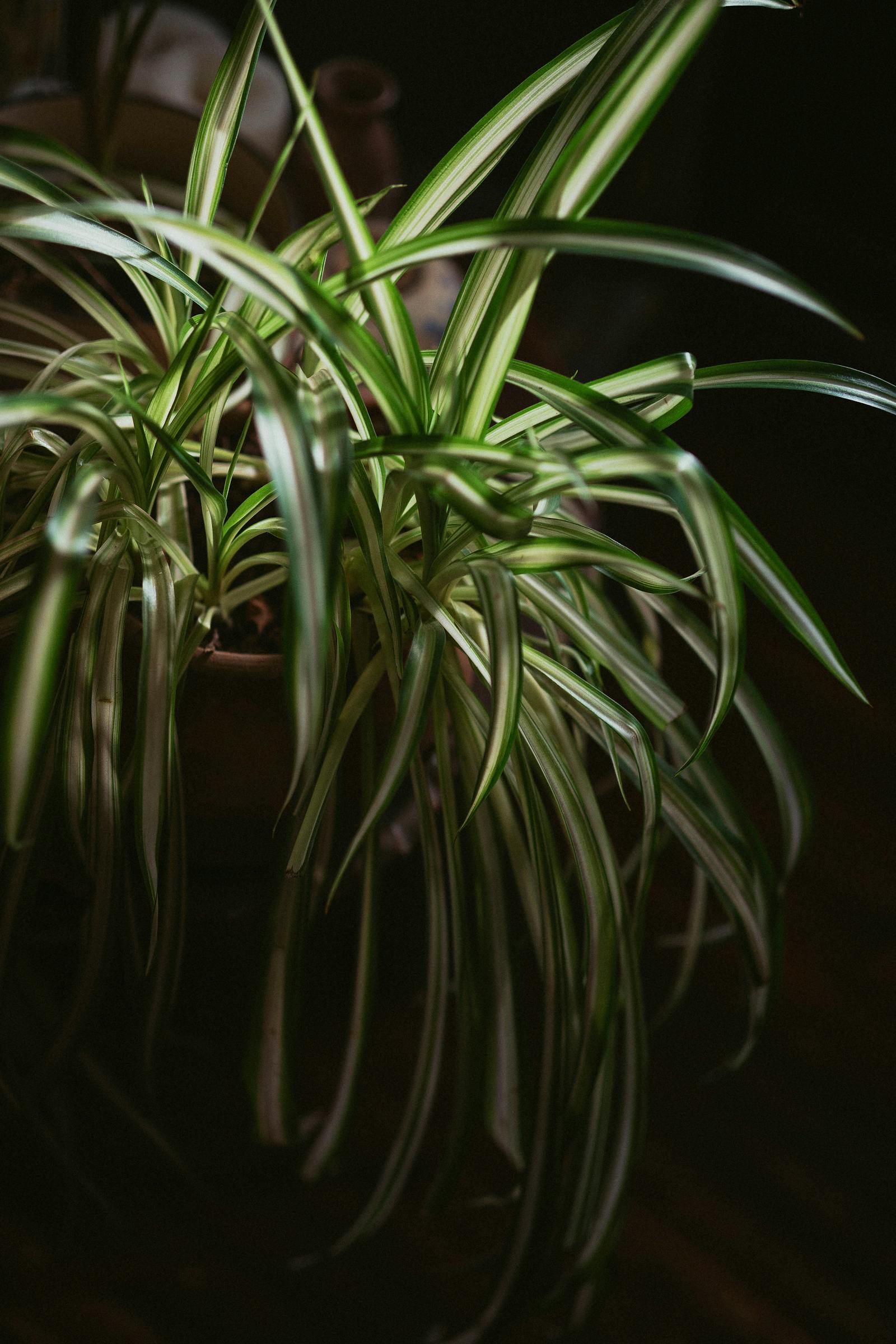
If you’re new to houseplants and want one that’s almost impossible to kill – and that gives you free new plants on top – get a spider plant. They tolerate low light, irregular watering, dry indoor air, and the kind of neglect that kills more demanding species. They’re also non-toxic to cats and dogs, and they produce baby plants (“spiderettes”) that dangle from the parent on long stems like a chandelier of small green creatures.
Here’s the complete care guide.
Anúncios
What you’re working with
The spider plant (Chlorophytum comosum) is native to South Africa and was Victorian-era popular for a reason: it grows in nearly any indoor condition. The classic variegated variety has long arching leaves with white stripes; the solid-green “Ocean” variety is just as hardy but less common.
Mature plants form a thick rosette in their pot and send out long stems with small white flowers, followed by tiny baby plants. Those babies can be rooted into new pots, creating an endless supply of more spider plants.
Light: easy
Spider plants tolerate a wider range of light than most houseplants:
Anúncios
- Bright indirect light: ideal. Fast growth, healthy variegation.
- Medium light: fine. Slightly slower growth.
- Low light: tolerable. The variegation fades and babies appear less often, but the plant survives.
- Direct sun: okay for short periods. Leaves can scorch in direct afternoon sun, especially through a south-facing window. Move back a few feet if you see bleaching.
A spot beside an east-facing window is the sweet spot for spider plants.
Water: forgiving
Spider plants store some water in their thick roots, so they tolerate drought better than most houseplants. The rule:
- Water when the top inch of soil feels dry.
- Water deeply (until water runs out drainage holes).
- Drain the saucer; don’t leave the pot in standing water.
In typical conditions, that’s every 7-10 days in summer and every 10-14 days in winter. Always check soil before watering.
Soil and pot
- Soil: any general-purpose potting mix.
- Pot size: spider plants like to be slightly root-bound. A 6-8 inch pot is plenty for a young plant; sizes up to 10 inches for a mature one. Don’t over-pot – the plant produces more baby plants when its roots are slightly cramped.
- Drainage holes: essential.
Humidity: relaxed
Unlike many tropical houseplants, spider plants tolerate dry indoor air well. They don’t need humidifiers or misting. They also don’t object to bathrooms or kitchens – any room works.
Fertilizing
Light feeders. A balanced liquid fertilizer at half strength every 4-6 weeks during spring and summer is plenty. Don’t fertilize in winter.
Over-fertilizing is one of the most common causes of brown leaf tips on spider plants. Less is more.
Propagating spider plants (free plants forever)
Once a spider plant reaches maturity (usually after a year or two), it sends out long stems with miniature plants at the ends – the “babies” or “spiderettes.” Each baby is a fully-formed mini spider plant ready to root.
Three propagation methods:
Method 1: Water rooting
- Snip a baby spider plant off its stem.
- Place the base (where roots will emerge) in a small glass of water.
- Keep on a windowsill with daylight.
- Within 1-2 weeks, white roots emerge.
- When roots are 1-2 inches long, plant in potting mix.
Method 2: Direct soil rooting
- Place a small pot of potting mix next to the parent plant.
- Gently rest a baby (still attached to the stem) on the soil surface.
- Mist daily. Within 2-3 weeks, the baby roots into the soil.
- Once rooted, cut the connecting stem.
Method 3: Just snip and plant
- Snip a mature baby with visible small roots already developed at its base.
- Plant directly in potting mix.
- Water in.
- Keep in moderate light for a couple of weeks while it establishes.
All three methods have high success rates. You’ll quickly have more spider plants than you know what to do with – perfect for giving away.
Common problems
| What you see | Cause | Fix |
|---|---|---|
| Brown leaf tips | Tap water fluoride, over-fertilizing, or dry air | Switch to filtered water; reduce fertilizer; trim tips for cosmetic improvement |
| Pale or yellow leaves | Too much direct sun or overwatering | Move out of direct sun; check soil moisture |
| No babies forming | Plant too young, or roots not yet cramped | Be patient; spider plants produce babies more readily when slightly root-bound |
| Plant looks droopy and limp | Underwatering | Water thoroughly; usually recovers within hours |
| Leaves losing their stripes | Not enough light | Move to brighter spot |
| Plant has stopped producing new leaves | Pot too cramped or nutrient depletion | Repot up one size; fertilize |
Special notes
- Pet-safe. Non-toxic to cats and dogs. Some cats are attracted to spider plant leaves and may chew them – this is harmless but messy.
- Air-purifying claims: spider plants are frequently cited in NASA’s “air-purifying houseplants” study, but realistic indoor effects are minor. Grow them because they’re easy and look nice, not because they’ll clean your air meaningfully.
- Outdoor in summer: spider plants can spend summer outside in a shaded spot. Bring back in before temperatures drop below 50°F (10°C).
The bottom line
Spider plants are one of the absolute best beginner houseplants. They tolerate almost any conditions, give you free plants to share, are safe around pets, and look elegant on a shelf or in a hanging basket. If you’ve struggled with houseplants, get a spider plant. It’s almost certain to forgive every mistake you make.
For other equally forgiving options, see best low-light indoor plants and 7 easiest plants for beginners. For pet owners specifically, pet-safe houseplants includes spider plants and similar safe options.
Why spider plants get brown leaf tips
This is the most common spider plant complaint. The causes (in order of likelihood):
- Fluoride in tap water: spider plants are particularly sensitive. Switch to filtered, distilled, or aged water (leave tap water out overnight).
- Over-fertilizing: salt buildup causes tip burn. Reduce fertilizer; flush soil quarterly.
- Inconsistent watering: wild swings between dry and saturated.
- Low humidity: especially in dry winter indoor air.
Once tips are brown, they stay brown. Trim them at an angle following the natural leaf shape for cosmetic improvement, and fix the underlying cause for healthy future growth.
Spider plant babies management
Mature spider plants produce baby plants on long stems. Options:
- Leave attached: creates a layered cascading look. Some baby plants will develop roots in air.
- Pot babies in nearby pots: rest the baby on damp soil while still attached to the parent; cut once roots establish.
- Water root: snip babies, place in water; roots in 1-2 weeks; plant in soil.
- Remove all: some gardeners snip babies to keep the parent compact and tidy.
One mature spider plant can produce 20+ babies per year. A small starter plant can fill a household over a couple of seasons.