Anúncios
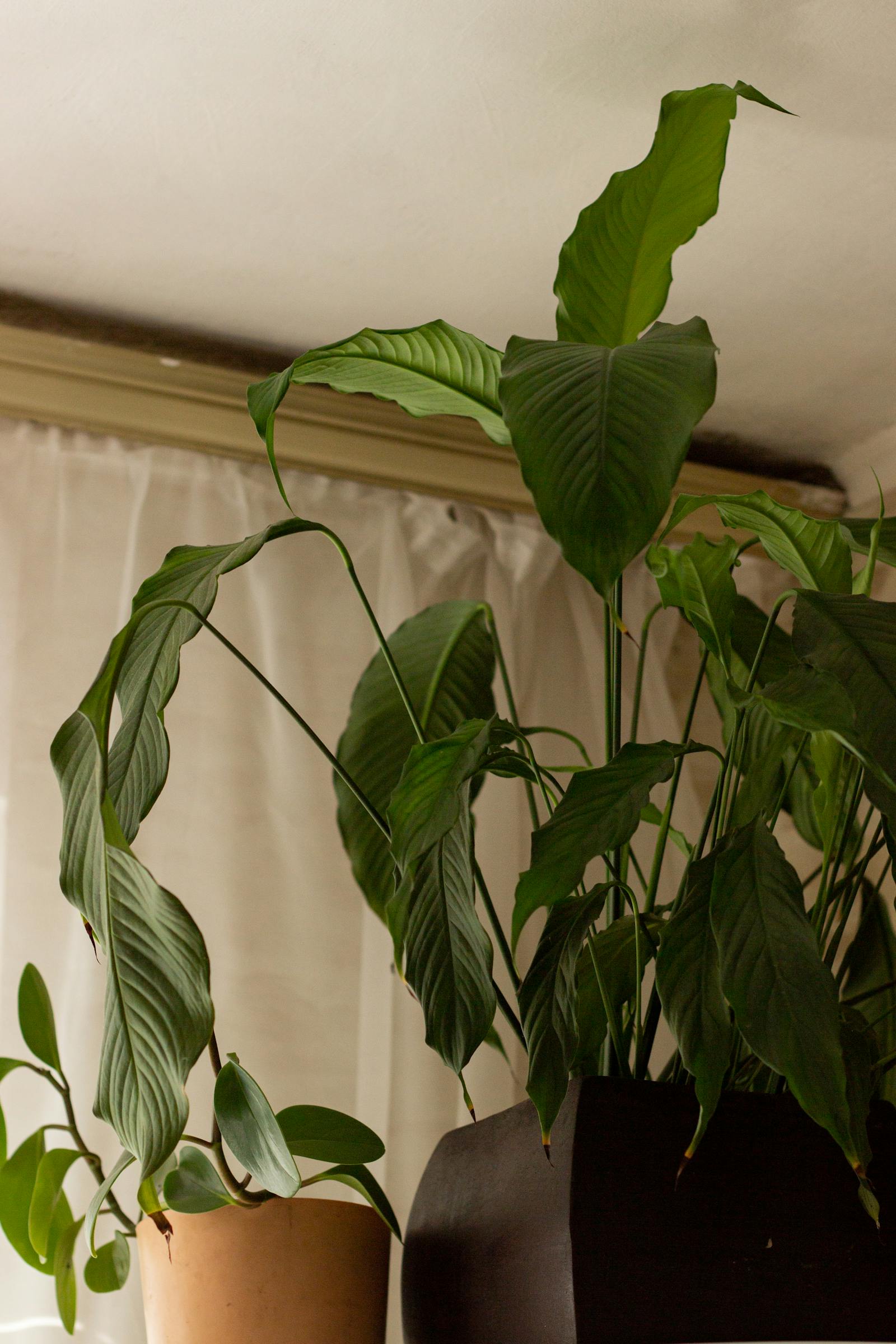
The peace lily (Spathiphyllum) is one of the most forgiving flowering houseplants you can own. It blooms even in low light, tolerates inconsistent watering, and tells you exactly when it needs a drink by drooping dramatically. For beginners, it’s nearly perfect.
Light: less is fine
Peace lilies tolerate a wide light range:
Anúncios
- Bright indirect: ideal. Best flowering.
- Medium light: excellent. Most homes.
- Low light: survives well, fewer flowers.
- Direct sun: avoid. Leaves scorch.
A north or east-facing room works perfectly. Direct sun through a south window can burn leaves.
Watering: the easiest signal in houseplants
Peace lilies dramatically droop when thirsty – leaves go floppy almost overnight – and recover within 1-2 hours of being watered. This is essentially a built-in watering reminder.
The rule:
Anúncios
- Wait for visible drooping OR check that the top inch of soil is dry.
- Water thoroughly until water runs out the drainage holes.
- Empty the saucer after 15-20 minutes.
Frequency is typically every 5-7 days in bright light, every 7-10 days in lower light. Don’t water on schedule – let the plant tell you.
Pot and soil
- Soil: standard potting mix. Nothing special needed.
- Pot: 6-8 inches for small plants, sized up as they mature. Peace lilies actually flower better when slightly root-bound, so don’t over-pot.
- Drainage holes: essential.
Humidity
Peace lilies are tropical and appreciate humidity. They tolerate average indoor humidity (30-40%) but visibly happier above 50%. Brown leaf tips often indicate dry air.
Boost humidity by:
- Placing in a bathroom (excellent peace lily spot).
- Grouping with other plants.
- Running a small humidifier nearby in winter.
- Pebble tray with water beneath the pot.
The blooms
The white “flowers” of a peace lily are actually modified leaves called spathes – they surround the true (much smaller) flowers in the centre. The spathes last 1-2 months before turning green and eventually browning.
To encourage blooming:
- Provide bright indirect light.
- Don’t over-pot (slightly cramped roots trigger flowering).
- Feed with a balanced liquid fertilizer at half strength every 6 weeks during spring/summer.
- Patience – young plants may not flower for the first 1-2 years.
Cut spent blooms at the base with clean scissors.
Common problems
| What you see | Cause | Fix |
|---|---|---|
| Severe drooping; leaves go limp | Thirst (most common) | Water thoroughly; recovers in 1-2 hours |
| Brown leaf tips | Dry air or tap water minerals | Increase humidity; use filtered water |
| Yellow leaves | Usually overwatering | Let soil dry; check drainage |
| Pale or bleached leaves | Too much direct sun | Move to indirect light |
| No flowers despite good care | Insufficient light or pot too big | Brighter spot; smaller pot |
| Brown patches on leaves | Sun scorch or chemical sensitivity | Move out of direct sun; flush soil |
Toxicity
Peace lilies are mildly toxic to cats and dogs – chewing causes mouth irritation and drooling. Not usually serious but uncomfortable. If you have pets that chew plants, place out of reach or choose a pet-safe alternative. See pet-safe houseplants.
Repotting
Repot every 2-3 years or when roots are heavily circling. Sign that it’s needed: water drains straight through the pot without absorbing.
Go up only 1-2 inches in pot diameter. Peace lilies bloom better slightly cramped. See how to repot a plant.
Dividing peace lilies
Mature plants form clumps that can be divided for free new plants:
- Unpot the plant.
- Gently separate clumps by hand or with a sharp knife.
- Each division needs healthy roots + some foliage.
- Pot each division into its own pot with fresh soil.
- Water in and place in moderate light for a couple of weeks.
One mature peace lily can yield 3-4 new plants.
The bottom line
Peace lilies are some of the most beginner-friendly flowering houseplants. They tolerate a wide range of conditions, give you a visible thirst signal, and reward modest care with periodic blooms. For lighting flexibility, see best low-light indoor plants.
The peace lily blooming cycle
Mature peace lilies bloom once or twice a year in spring or summer, with each bloom lasting 4-8 weeks. The “flowers” are actually modified leaves (called spathes) that surround a small spike of true flowers in the centre.
Bloom timing varies by:
- Light exposure: bright indirect light produces more blooms than dim conditions.
- Plant maturity: young plants (under 1 year) often don’t bloom regardless of conditions.
- Pot conditions: slightly root-bound plants bloom better than ones in oversized pots.
- Fertilizer regime: low-phosphorus growing followed by phosphorus boost can trigger blooms.
Encouraging blooms
If your peace lily isn’t flowering and you want it to:
- Provide bright indirect light – east-facing windows are ideal.
- Don’t over-pot. Peace lilies prefer slightly cramped roots.
- In late winter / early spring, switch to a bloom-focused fertilizer (lower nitrogen, higher phosphorus and potassium) at half strength every 4 weeks.
- Maintain consistent moisture – droopy then watered cycles can delay blooming.
- Be patient. Young plants may need 1-2 years to start flowering.
Brown leaf tips on peace lilies
The most common peace lily issue. Causes:
| Cause | Fix |
|---|---|
| Hard or chlorinated tap water | Use filtered, distilled, or aged tap water |
| Dry indoor air | Group plants together; bathroom placement; humidifier |
| Over-fertilizing (salt buildup) | Reduce fertilizer; flush soil with plain water |
| Inconsistent watering | Water when soil is dry an inch down; don’t let plant dry out completely |
Brown tips don’t return to green. Trim them with clean scissors (cut following the leaf shape, leaving a thin sliver of brown) for cosmetic improvement.
Dividing mature peace lilies
Mature peace lilies form clumps that can be divided for free new plants. The process:
- Wait until spring when the plant is entering growth season.
- Unpot the entire plant.
- Gently separate the natural clumps by hand or with a sharp knife.
- Each division needs at least 2-3 leaves and healthy roots.
- Pot each division into its own pot with fresh potting mix.
- Water in gently and place in moderate light for 2-4 weeks.
A large peace lily can yield 3-6 new plants this way. Excellent for gifting or expanding your collection.
Pet safety reminder
Peace lilies are mildly toxic to cats and dogs – chewing causes mouth irritation, drooling, and sometimes vomiting. Reactions are usually not severe but are uncomfortable. If you have pets that chew plants, place out of reach or choose a pet-safe alternative.
For pet-safe options, see best pet-safe houseplants.