Anúncios
Most failed seed sowings I’ve diagnosed for beginners share one cause: the seeds were buried too deep. The instinct is to plant seeds “in” the soil, with proper depth. The reality is that most seeds want a sprinkle of soil over them – not a burial.
The rule
Plant seeds at a depth roughly twice their diameter.
Anúncios
That’s it. Below are some examples to make it concrete.
| Seed | Approx. size | Planting depth |
|---|---|---|
| Lettuce | 1 mm | 2-3 mm (barely covered) |
| Basil | 1-2 mm | 4 mm (1/4 inch sprinkle) |
| Tomato | 2 mm | 4-5 mm (1/4 inch) |
| Pepper | 3 mm | 6 mm (1/4 inch) |
| Marigold | 3-4 mm | 5-8 mm |
| Radish | 3 mm | 1 cm (1/2 inch) |
| Spinach | 4 mm | 1 cm (1/2 inch) |
| Cucumber | 10 mm | 2 cm (3/4-1 inch) |
| Beans | 15 mm | 2-3 cm (1 inch) |
| Peas | 10-15 mm | 2-3 cm (1 inch) |
| Sunflower | 10 mm | 2 cm (1 inch) |
When in doubt, the back of the seed packet has the exact depth for that variety.
Why too deep is so common
Two reasons:
Anúncios
- The seed instructions feel “too shallow” to trust – we want to bury seeds properly.
- We poke holes with a finger, drop in seeds, and the holes are usually deeper than the seed needs.
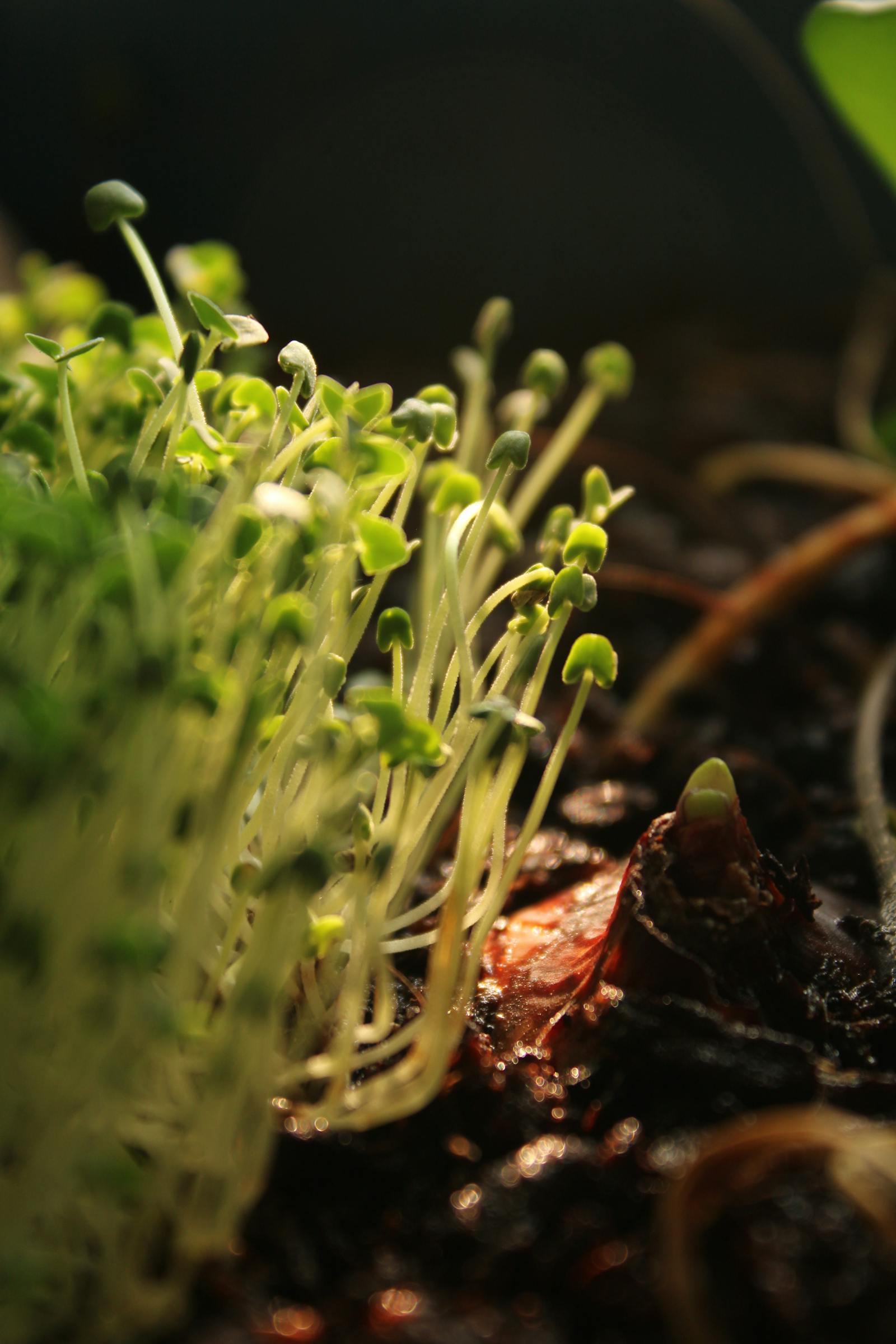
Both result in seeds 2-3x deeper than recommended. The seedling exhausts its energy reserves trying to reach the surface, gets stuck, and dies.
The light exception
Some seeds need light to germinate. Burying them stops the process before it starts. The most common:
- Lettuce
- Celery
- Dill
- Snapdragons
- Foxglove
- Most very small flower seeds (mostly because their tiny reserves can’t push through soil)
For these, surface-sow: scatter seeds on top of moist soil, press gently with your hand or a flat object, mist daily until germination. Don’t cover with soil.
The simple technique
For most seeds:
- Moisten the soil before sowing.
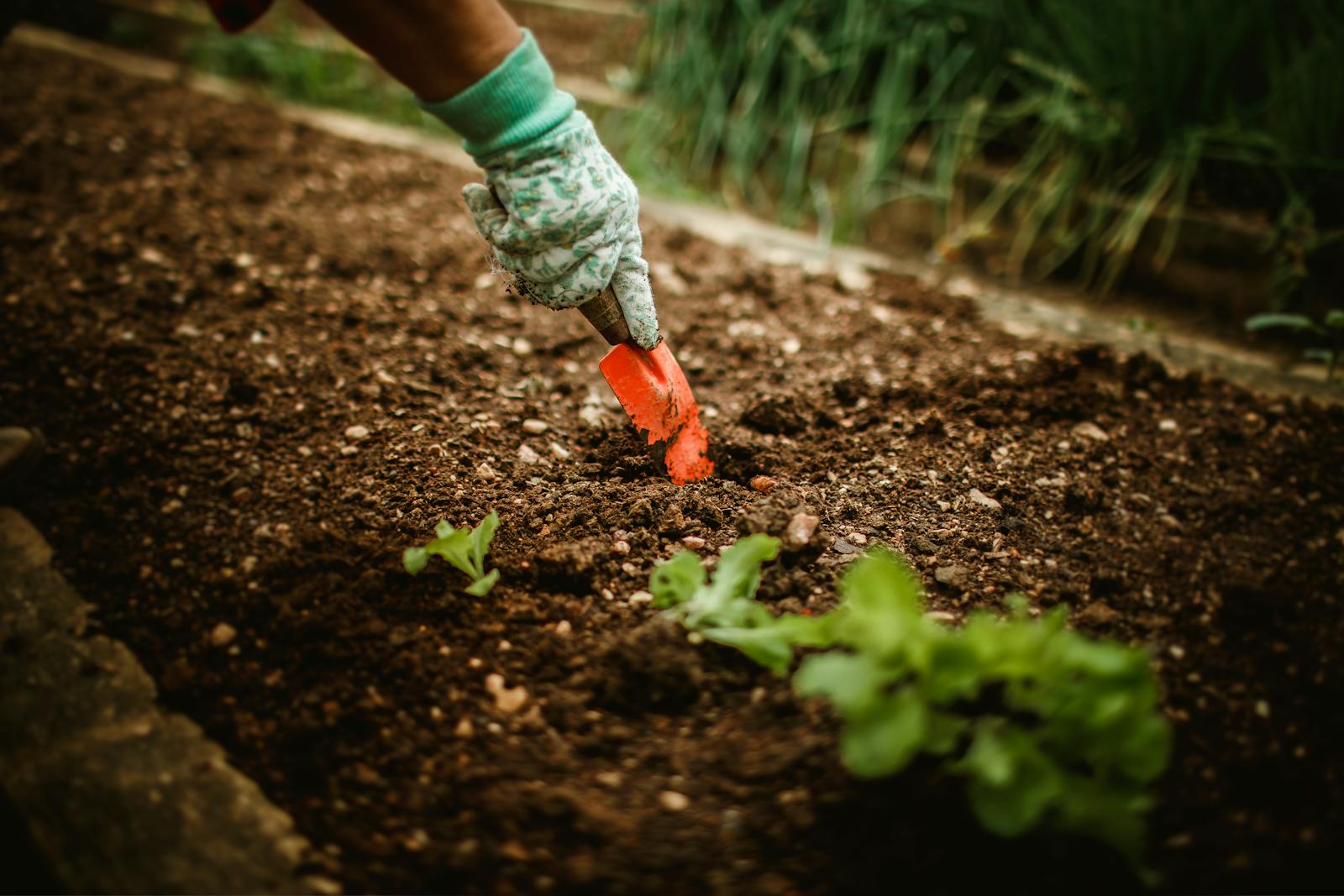
- Make a shallow depression with a fingertip, pencil eraser, or dibber – depth matched to seed size.
- Drop in 1-2 seeds (sow extra to compensate for non-germination).
- Cover lightly with soil and press gently.
- Mist or gently water to settle the soil.
- Don’t let the soil dry out before germination.
Common depth-related mistakes
- Pressing seeds in firmly. Seeds should rest on or just below the surface, not be pushed deep. Light pressure is enough.
- Watering with a strong stream. Heavy water washes small seeds deep or buries them under washed-down soil. Mist or use a watering can with a fine rose.
- Adding mulch over freshly-sown seeds. The mulch acts as extra burial depth. Wait until seedlings are 1-2 inches tall before mulching.
- Sowing in heavy garden soil for seeds. Compacted soil resists seedling emergence. Use light seed-starting mix or general potting mix.
What if I planted too deep?
If seedlings haven’t emerged in twice the expected time:
- Carefully dig up one seed. If it’s started growing but stuck below the surface, you went too deep.
- Resow at the correct depth. Don’t try to rescue the stuck seedlings – they’re usually too weak.
The bottom line
Twice the seed’s diameter. That’s the depth. Trust the rule even when it feels too shallow. For more on seed starting, see how to read a seed packet and why your seeds are not germinating.
The “press, don’t bury” technique for small seeds
For very small seeds (lettuce, basil, snapdragons, most herbs), even the recommended “twice the diameter” is hard to measure accurately. A more practical method:
- Moisten the soil surface lightly.
- Sprinkle seeds onto the surface, spaced as the packet recommends.
- Use a flat object (back of a spoon, small piece of cardboard) to press the seeds gently into the soil.
- Cover with a very thin dusting of fine soil – a couple of millimeters.
- Mist gently to settle.
This achieves the same effect as careful depth measurement without the precision work. The press ensures soil contact (needed for germination); the thin dusting protects from light if needed.
Larger seeds: hole vs press
Beans, peas, sunflowers, and other larger seeds need actual hole-poking. A pencil eraser, your fingertip, or a dibber works. The hole needs to be the right depth – a finger first joint deep is roughly 3 cm, suitable for beans and peas.
Drop the seed in, cover, press the surface lightly to ensure soil contact, then water gently. Strong water streams can wash seeds deeper than intended.
Why timing matters as much as depth
Seeds need three things to germinate: moisture, warmth, and (sometimes) light. Depth affects all three:
- Too deep: cooler temperatures, harder for the seedling to push through.
- Too shallow: surface dries too fast, seeds desiccate before germinating.
- Just right: stable moisture and temperature, seedling emerges within the expected window.
The seed packet’s germination window assumes proper depth. If you’ve sown right and seeds haven’t appeared within the stated time, depth is usually the issue. Dig up one seed to check.
Containers and seed depth
If you’re sowing in a small container, the soil’s depth affects depth flexibility. A seed-starting tray with only 1 inch of soil can’t really accommodate a half-inch-deep planting because there’s not enough soil below the seed for root development. For deeper-planted seeds, use containers at least 4 inches deep. For surface-sown seeds, shallow trays work fine.