Anúncios
Every beginner wants a watering schedule. Once a week. Every other day. Sunday mornings. Something simple, something we can put in our calendar. And every time someone asks me for one, I have to gently push back: there isn’t one. Or rather, there is, but it changes constantly, and the only reliable schedule is “check the soil first.”
That sounds frustrating. It also happens to be the reason most beginner plants die. We water on autopilot, the soil is already damp, the roots sit in moisture they can’t use, and a few weeks later the plant collapses. So before we get to actual numbers, here’s the thing to remember: your fingertip is the watering schedule.
Anúncios
The three things that actually decide when to water
If you understand these, you can water any plant correctly without memorizing a chart.
1. How dry the soil currently is. Push a finger an inch or two into the soil. Damp? Wait. Dry? Water. This single habit replaces every other rule on the internet.
2. The size and material of the pot. Small pots dry out fast. Big pots hold moisture for days. Terracotta breathes and dries the soil quicker than plastic. A 4-inch terracotta pot in summer might need water every day; the same plant in a 10-inch glazed pot might need water every 5 days.
Anúncios
3. The plant itself. Succulents store water and want to dry out for weeks. Ferns want consistent moisture and panic if their soil dries out. Most leafy houseplants are in the middle. Match your watering frequency to the plant, not to a generic rule.
A rough starting guide
| Plant type | Typical interval (indoors) | Test before each water |
|---|---|---|
| Succulents and cacti | Every 10-21 days | Soil completely dry, top to bottom |
| Snake plant, ZZ plant | Every 14-21 days | Soil completely dry |
| Pothos, philodendron | Every 7-10 days | Top inch dry |
| Peace lily, calathea | Every 5-7 days | Top half-inch dry; lily droops if too dry |
| Ferns | Every 3-5 days | Surface barely dry; never fully dry |
| Herbs (basil, parsley) | Every 2-4 days | Top inch dry |
| Vegetables in pots (outdoor) | Daily in hot weather | Top inch dry |
These are starting points. Your home’s humidity, your specific pot, and the season will all shift these by a day or two. Use the table as a sanity check, not a rule.
How to water properly (this matters more than how often)
Once you’ve decided it’s time, the act of watering itself has its own little rules. Most beginners get this wrong without noticing.
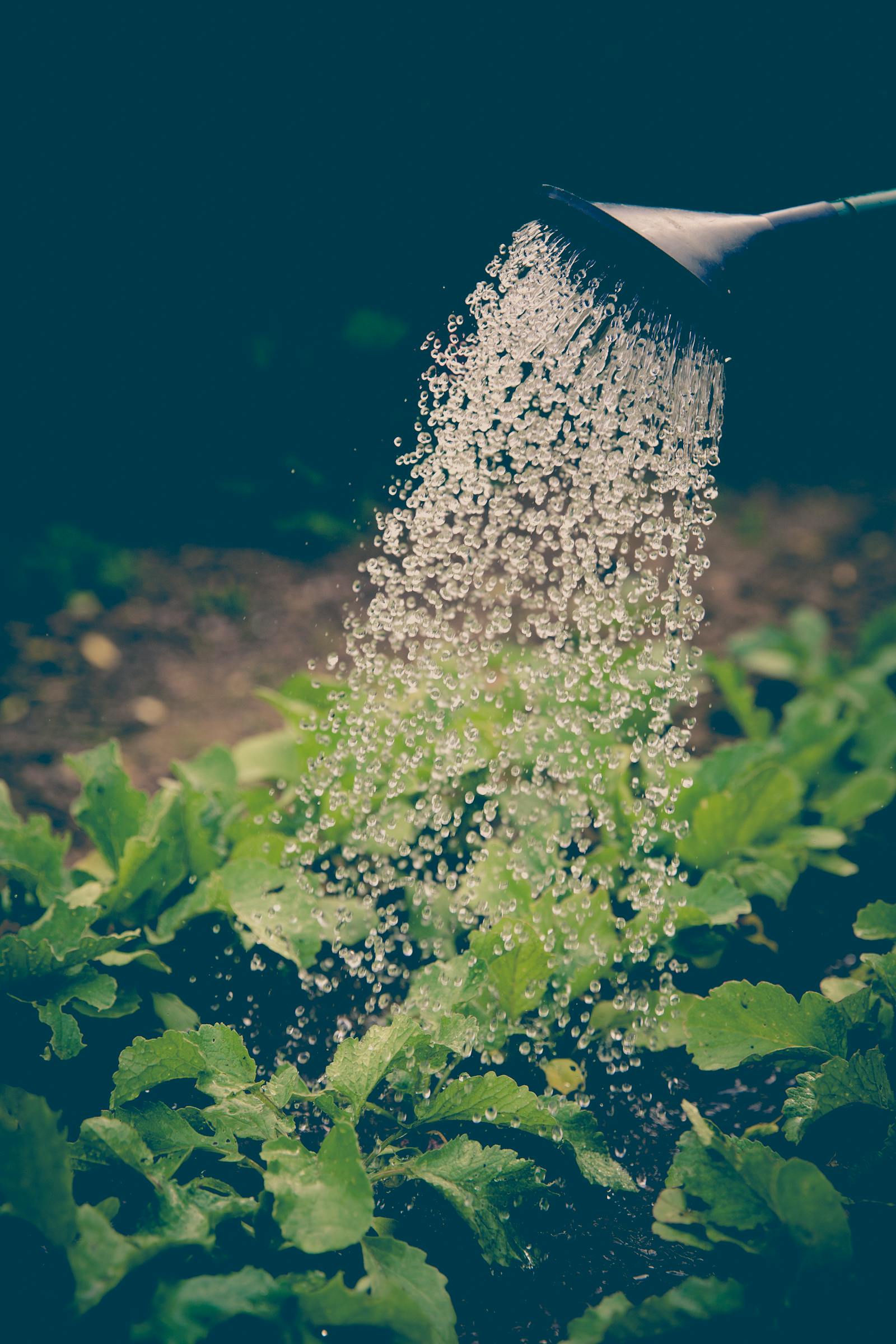
- Water until it runs out the bottom. Not a splash. Not a “make the surface look wet” pour. Enough that 10-20% of what you poured drains out the bottom holes. This soaks the entire root ball.
- Empty the saucer. If a pot sits in a tray of standing water, the soil never dries out and roots rot. Tip excess water away within 30 minutes.
- Water the soil, not the leaves. Wet leaves invite fungal disease (especially in evening or low light). Aim at the soil surface.
- Use room-temperature water. Ice-cold water shocks tropical houseplants. Tap water sat out overnight is fine.
Seasonal shifts to remember
Plants drink less when they’re growing less. In winter, light is weaker and most houseplants slow down or pause growth entirely. They use less water. If you water on the same schedule you used in summer, you’ll overwater.
A rough seasonal adjustment for indoor plants:
- Spring and summer: active growth, more water, possibly fertilize every 4-6 weeks.
- Fall: watering frequency drops by about 30%.
- Winter: half the summer frequency for most houseplants. Many succulents go a full month between waterings.
For outdoor plants in pots, the swing is the opposite extreme: summer can mean daily watering, especially on a hot balcony. Our balcony garden guide covers the wind and sun combinations that drain pots fast.
How to tell if you’re getting it wrong
Watering mistakes show up on the leaves before they show up in the roots. Catch them early.
| What you see | What’s happening | Fix |
|---|---|---|
| Lower leaves yellowing and dropping | Overwatering (most common) | Wait longer between waterings |
| Leaves limp and drooping, soil bone dry | Underwatering | Water thoroughly; the plant usually recovers in hours |
| Brown crispy edges on otherwise healthy leaves | Underwatering or low humidity | Water deeper, more often |
| Yellow leaves with brown tips, mushy stem base | Root rot from chronic overwatering | Unpot, trim rotted roots, repot in fresh soil |
| White crusty buildup on soil surface | Salt buildup from minerals in tap water | Flush the pot thoroughly under running water; reduce fertilizer |
For the full troubleshooting checklist, see our guide to 15 beginner gardening mistakes.
Three habits that replace any schedule
Once you internalize these, you can throw out the calendar.
- Stick your finger in the soil before reaching for the watering can. Every time. It takes two seconds. It saves more plants than anything else.
- Lift the pot. A dry pot is much lighter than a freshly-watered one. After a few weeks you’ll know the weight difference by feel.
- Watch the plant, not the calendar. Drooping pothos? Probably thirsty. Yellowing pothos? Probably too much water. Plants are not subtle – they tell you, you just have to look.
What about self-watering pots?
They’re great for people who travel or forget. The pot has a reservoir at the bottom; the plant draws water up as needed through a wick. Done right, self-watering pots can extend the time between waterings to two or three weeks even for thirsty plants.
Two things to know: not every plant likes them (succulents and cacti hate them – they want dry conditions between waterings, not constant moisture), and you still need to refill the reservoir. They reduce frequency, they don’t eliminate it.
The single rule that beats all of this
If you remember nothing else: when in doubt, wait a day. Almost every plant on earth tolerates being slightly underwatered better than slightly overwatered. Roots can regrow from drought. They can’t regrow from rot.
So the next time you’re staring at a pot trying to decide, ask yourself: is the soil dry to my finger? If not, walk away. Come back tomorrow. You’ll be right more often than wrong, and your plants will live longer than the watering-calendar versions of themselves.
See also: building a real watering schedule rather than guessing.