Anúncios
People ask for watering schedules the way they ask for diet plans – hoping for a precise daily formula. I’d love to give you one. But the honest answer is that a fixed schedule kills more plants than it saves. Here’s the system that actually works.
Why fixed schedules fail
Plants don’t use water on a clock. They use it based on conditions:
Anúncios
- Hot, sunny days: lots of water use.
- Cool, cloudy days: minimal water use.
- Active growth (spring/summer): more water.
- Dormancy (winter): much less water.
- Newly potted: gentle watering needed.
- Established: deep, less frequent watering.
A “water every Tuesday” rule ignores all of this. The soil might be bone dry on Monday or sopping wet on Tuesday – depending on the week.
The system that works: check, water, log
Step 1: Check the soil
Push a finger 1-2 inches into the soil. Damp = wait. Dry = water.
Different plants want different “dry”:
Anúncios
- Succulents and snake plants: bone dry, top to bottom.
- Most houseplants: top inch dry.
- Ferns and consistent-moisture plants: surface barely dry.
- Outdoor containers in summer: top inch dry (check daily).
Step 2: Water properly when you do
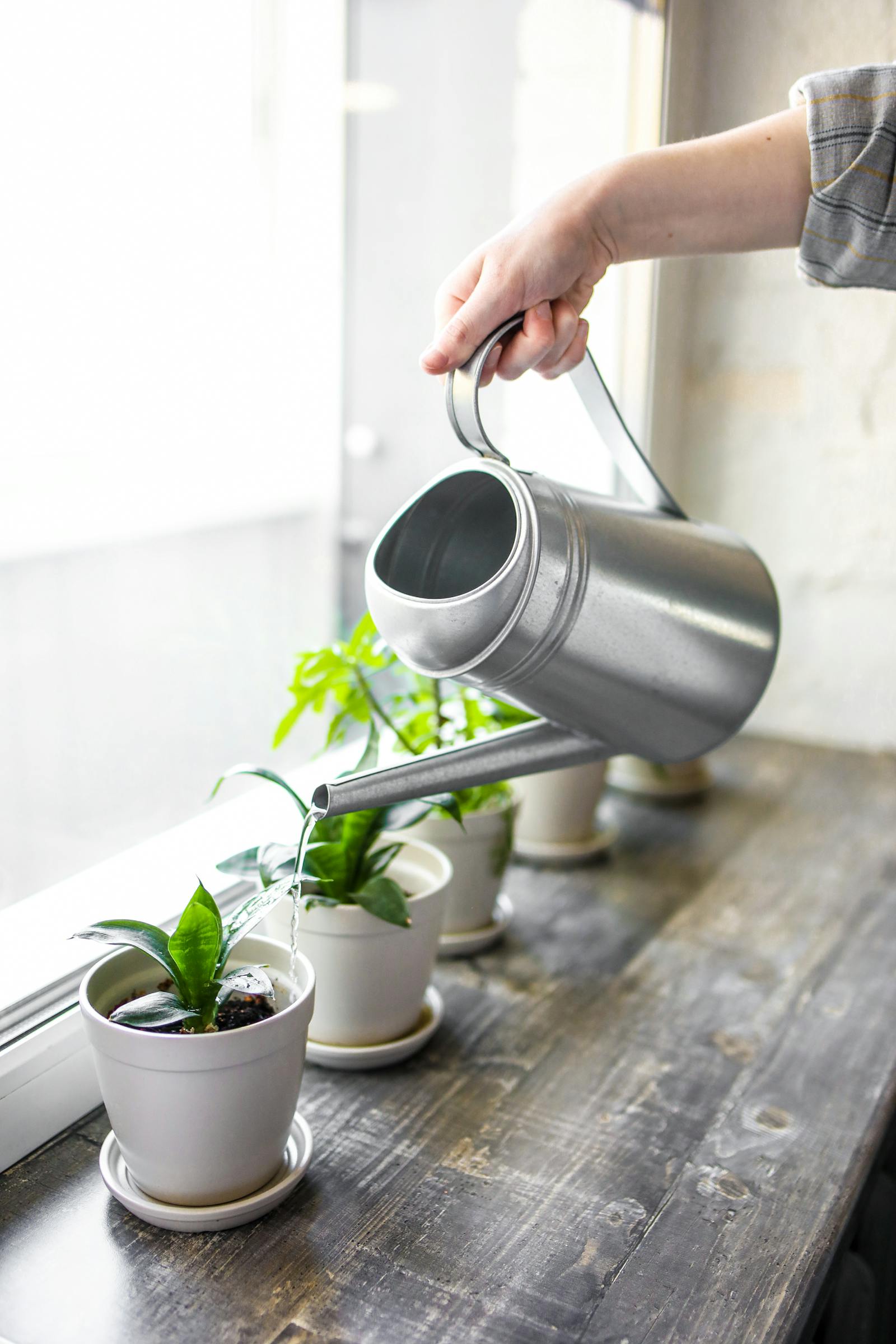
Water deeply until water runs out the drainage holes. Empty the saucer after 15-20 minutes. Don’t water a little bit daily – water thoroughly when needed.
Step 3: Log when you water
This is the missing piece for most beginners. Track when you actually watered, not when you “should have.” After a month or two, you have your real schedule based on observed patterns.
Options for logging:
- A notebook by your plants.
- A note on your phone, dated.
- Plant care app (Planta, Greg, Vera).
- Small calendar stickers next to each pot.
Sample observed schedules
| Plant + conditions | Observed watering frequency |
|---|---|
| Snake plant, bedroom (low light) | Every 21-28 days |
| Pothos, kitchen (medium light) | Every 7-10 days |
| Basil, sunny windowsill | Every 3-4 days |
| Cherry tomato in 12″ pot, sunny balcony, summer | Daily |
| Mint, partial shade outdoor, summer | Every 2-3 days |
| Peace lily, north-facing room | Every 6-8 days (droops to remind you) |
Your numbers will differ slightly. That’s fine – your home isn’t a controlled environment.
Seasonal adjustments
- Spring (March-May): increase watering as growth picks up.
- Summer (June-August): peak frequency, especially outdoors.
- Fall (September-November): gradually reduce as growth slows.
- Winter (December-February): cut by 30-50% for most houseplants; some succulents barely water at all.
What if I travel?
The single best move: water deeply before you leave. Most houseplants are fine for 5-10 days. For longer absences:
- Self-watering planters or wick systems.
- Move plants away from direct sun (slows water loss).
- A plant sitter for finicky species.
- Group pots in a sink with shallow water if leaving in summer.
The bottom line
A real watering schedule is the habit of checking soil before watering, paired with light observation of your specific plants in your specific home. Within a month or two you’ll know which plants need water on similar cycles and can plan accordingly. For more on diagnostic signs, see overwatering vs underwatering signs and how often to water houseplants by room.
Building your first observation log
For the first month with a new plant, write down two things each time you water: the date and the soil condition you found (dry, slightly damp, wet). After four to six entries you’ll see a pattern – this is your actual personal watering rhythm for that plant in your home.
A simple format that works:
| Date | Soil condition | Action | Notes |
|---|---|---|---|
| Mar 1 | Top inch dry | Watered deeply | Sunny week, hot |
| Mar 6 | Still damp | Skipped | Rainy, overcast |
| Mar 9 | Dry | Watered deeply | Back to sunny |
The “Notes” column is the secret – weather, room changes, recent repotting all affect water use. After a month you can predict watering needs reliably.
What changes the rhythm
Even a stable plant in a stable home has watering needs that shift with:
- Season – shorter days in winter mean less water use.
- Heating and air conditioning – both dry indoor air faster than natural conditions.
- New growth – actively growing plants use more water than dormant ones.
- Pot age – older soil holds less water than fresh mix.
- Plant age – mature plants with full root systems drink more than young ones.
The schedule you build in March won’t work unchanged in November. Expect to recalibrate at each season change. For winter-specific watering shifts, see winter houseplant care.
The shared-plant problem
Multiple plants in one home don’t usually share a schedule perfectly. A snake plant on a windowsill might need water every 3 weeks while a fern on the same windowsill needs water every 4 days. Trying to “water everyone on the same day” is how houseplants die.
Group plants in your head by similar needs (succulents together, leafy houseplants together, ferns together) but check each one individually before watering. The soil-check habit takes seconds and accounts for differences in pot size, light exposure, and species without you having to memorize 12 schedules.