Anúncios
Most balcony vegetable guides promise too much. A “tomato jungle in 30 square feet.” A “year-round salad garden in a corner.” A “spice rack in containers.” Real balcony vegetable gardening is more modest than that – but more genuinely useful than people expect. With realistic expectations and the right crops, you can produce regular fresh harvests through summer with a few pots.
Here’s the honest plan.
Anúncios
Set realistic expectations
What you actually get from a small balcony vegetable garden:
- Continuous lettuce and salad greens through spring/fall (a real meaningful supply)
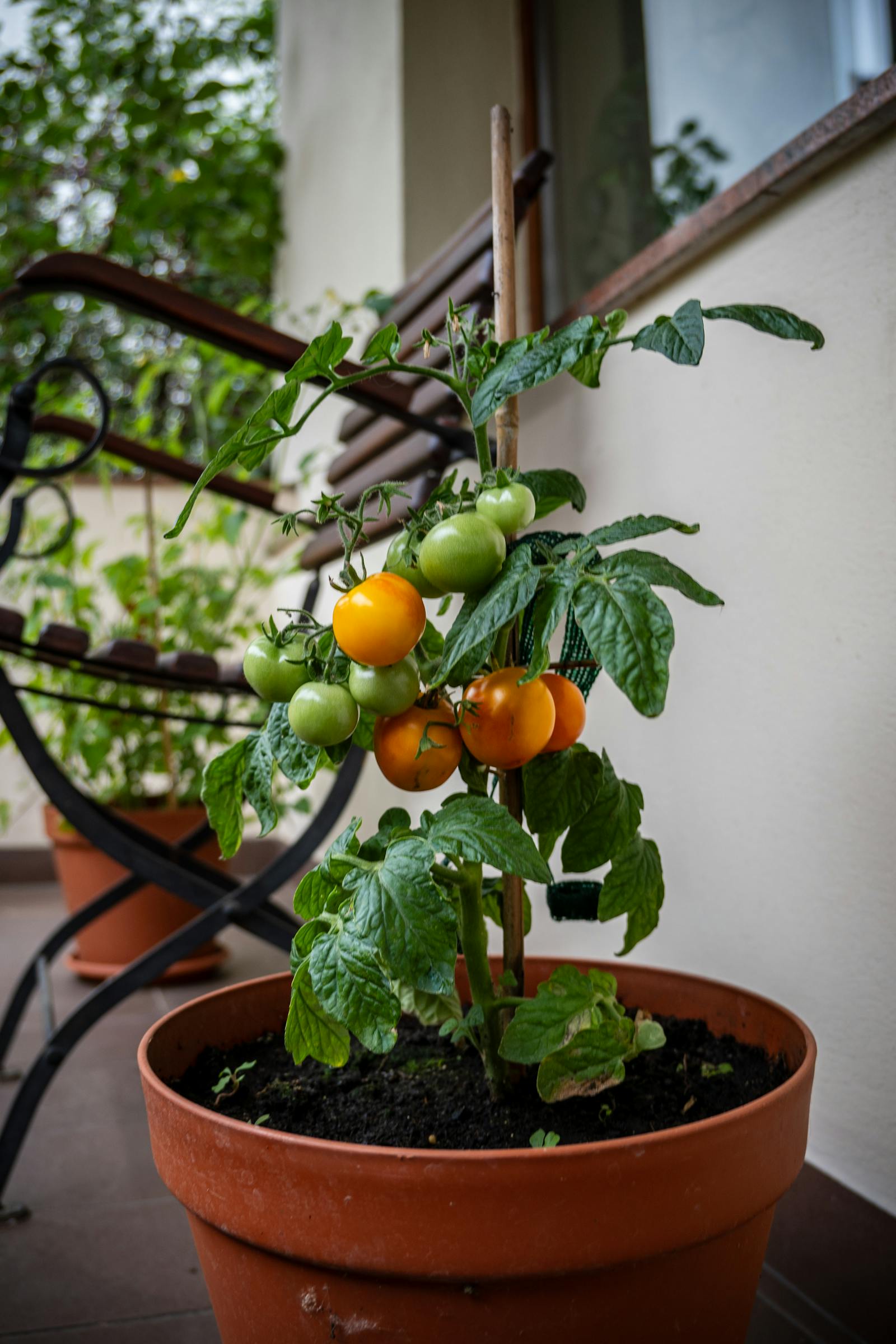
- 2-3 cherry tomato plants producing 1-2 lbs each over a summer
- A handful of fresh peppers or chillies per plant
- Steady herbs through the growing season
- Occasional radishes, bush beans, or fast crops
What you don’t get:
- A meaningful staple crop. You won’t grow your potatoes for the year.
- Year-round growing without indoor grow lights.
- The same volumes as in-ground gardens.
Balcony vegetables are about quality and freshness rather than volume. A tomato off your own plant tastes better than any supermarket one – that’s the real return.
Anúncios
The crops that actually work
Tier 1: Easiest and most productive
- Cherry tomatoes (compact varieties). ‘Tumbler’, ‘Tiny Tim’, or ‘Patio’. One plant in a 12-inch pot can yield 50-100+ small tomatoes over a summer.
- Salad greens / lettuce. A window box with succession-sown lettuce gives you regular fresh salad. See growing lettuce in containers.
- Radishes. Direct sow from seed, ready in 25-30 days. Great for kids and beginners.
- Bush beans. Compact, prolific, easy from seed. 8-10 inch pot each.
- Spinach and arugula. Cool-weather greens, fast from seed.
Tier 2: Workable with attention
- Bush peppers and chillies. Need full sun and warmth. 10-inch pot.
- Strawberries. Productive in hanging baskets or strawberry pots. Replace plants every 2-3 years.
- Bush cucumbers. Compact varieties exist; need lots of water.
- Patio eggplant. Compact varieties (‘Patio Baby’) in a 10-12 inch pot.
- Carrots (short varieties). Round or stubby varieties like ‘Paris Market’ grow in 8-10 inch deep pots.
- Beetroot. Surprisingly easy in 8-10 inch pots.
Tier 3: Skip or accept limited results
- Full-size tomatoes (too tall, too heavy for most balconies)
- Corn (needs to be planted in blocks for pollination; produces little per square foot)
- Melons and squash (sprawling, take huge containers)
- Onions and leeks (long growing season, poor space efficiency)
- Potatoes (possible in grow bags but bulky)
What you need: pots, soil, and basics
| Crop | Pot size | Sun needed |
|---|---|---|
| Cherry tomato (compact) | 12-inch minimum, deeper better | 6+ hours |
| Pepper / chilli | 10-inch minimum | 6+ hours |
| Lettuce / greens | 4-6 inch deep window box | 4-5 hours (cooler is better) |
| Radishes | 6-8 inch wide pot | 4-6 hours |
| Bush beans | 8-10 inch pot | 5-6 hours |
| Strawberries | 6 inch per plant or strawberry pot | 6+ hours |
| Carrots (short) | 8-10 inch deep pot | 4-6 hours |
Soil: bagged general-purpose potting mix. Add a handful of compost per pot at planting if available. See potting soil vs garden soil for the why.
Drainage holes: non-negotiable. See why pots need drainage.
Realistic spring-to-fall timeline
A small balcony vegetable garden in roughly the right hemisphere:
- Early spring: sow lettuce, radishes, spinach directly into pots.
- Mid-spring (after last frost): buy and plant tomato, pepper, and basil seedlings. Sow bush beans direct.
- Late spring: first lettuce harvests. Strawberries begin producing.
- Early summer: first tomato fruits. Continuous beans. Lettuce slows in heat – sow more in semi-shade or pause until fall.
- Midsummer: peak tomato/pepper/strawberry harvests. Daily watering. Pinch herbs to prevent flowering.
- Late summer / early fall: re-sow lettuce, radishes, spinach for fall harvest.
- First frost: end of tender crops. Cover or move tender perennials inside.
Watering vegetables in containers
Container vegetables in summer can need daily watering, sometimes twice daily. Strategies that reduce the burden:
- Bigger pots. 12-inch pots dry far slower than 8-inch ones.
- Self-watering containers. The reservoir buffers wild swings. Excellent for tomatoes and peppers.
- Mulch the soil surface. A 1-inch layer of pebbles or bark slows evaporation.
- Group pots together. Microclimate effect; slower drying.
- Water early morning. See best time of day to water.
For more on watering generally, see how often to water plants.
Fertilizing
Container vegetables run out of nutrients faster than in-ground ones. A balanced liquid fertilizer at half-strength every 2-3 weeks keeps plants productive. Tomatoes and peppers especially benefit from extra potassium-rich feeds once they start flowering.
Don’t over-fertilize: too much nitrogen produces lots of leaves and few fruits. Less is more.
Common balcony vegetable problems
- Blossom end rot on tomatoes (black/brown sunken patches on the bottom of fruit): calcium deficiency, usually triggered by inconsistent watering. Water more steadily.
- Lots of leaves, no fruit: too much nitrogen, not enough sun, or too few pollinators. Reduce fertilizer; ensure sun; gently shake flowering plants to assist pollination.
- Aphids on new growth: common, easily managed by spraying with water or insecticidal soap.
- Plants growing tall and weak: not enough sun. Move to a sunnier spot or switch to shade-tolerant crops.
For more diagnostics, see 15 beginner gardening mistakes.
The bottom line
A balcony vegetable garden won’t replace a grocery store, but it can absolutely produce real food and a serious upgrade in flavour. Cherry tomatoes, salad greens, peppers, herbs, and quick crops like radishes are the workhorses. Start with 2-3 crops, succeed with those for a season, then expand.
The reward isn’t volume – it’s the difference in taste between supermarket and home-grown, the satisfaction of cooking with ingredients you grew, and the steady weekly improvements in your skill. That alone makes balcony vegetable gardening worth it.
For the broader balcony setup, see how to start a balcony garden. For the herb-focused option, see growing herbs on a balcony.
Realistic balcony vegetable yields
Setting expectations clearly so the project feels successful:
| Crop | Realistic yield per plant per season |
|---|---|
| Cherry tomato (compact variety) | 50-100+ fruit (1-2 lbs) |
| Bush pepper | 10-25 fruit |
| Bush bean | 1-2 lbs over season |
| Lettuce (cut-and-come-again) | 5-10 cuttings |
| Radishes | 15-30 roots per square foot |
| Strawberry (day-neutral) | 0.5-1 lb per plant |
| Cucumber (bush) | 5-15 fruit |
These aren’t supermarket replacements but they’re meaningful supplements – regular salad ingredients, occasional cooking additions, real flavour upgrades.
The succession planting strategy for vegetables
Same principle as for radishes – don’t plant everything at once:
- Sow lettuce every 2-3 weeks for continuous supply.
- Plant beans in 2-3 batches with 2-week gaps.
- Pull spring crops as they bolt, replant with summer-tolerant alternatives.
- Restart cool-season crops in late summer for autumn harvest.
This way the balcony produces continuously rather than feast-or-famine.