Anúncios
A potted plant that wilts once and recovers after watering is normal. A potted plant that keeps wilting – even though you’re watering it – is telling you something specific is wrong. Here’s the diagnostic.
The five likely causes
| Pattern | Cause |
|---|---|
| Wilts daily, recovers overnight | Pot too small / rootbound |
| Wilts in afternoon heat, recovers evening | Heat stress (not really a problem) |
| Wilts even when soil is wet | Root rot from overwatering |
| Wilts shortly after each watering | Hydrophobic dry soil |
| Wilts and doesn’t recover after watering | Severe root damage |
1. Pot too small or rootbound
The plant has outgrown its pot. Roots circle the inside, leaving no room for soil to hold water. The pot dries out within hours, the plant wilts.
Anúncios
Signs: water runs straight through the pot when you water. Plant looks too big for the container. Roots visible at drainage holes.
Fix: repot into a pot 1-2 inches larger. See how to repot a plant.
2. Heat stress (not actually a problem)
Some plants wilt during the hottest part of summer afternoons even when adequately watered. The wilting protects them by reducing surface area for water loss.
Anúncios
Signs: wilts mid-afternoon, recovers fully by evening, soil is still moist.
Fix: none needed. Move to slightly shadier location during heatwaves. Don’t water just because the plant looks wilted – check the soil first.
3. Root rot from overwatering
Counterintuitively, severely overwatered plants wilt because their rotted roots can’t absorb water – even when soil is saturated. Looks like thirst, but the cause is the opposite.
Signs: soil is constantly wet or sour-smelling. Lower leaves yellow. Stems soft at the base.
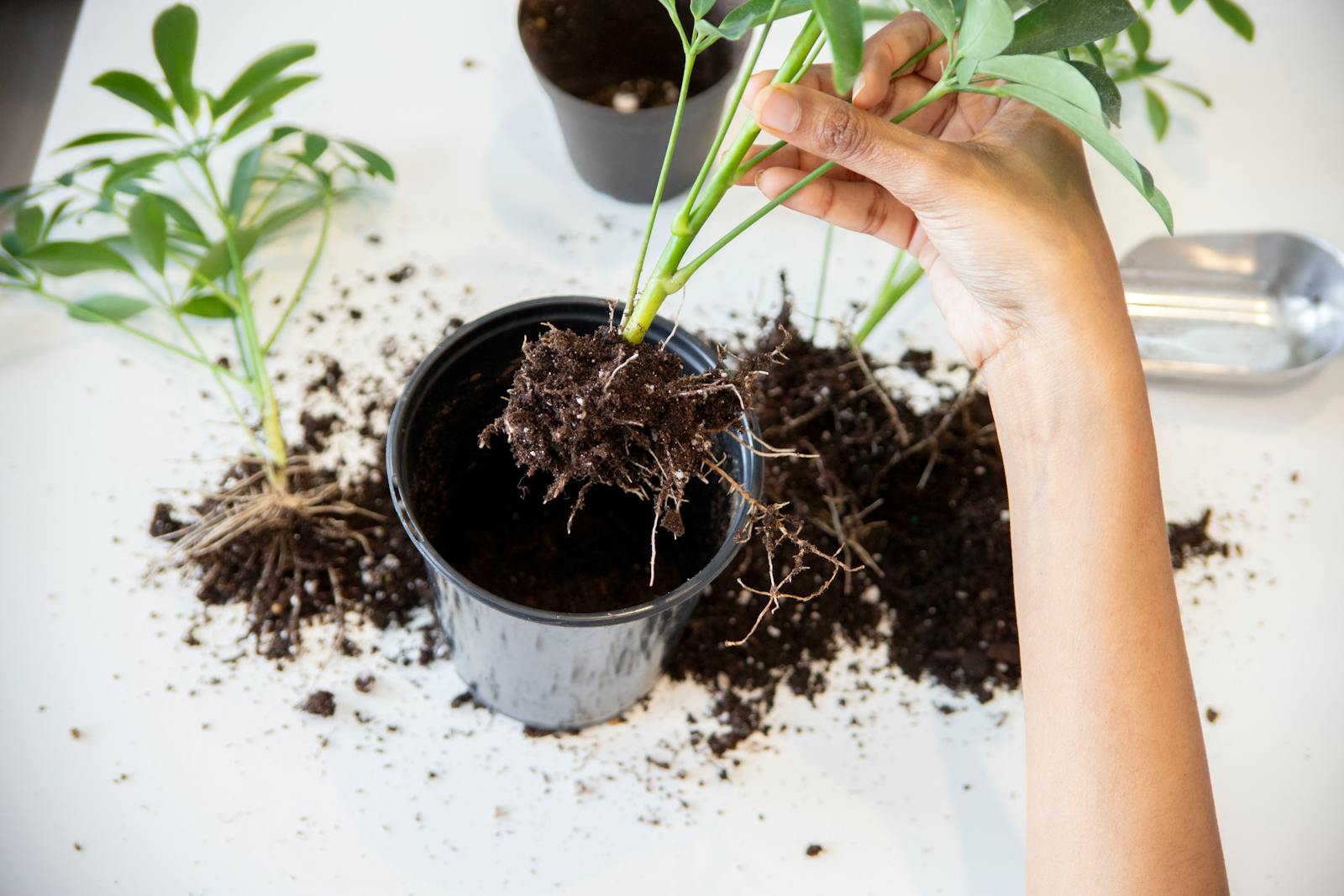
Fix: stop watering. Unpot and check roots – trim away rotted black or mushy sections. Repot in fresh dry soil. See how to revive a dying plant.
4. Hydrophobic dry soil
Soil that’s been bone-dry for a while can become hydrophobic – it repels water rather than absorbing it. You water, water runs straight through and out the drainage holes, but the soil itself stays dry. The plant wilts because the water never reached the roots.
Signs: water disappears within seconds. Soil pulls away from the pot edges. Plant wilts shortly after watering.
Fix: bottom-soak. Place the pot in a basin of water for 20-30 minutes. The dry soil slowly rehydrates through the drainage holes. After rehydration, normal top-watering works again.
5. Severe root damage
Root damage from disease, pests, transplant shock, or fertilizer burn limits the plant’s ability to absorb water. Wilting persists even with proper watering.
Signs: plant doesn’t recover after watering. Other symptoms – yellowing, leaf drop, slow growth.
Fix: identify the underlying cause. Check roots for rot or pests. Stop fertilizing. In severe cases, take cuttings to propagate while trying to save the original plant.
Pot size and wilting
Small pots dry out fast even with healthy plants. Some context:
- 6-inch pot in full summer sun may need water twice daily.
- 12-inch pot needs water every 2-3 days.
- If a plant is repeatedly drying out before the next planned watering, the pot is too small for the location.
The fix isn’t watering more – it’s a bigger pot.
Pot material and wilting
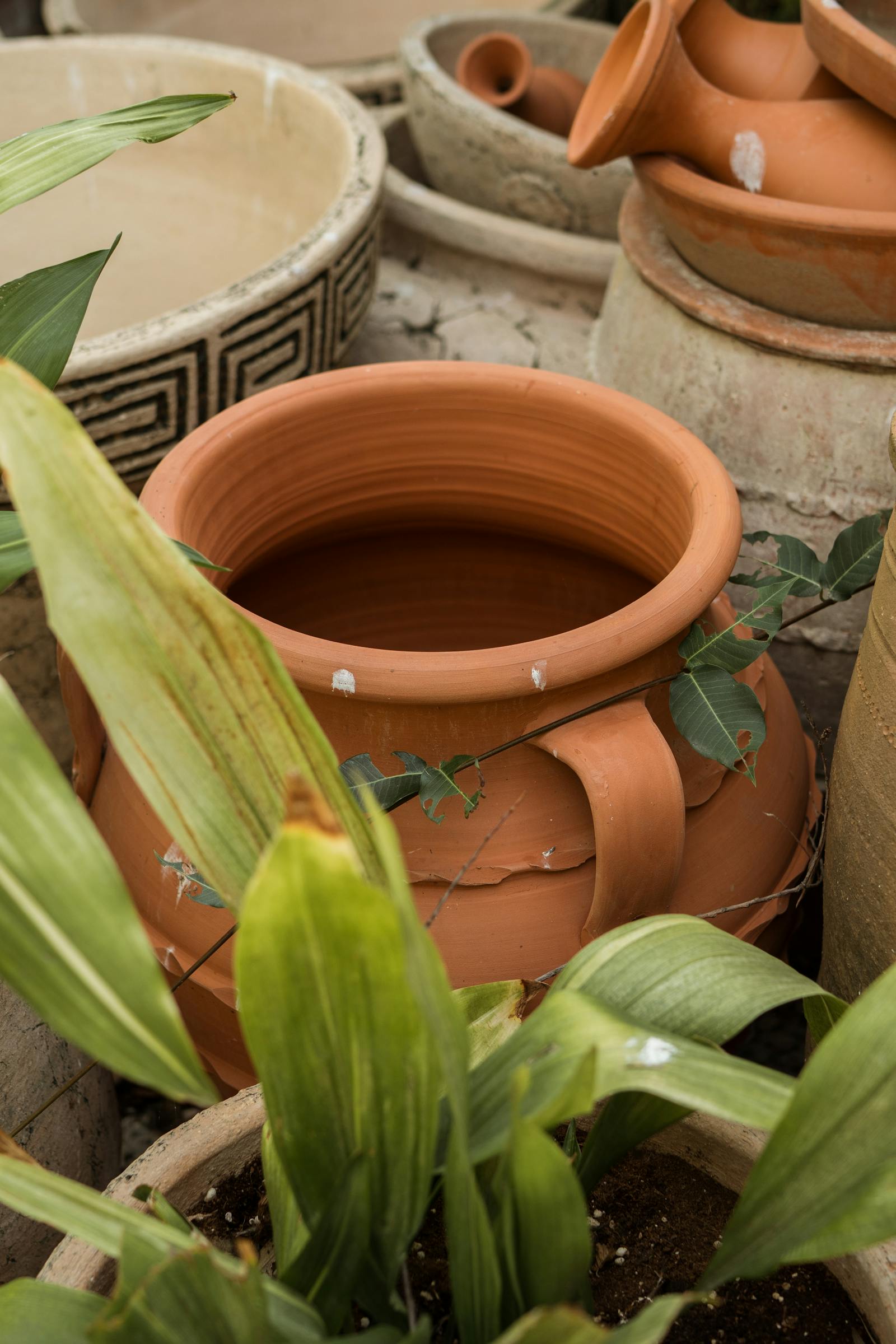
- Terracotta dries faster than plastic (breathing through the walls).
- Fabric grow bags dry fastest of all.
- Self-watering pots dry slowest.
For plants that wilt repeatedly in summer heat, switching from terracotta to a self-watering container often solves it.
Seasonal wilting patterns
- Spring: rare. Plants are growing into their pots; watering needs increase.
- Summer: most common. Heat + sun + small pot = wilting.
- Fall: wilting often signals overwatering as plants slow down.
- Winter: rare unless severe under-watering or extreme cold.
The bottom line
Repeated wilting is a specific signal, not random distress. Match the pattern to one of the five causes and apply the matching fix. The most common: pot too small, hydrophobic soil, or root rot from overwatering. None of them is solved by more watering on the existing pot.
For broader watering troubleshooting, see overwatering vs underwatering signs and how often to water plants.
The diagnostic flow chart
When a plant wilts, work through this sequence:
- Feel the soil. Wet = overwatering issue (skip to that section). Dry = continue.
- Lift the pot. Very light = drying out fast; probably rootbound or hydrophobic soil. Normal weight = continue.
- Check the time of day. Mid-afternoon during hot weather = heat stress; usually recovers in evening.
- Look at the leaves. Crispy edges or curling = chronic underwatering. Soft and limp = either acute thirst or root rot.
- Check recent changes. New location, repot, new fertilizer – any of these can trigger wilting.
The hydrophobic soil rescue
Soil that’s been very dry for a while becomes hydrophobic – water beads off the surface rather than absorbing. Signs:
- Water runs through the pot within seconds without absorbing.
- Soil pulls away from the pot edges.
- Plant wilts even though you just watered.
The fix: bottom-soaking. Set the pot in a basin of water for 20-30 minutes. The hydrophobic soil slowly rehydrates through capillary action from below. After this rescue, the plant should perk up within hours.
The repeating wilt problem
A plant that wilts every few days even with consistent care has a deeper issue. Common causes:
- Pot too small: roots fill the pot, no soil left to hold water, pot dries within hours of watering. Repot 1-2 sizes up.
- Soil too compacted: old potting mix loses structure. Refresh by repotting or topping up with fresh mix.
- Drainage too aggressive: very fast-draining mix doesn’t retain enough water. Switch to a slower-draining mix or self-watering pot.
- Plant exposed to too much sun: heat-stressed plants wilt repeatedly. Move to partial shade.
When wilting is the plant’s normal behaviour
A few plants droop dramatically as their natural response – it’s not a problem if they recover quickly:
- Peace lily: collapses fully when thirsty, recovers in 1-2 hours after watering.
- Pothos: droops as a “water me” signal, recovers within hours.
- Tomato leaves in midday heat: curl upward to reduce sun exposure, flatten back at evening.
- Cucumber and squash leaves: similar heat response, evening recovery.
For these plants, the wilting itself isn’t damaging – it’s just the plant’s signal or temporary response. Address the underlying cause but don’t panic.
When the plant doesn’t recover
If a wilting plant doesn’t perk up within 24 hours of careful watering, the issue is probably root damage. Options:
- Unpot and inspect roots.
- Trim any black or mushy roots.
- Repot in fresh dry soil.
- Don’t water for 3-5 days.
For severe cases, see how to revive a dying plant for the full revival protocol.