Anúncios
Basil should be one of the easiest plants in the world to grow. It germinates fast, smells incredible, and produces enough leaves for a year of pesto from one pot. And yet – I’ve watched people kill more basil plants than any other herb. Including me, at least three times, in increasingly creative ways.
The good news is that basil isn’t actually hard. The plants from grocery stores are just set up to fail (more on that), and a few small habits – pinching, sun, watering – make the difference between a sad sprout and a bushy plant that lasts all summer.
Anúncios
This guide is everything you need to keep basil alive and productive at home. From a windowsill. From a balcony. From a small kitchen pot. Even from a slightly underwatering, over-watering, generally overscheduled person.
What basil actually wants

If you remember nothing else from this guide, remember basil’s four favourite things:
- Sun. At least 5-6 hours of direct sun a day. More is better.
- Warmth. Basil hates cold. Below 50°F (10°C) it sulks; below 40°F (4°C) it dies.
- Well-drained soil. Roots in soggy soil rot fast.
- Consistent (but not constant) moisture. Water when the top of the soil is dry, then water deeply.
Basil does not want: a dim corner, an under-sized pot, soaking soil, or cold drafts. That covers most of the ways people accidentally kill it.
Anúncios
Starting from seed or buying a plant?
Both work. Each has its quirks.
Starting from seed is cheap, satisfying, and gives you more plants than you’ll know what to do with. A single seed packet is enough for several pots. Seeds germinate in about 5-10 days at warm room temperature and are usually ready for their final pot in 4-6 weeks.
Buying a plant is faster but trickier than people realize. The basil pots sold at grocery stores are deliberately overcrowded – there can be 20+ seedlings packed into a single tiny pot to make it look bushy on the shelf. Each individual plant is starved for root space, and they collectively die within weeks of you taking them home unless you separate them.
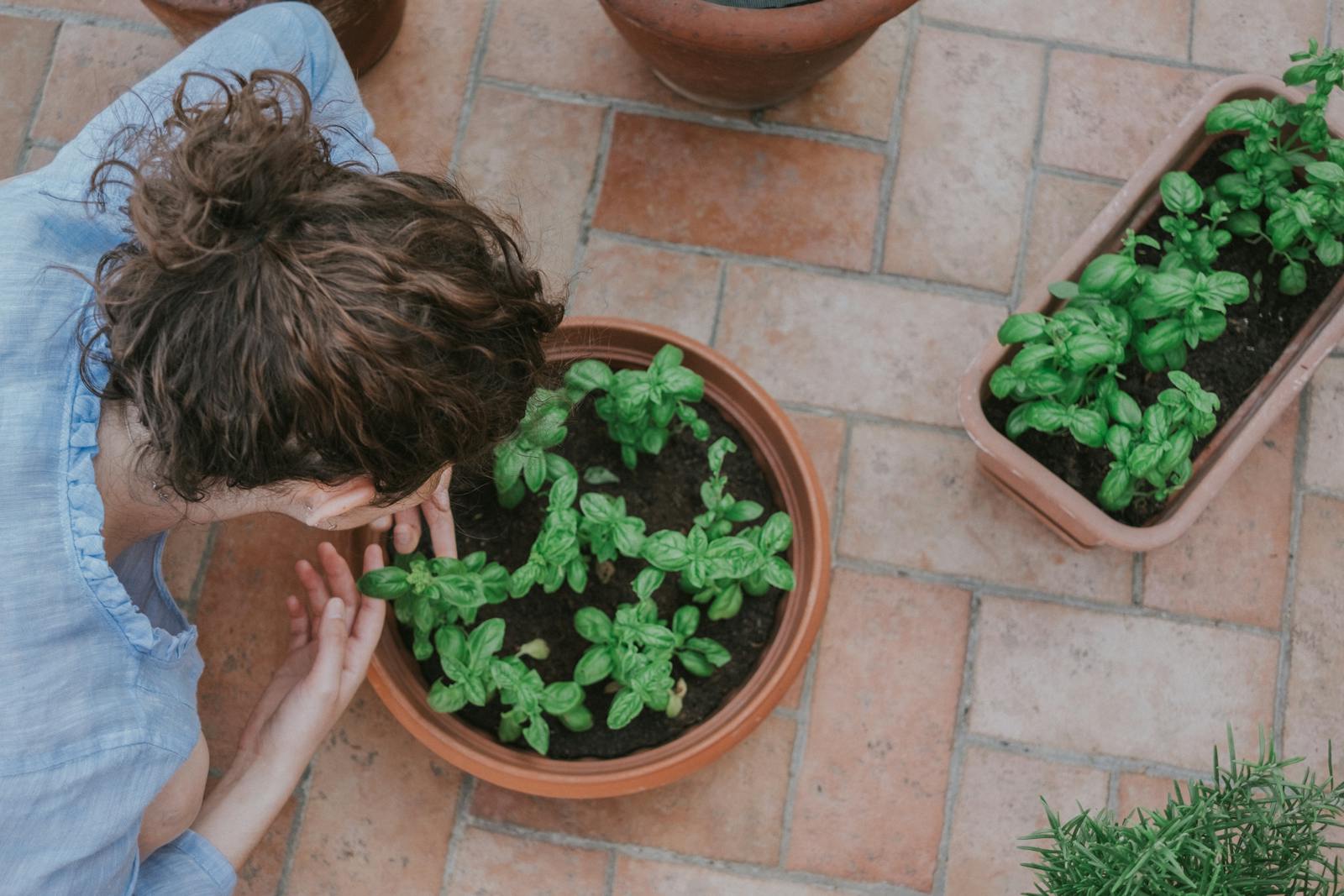
If you do buy a store basil plant, plan to gently divide it into smaller groups (3-4 seedlings per pot) and repot them into proper containers. Don’t try to keep them all in that original tiny pot – it’s the most common reason store basil dies.
How to start basil from seed (the easy way)
- Fill a small pot or seed tray with seed-starting mix (or general potting mix). See our potting soil vs garden soil guide for what to use.
- Sprinkle 4-5 seeds onto the surface and cover with about ¼ inch (5 mm) of soil. Basil seeds need a tiny bit of soil over them, not deep burial.
- Mist with water until the soil is damp but not soggy.
- Place somewhere warm – a windowsill that gets some sun, on top of the fridge, anywhere that stays around 70-75°F (21-24°C).
- Keep the soil consistently damp until the seedlings appear (usually 5-10 days).
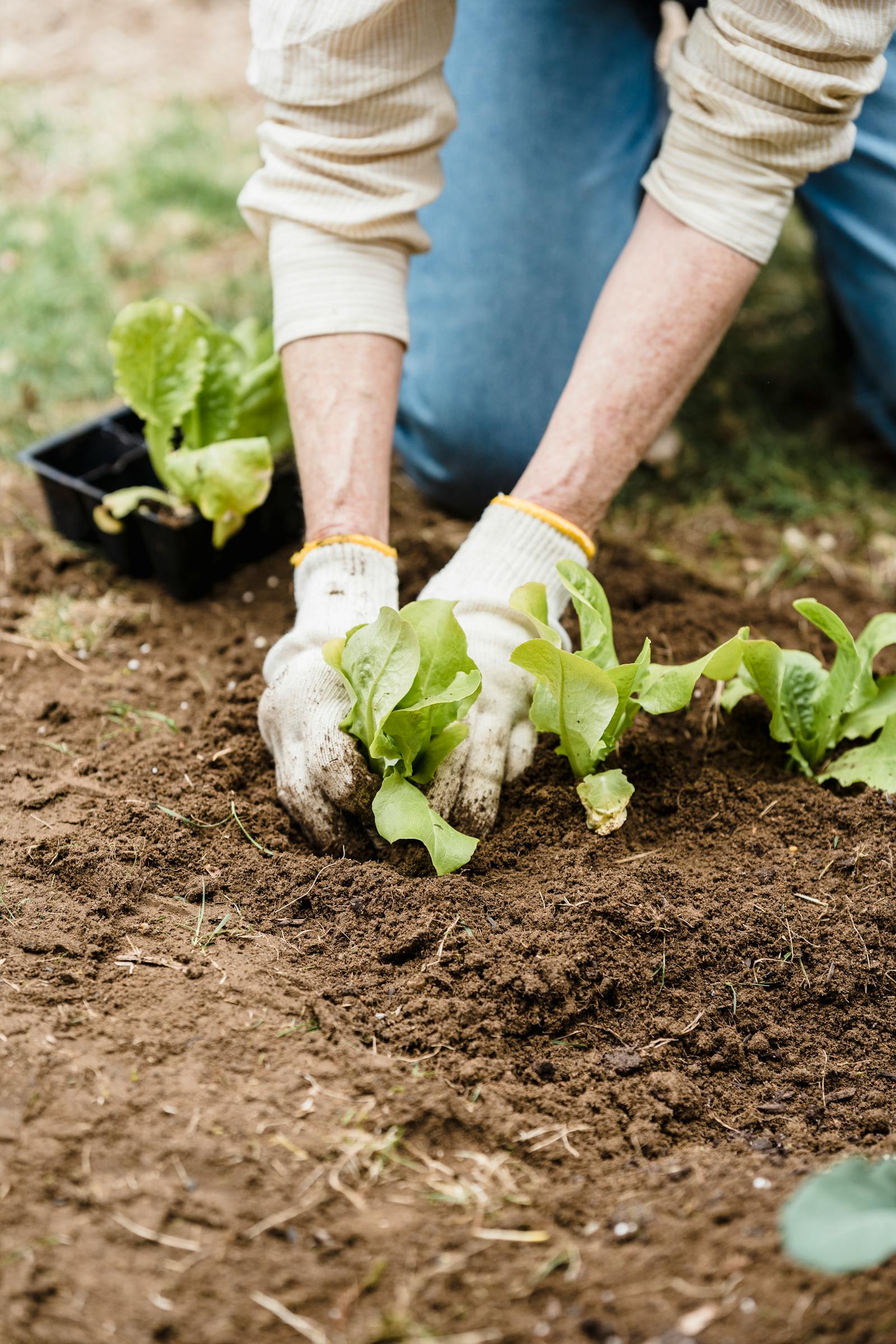
- Once seedlings are about 2 inches (5 cm) tall and have at least two sets of true leaves, transplant them into bigger pots – one to three plants per 6-inch pot.
The pot, the soil, the sun (setting your basil up to thrive)
Pot: at least 6 inches deep and 6 inches wide for one or two basil plants. Bigger is better. Drainage holes are non-negotiable. Plastic or glazed ceramic holds moisture better than terracotta if you’re somewhere hot or windy.
Soil: a general-purpose potting mix is fine. Basil isn’t picky. Mix in a little compost if you have it for a slight nutrient boost.
Sun: the south- or west-facing window if you’re growing indoors. On a balcony, the sunniest corner you have. If you’re getting less than 5 hours of direct sun, basil will grow but stay small, leggy, and pale. A small LED grow light (the cheap kind, $15-20) can make a huge difference indoors.
Watering basil correctly
This is where most basil dies. The instinct is to water on a schedule – every day, every other day – which kills the plant by waterlogging. The actual rule is so simple it bears repeating: water when the top inch of soil is dry, then water deeply.
In practice that’s usually:
- Once every 2-3 days in summer for a smaller pot.
- Once every 4-5 days for a larger pot or cooler weather.
- Less in cloudy or cool spells.
- More in heatwaves on a sunny balcony – sometimes daily.
Always check first. Push a finger into the soil before reaching for the watering can. If it’s still moist, walk away. If it’s dry, water until it runs out the drainage holes, then let the saucer dry before the next round.
Signs your basil is too dry: leaves go limp and dramatic but firm up within hours of watering. Signs it’s too wet: leaves turn yellow at the base, then drop. Soft, blackening stems mean root rot – at that point the plant rarely recovers.
The single habit that doubles basil’s lifespan: pinching
This is the secret that most beginners don’t know about, and it’s the difference between basil that lasts six weeks and basil that lasts six months.
Once your basil plant has at least 4-6 sets of leaves, you need to start pinching off the top. Find the very top growing tip and pinch (or snip) it off just above a leaf pair. The plant will respond by splitting into two new branches from below the cut. Repeat every couple of weeks. Each round doubles the number of growing tips. Within a couple of months, you have a full bushy plant instead of a single tall stem.
And: pinch off flower buds aggressively. As soon as you see flower spikes forming at the top of any stem, snip them. Basil that’s allowed to flower starts pouring its energy into seed production and the leaves turn bitter and stop growing. Flowering is the basil equivalent of retirement – once it starts, the plant winds down.
Harvesting (do it more than you think)
Harvest basil generously. Pinching is harvesting; harvesting is pinching. Take small handfuls every few days for cooking. Always snip just above a leaf pair, so the plant has new growth points to branch from.
Don’t strip a single stem bare – work across the plant. Take a few leaves from one side, a few from another. A healthy, well-pinched basil plant easily yields a small bowl of leaves every week through the growing season.
Common basil problems and what they mean
| What you see | Probable cause | Fix |
|---|---|---|
| Leaves yellow at the bottom | Overwatering or poor drainage | Let soil dry out more between waterings; check pot has drainage |
| Limp, drooping leaves that perk up after watering | Underwatering | Water more deeply, more often |
| Tall, leggy stems with few leaves | Not enough sun | Move to a sunnier spot or add a grow light |
| Flower spikes at the top of stems | Plant going to seed | Pinch off all flower buds immediately |
| Small black or brown spots on leaves | Cold damage or fungal disease | Move to a warmer spot; remove affected leaves |
| Tiny holes in leaves | Caterpillars, slugs, or beetles | Inspect leaves at dusk; remove pests by hand |
For more diagnoses across all kinds of plants, see our guide to 15 beginner gardening mistakes.
What about growing basil indoors year-round?
You can – but it’s harder than people make it sound. Basil is genuinely a sun-hungry plant, and most indoor spaces don’t provide enough light in winter for it to thrive without supplementation. Indoor basil in winter, without a grow light, typically grows slowly and gets leggy.
If you want basil through winter:
- Add a small LED grow light over the plant for 12-14 hours a day in winter. This makes a massive difference.
- Reduce watering frequency – the plant is using less water in low light, and you’ll overwater otherwise.
- Don’t fertilize in winter. Wait for spring.
- Accept slower growth. Even a struggling winter basil will pick up dramatically once the days lengthen.
One more thing: types of basil
Most beginners grow “sweet basil” (Genovese basil) – the classic pesto and tomato-sauce variety. If you want to branch out:
- Thai basil – anise-flavoured, classic in Southeast Asian cooking, more heat-tolerant than sweet basil.
- Lemon basil – citrusy, great in salads and fish dishes.
- Purple / Opal basil – milder, beautiful colour, slightly slower growing.
- Greek basil – tiny leaves, compact bushy plant, very ornamental.
They all have similar care needs. Pick whichever sounds good to cook with.
The short version
Basil isn’t a fragile plant – it’s a generous one whose specific needs are easy to ignore. Sun, warmth, well-drained soil, careful watering, regular pinching, and no flowering. That’s the whole list. Set it up that way and you’ll harvest leaves for months from a single pot.
If you’ve killed basil before, it almost certainly wasn’t because of you specifically. It’s because grocery store basil is set up to fail and nobody told you about pinching. Now you know.
Once your basil is thriving, you’re well on your way to the rest of the kitchen herb garden – mint, parsley, rosemary, thyme. For the wider list of easy-to-grow plants for new gardeners, see the 7 easiest plants for absolute beginners. For everything you need to set up a small outdoor herb garden, the balcony garden guide is the place to start.