Anúncios
The first real decision in growing anything is also the most confusing one for new gardeners: do you start from seed or buy a small plant from a garden centre? Internet advice is split. Influencers tell you seeds are easy and rewarding. Garden centres tell you seedlings are safer. Both are right, depending on what you’re growing and where you are in your gardening journey.
Here’s the honest comparison, with a clear recommendation for first-time growers.
Anúncios
The quick answer
For your first growing season, buy seedlings for anything heat-loving (tomatoes, peppers, basil, marigolds). Start from seed for anything fast and forgiving (lettuce, radishes, mint, salad greens).
Why: heat-loving crops need a long lead time and warm conditions to germinate well. Beginners often get the conditions wrong and lose weeks. A small plant from a garden centre skips that risk entirely. Fast crops germinate so quickly and easily that there’s no benefit to buying them.
Seeds: pros and cons
Why seeds are great:
Anúncios
- Cheap. A packet of 50 lettuce seeds costs less than a single lettuce plant. Multiply that across a season’s growing and the savings are huge.
- Variety. Garden centres stock the most popular cultivars. Seed catalogues offer hundreds – heirloom tomatoes, unusual peppers, specialty herbs you can’t find anywhere else.
- Satisfaction. Watching a seed germinate and grow is genuinely rewarding in a way that buying a plant isn’t.
- Quantity. One seed packet plants a whole bed or a season of succession-sown lettuce.
Why seeds can be hard:
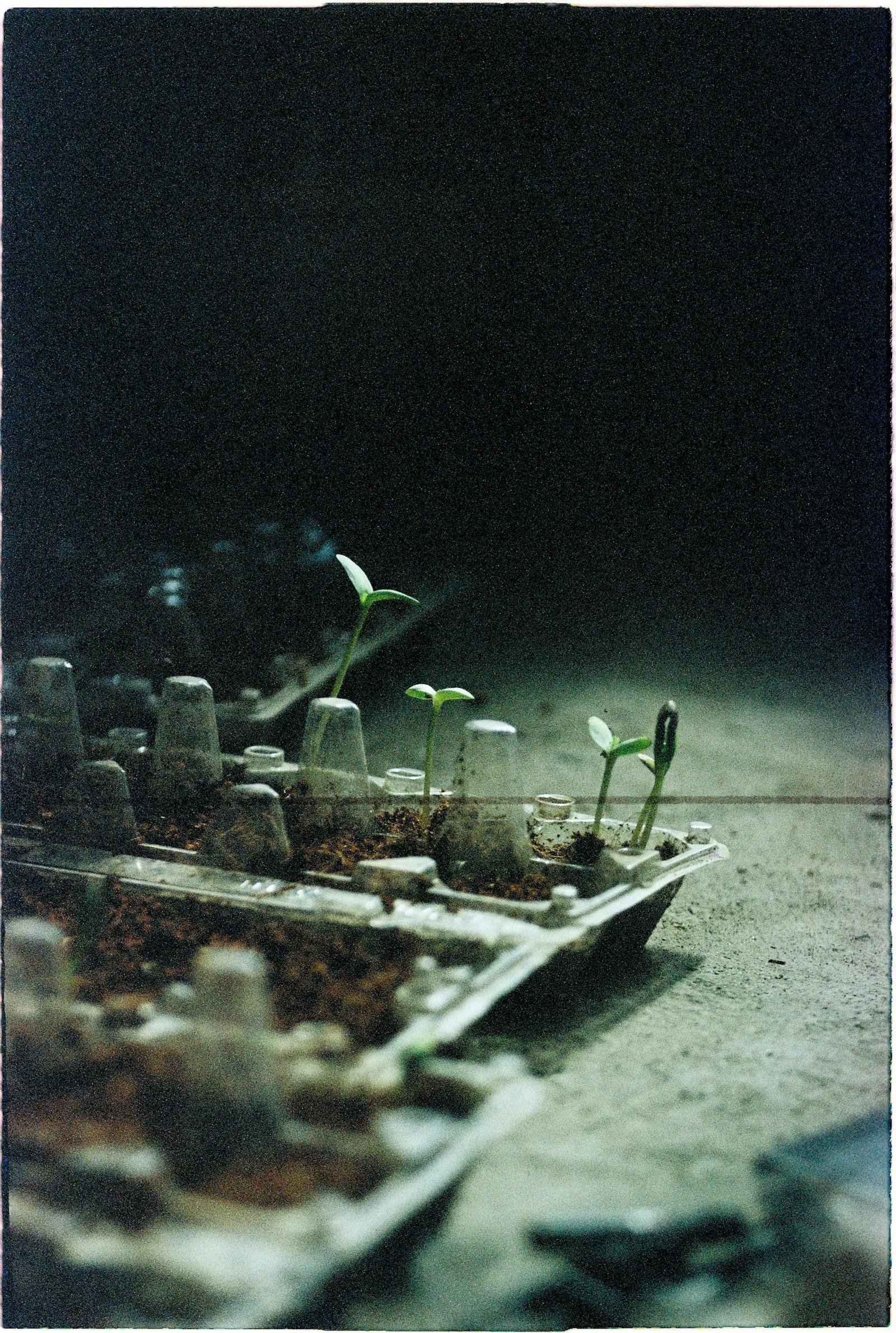
- Time. 6-10 weeks of indoor growing before some crops are ready to go outside.
- Setup. You need a sunny window or grow light, trays, seed-starting mix.
- Failure rate. Some seeds don’t germinate. Some sprout and die. Beginners often have leggy or weak seedlings if light isn’t strong enough.
- Timing. Sow too early and seedlings outgrow their pots before it’s safe to plant outside. Sow too late and you miss the season.
Seedlings: pros and cons
Why seedlings are great:
- Quick. Buy on Saturday, plant on Sunday. Harvest within weeks.
- Reliable. Someone else has done the difficult germination phase. You’re starting with a healthy young plant.
- Forgiving. A small plant tolerates beginner mistakes better than a tiny seedling does.
- No equipment. No grow lights, no trays, no special soil.
Why seedlings have downsides:
- Cost. Buying every plant individually adds up. A garden of seedlings costs 5-10× more than a garden grown from seed.
- Limited choice. Standard varieties only. No unusual heirlooms.
- Transplant shock. Most seedlings sulk for a week after transplanting before recovering.
- Variable quality. Some garden centre seedlings are stressed, root-bound, or already showing pest issues.
Decision table by plant type
| Plant | Best route for beginners | Why |
|---|---|---|
| Tomatoes | Seedlings | Long lead time from seed; one or two plants is enough for most homes |
| Peppers (sweet or chilli) | Seedlings | Slow to germinate; need warm conditions |
| Basil | Either | Easy from seed; quick to grow; seedlings widely available |
| Lettuce | Seeds | Germinates in days; cheap to grow lots; succession sowing is the point |
| Radishes | Seeds | Direct sow only; ready in 25 days |
| Mint | Seedlings (or cutting) | Seeds are slow and unreliable; one starter plant is enough forever |
| Parsley | Seedlings | Notoriously slow to germinate (2-3 weeks) |
| Rosemary | Seedlings | Very slow from seed; cuttings or starter plants are far easier |
| Marigolds, sunflowers | Seeds | Germinate easily; flowers are the point and seeds are cheap |
| Strawberries | Plants (not seedlings – established small plants) | Seeds are slow and unreliable; runners or bare-root plants are standard |
How to choose at the garden centre (if buying seedlings)
Not all seedlings are equal. Look for:
- Compact, sturdy growth. Not leggy or stretched.
- Healthy green colour. No yellowing or pale leaves.
- No flowers or fruit yet. A tomato seedling with flowers has been in the small pot too long.
- Roots not coming out the bottom of the pot. Heavily root-bound seedlings are stressed.
- No pests visible. Check the undersides of leaves for aphids, spider mites, or whitefly.
- Multiple seedlings per pot is a warning sign for some plants. Grocery store basil pots often have 20+ seedlings crammed in – those are designed to look bushy for sale, not to grow long-term. See our basil guide for what to do with these.
Starting seeds: a quick sanity check
If you decide to start from seed, the bare minimum kit:
- A seed-starting tray or small pots with drainage.
- Seed-starting mix (fine and sterile; not the same as regular potting mix).
- A sunny window or a cheap LED grow bulb in a desk lamp.
- A spray bottle for misting newly-sown seeds.
- The packet of seeds (read the back; see our guide to seed packets).
For the most common reasons seeds fail, see why your seeds aren’t germinating and why your seedlings are tall and leggy.
The bottom line
For your first season, mix and match. Buy seedlings for the slow, heat-loving plants where germination is the hardest part – tomatoes, peppers, basil, perennial herbs. Start from seed for the fast, forgiving plants where seeds genuinely are easier – lettuce, radishes, salad greens, marigolds.
Once you’ve grown for a season and have your grow lights or sunny window dialled in, you can shift more toward seeds for the cost savings and variety. But there’s no rule that says a real gardener “must” grow from seed. Some of the best home gardens are entirely seedling-grown.
For the next step – choosing what to grow first – see our 7 easiest plants for absolute beginners. And if you’re getting set up for outdoor growing, the balcony garden guide covers the practical infrastructure.
The cost comparison over a season
Real numbers for a typical container vegetable garden:
| Item | Seed cost | Seedling cost |
|---|---|---|
| Lettuce (10 plants) | $2 (one packet has 100+ seeds) | $15-25 |
| Tomato (2 plants) | $3 (one packet) | $6-12 |
| Pepper (2 plants) | $3 | $6-10 |
| Basil (2 pots) | $2 | $6-10 |
| Marigolds (10 plants) | $2 | $10-20 |
Seeds save 50-90% of cost, but the time investment is significant. For a serious vegetable gardener, seeds win. For someone wanting a quick balcony garden, seedlings are worth the cost.
What about saving seeds from this year’s plants?
Free seeds for future seasons – but only if the parent plant is “open-pollinated” or heirloom. Hybrid plants (labeled F1) often don’t reproduce true to type from saved seeds.
- Heirloom and open-pollinated: save seeds reliably.
- F1 hybrids: seed-saving gives unpredictable results.
- Many supermarket-purchased plants are hybrids; seed-saving is unreliable.
For continuous seed-saving gardens, choose heirloom varieties from the start.