Anúncios
Plants in the ground can pull nutrients from a huge volume of soil. Plants in pots only have a few litres of mix to work with – and they exhaust it within months. Fertilizing isn’t optional for container plants beyond their first few months; it’s how you keep them productive over a season.
Most beginners either over-fertilize (which burns roots) or under-fertilize (which leaves plants slow and pale). Here’s the simple middle path.
Anúncios
When container plants need feeding
The signs that nutrients are running low:
- Slower than expected growth
- Pale or yellowing leaves with no other obvious cause
- Smaller new leaves than older ones
- Reduced flowering or fruiting
- Plant has been in the same pot for 3+ months
If a plant is freshly potted in fresh mix, it doesn’t need fertilizing for the first 6-8 weeks – the mix has enough nutrients to start with. Many bagged potting mixes include slow-release fertilizer pre-loaded, which lasts even longer.
The three types of fertilizer
Liquid (water-soluble)
How it works: dilute in water, apply every 2-4 weeks during the growing season.
Anúncios
Pros: easy to control dilution, quick uptake by plants, easy to apply evenly.
Cons: needs regular application; if you forget, plants run out.
Recommended for beginners: yes – the easiest to use without overdoing it.
Slow-release granular
How it works: small pellets mixed into the soil or sprinkled on top. Release nutrients over 3-6 months as water passes through.
Pros: set-and-forget; one application can last most of a growing season.
Cons: less control over timing; can release more in hot weather (potentially burning roots).
Recommended for beginners: yes, especially if you forget to fertilize regularly.
Organic amendments (compost, worm castings, fish emulsion)
How it works: mix compost into soil at planting; add a top-dressing layer during the season; or apply liquid versions like fish emulsion.
Pros: gentle, improves soil structure, adds beneficial microbes.
Cons: slower-acting, fish emulsion smells strongly for a day or two.
Recommended for beginners: yes alongside liquid – compost top-dressing is one of the easiest “fertilizer” actions for any pot.
Decoding the numbers (NPK)
Every fertilizer bottle shows three numbers – say, 10-10-10 or 5-3-3. These are the percentages of:
- N (Nitrogen): drives leaf and stem growth. The “green” nutrient.
- P (Phosphorus): drives root, flower, and fruit development.
- K (Potassium): drives overall plant health, disease resistance, fruit ripening.
For most container plants, a balanced fertilizer (10-10-10, 20-20-20, or similar) works. Specialized fertilizers exist:
- “Bloom” fertilizers are higher in P and K (e.g., 5-10-10). Use for plants that flower or fruit when they enter that phase.
- Leafy fertilizers are higher in N (e.g., 20-5-5). Use for plants grown for foliage – lettuce, leafy houseplants.
For beginners: a balanced liquid is fine. Don’t overthink it.
The simple feeding schedule
This works for most container plants:
| Period | Frequency | Strength |
|---|---|---|
| Spring (active growth) | Every 2-3 weeks | Half-strength liquid |
| Summer (peak growth) | Every 2 weeks | Half-strength liquid |
| Fall (slowing) | Once or twice total | Quarter-strength liquid |
| Winter (dormant) | Don’t fertilize | – |
Half-strength means using half the dose printed on the bottle. This is one of the most important habits – the manufacturer’s recommended dose is calibrated for in-ground plants and is too strong for containers.
How to apply liquid fertilizer
- Water the plant first if soil is bone dry. Fertilizing dry soil can burn roots.
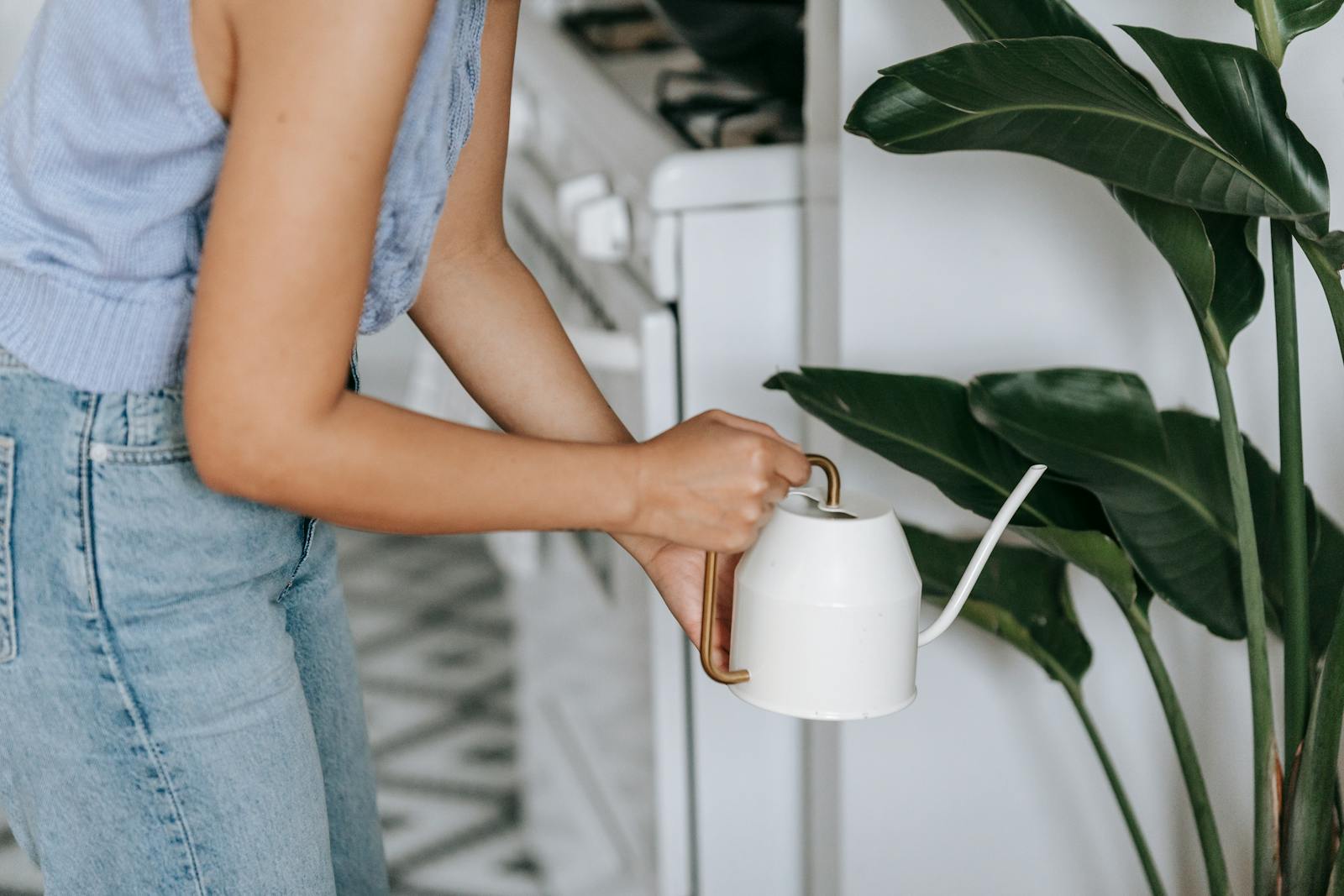
- Mix the fertilizer at half the recommended strength in a watering can.
- Water the soil thoroughly with the diluted fertilizer.
- Avoid splashing leaves – some fertilizers burn foliage.
- Note the date so you remember when to repeat.
Specific plant notes
- Tomatoes and peppers: heavy feeders. Liquid fertilizer every 1-2 weeks during fruiting. Once flowers appear, switch to a bloom fertilizer (higher P/K).
- Leafy greens (lettuce, spinach): moderate feeders. Half-strength liquid every 3 weeks.
- Herbs: light feeders. Too much fertilizer makes leaves grow fast but bland. Half-strength every 4-6 weeks at most.
- Houseplants: light feeders. Every 4-6 weeks at half strength during spring/summer. None in winter.
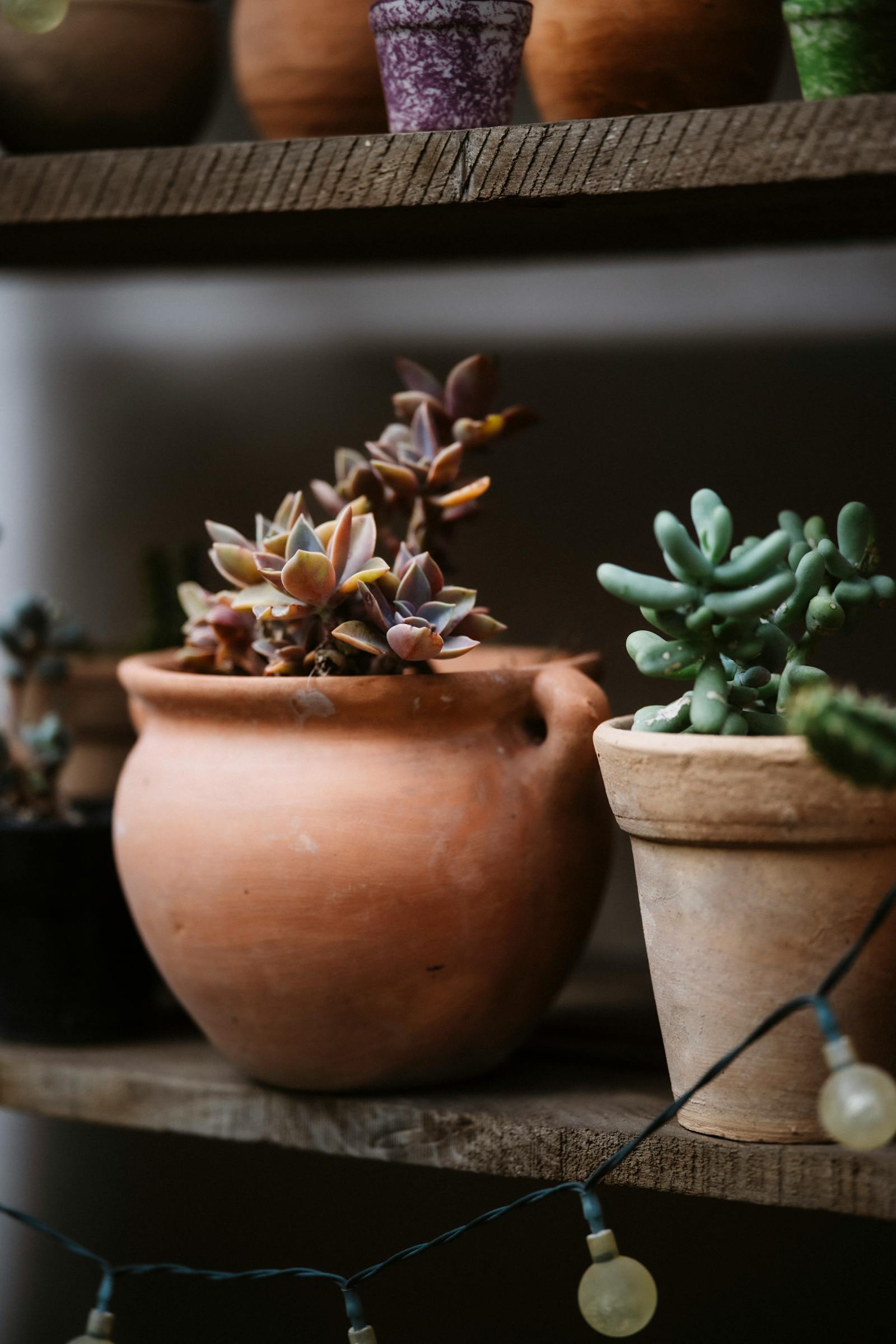
- Succulents and cacti: very light feeders. Quarter-strength liquid every 6-8 weeks in summer. None in winter.
- Orchids: “weakly weekly” – very dilute (quarter strength) feeding most weeks during growth.
Signs of over-fertilizing
Common and easy to identify:
- Brown crispy leaf tips or edges (especially on a healthy plant)
- White crusty buildup on the soil surface
- Yellowing leaves despite consistent watering
- Slow or stopped growth despite active season
The fix:
- Stop fertilizing immediately.
- Flush the pot with several pot-volumes of plain water. This rinses excess salts out the drainage holes.
- Resume fertilizing later, at a lower frequency or strength.
For broader troubleshooting, see signs of over-fertilizing and brown leaf tips causes.
What about home-made fertilizers?
Coffee grounds, banana peels, eggshells – all popular home fertilizer hacks. The honest truth:
- Coffee grounds: mild nitrogen source. Add to compost rather than directly to pots. Direct application can mat and block water.
- Banana peels: contain potassium but require composting to be plant-available. Burying fresh peels in pots can attract pests.
- Eggshells: source of calcium but break down very slowly. Useful in compost, less useful direct.
- Compost itself: excellent. Top-dress pots with a 1-cm layer in spring.
The simple liquid fertilizer routine is more reliable than home-made hacks for beginner pots.
The bottom line
Container plants need feeding, but not as much as people fear. A half-strength liquid fertilizer every 2-3 weeks during the growing season covers almost every situation. Slow-release granules work as a set-and-forget alternative. Don’t fertilize in winter. Don’t double the dose. When in doubt, less is more – underfed plants recover quickly; burnt-root plants take weeks.
For the foundation of container growing, see potting soil vs garden soil and choosing potting mix.
The “less than the label says” rule
Manufacturer fertilizer doses are typically calibrated for in-ground plants with deep soil. Container plants need less concentrated feeding:
- Container houseplants: half the recommended strength.
- Container vegetables (heavy feeders): half strength but more frequently.
- Container herbs: quarter to half strength.
- Succulents and cacti in containers: quarter strength, much less frequently.
Over-fertilizing causes more problems in containers than in-ground because there’s nowhere for excess salts to leach away. The contained soil concentrates them.
Organic vs synthetic fertilizers
Both work; the differences are practical:
| Aspect | Organic (fish emulsion, kelp, compost) | Synthetic (liquid feeds) |
|---|---|---|
| Speed | Slower (weeks) | Faster (days) |
| Soil improvement | Yes, feeds microbes | No |
| Smell | Often pungent | Minimal |
| Cost | Variable | Usually cheaper per dose |
| Burn risk | Lower | Higher if overdone |
Most container gardeners do well with a mix – organic compost amendment when refreshing soil annually, plus diluted synthetic liquid feeds for in-season feeding.