Anúncios
Repotting feels straightforward – new pot, fresh soil, plant goes in. But specific mistakes turn this routine task into a real setback. Here are the most common ones and how to avoid them.
1. Repotting at the wrong time of year
The mistake: Repotting in mid-winter or during the plant’s dormancy.
Anúncios
Why it matters: dormant plants recover slowly from root disturbance. Spring repotting takes 2-4 weeks to bounce back; winter repotting can take months and sometimes causes serious decline.
The fix: repot in early spring as plants enter active growth. Early summer is fine too. Avoid mid-winter and during flowering.
2. Going up too many pot sizes at once
The mistake: Moving a plant from a 6-inch pot straight into a 12-inch pot to “give it room to grow.”
Anúncios
Why it matters: a too-large pot holds far more soil moisture than the small root system can use. The excess wet soil leads to root rot.
The fix: go up only 1-2 inches in diameter at a time. From a 6-inch to a 7- or 8-inch.
3. Repotting a freshly-purchased plant immediately
The mistake: Bringing a plant home and repotting it the same day.
Why it matters: the plant is already stressed from the move. Adding repot shock on top often pushes it over the edge.
The fix: let new plants acclimate for 2-4 weeks before repotting. The exceptions: visibly root-bound nursery pots or dying plants where the current pot is the problem.
4. Damaging roots during removal
The mistake: Yanking the plant out by pulling on the stem.
Why it matters: roots tear, stem can snap, the plant suffers unnecessary damage.
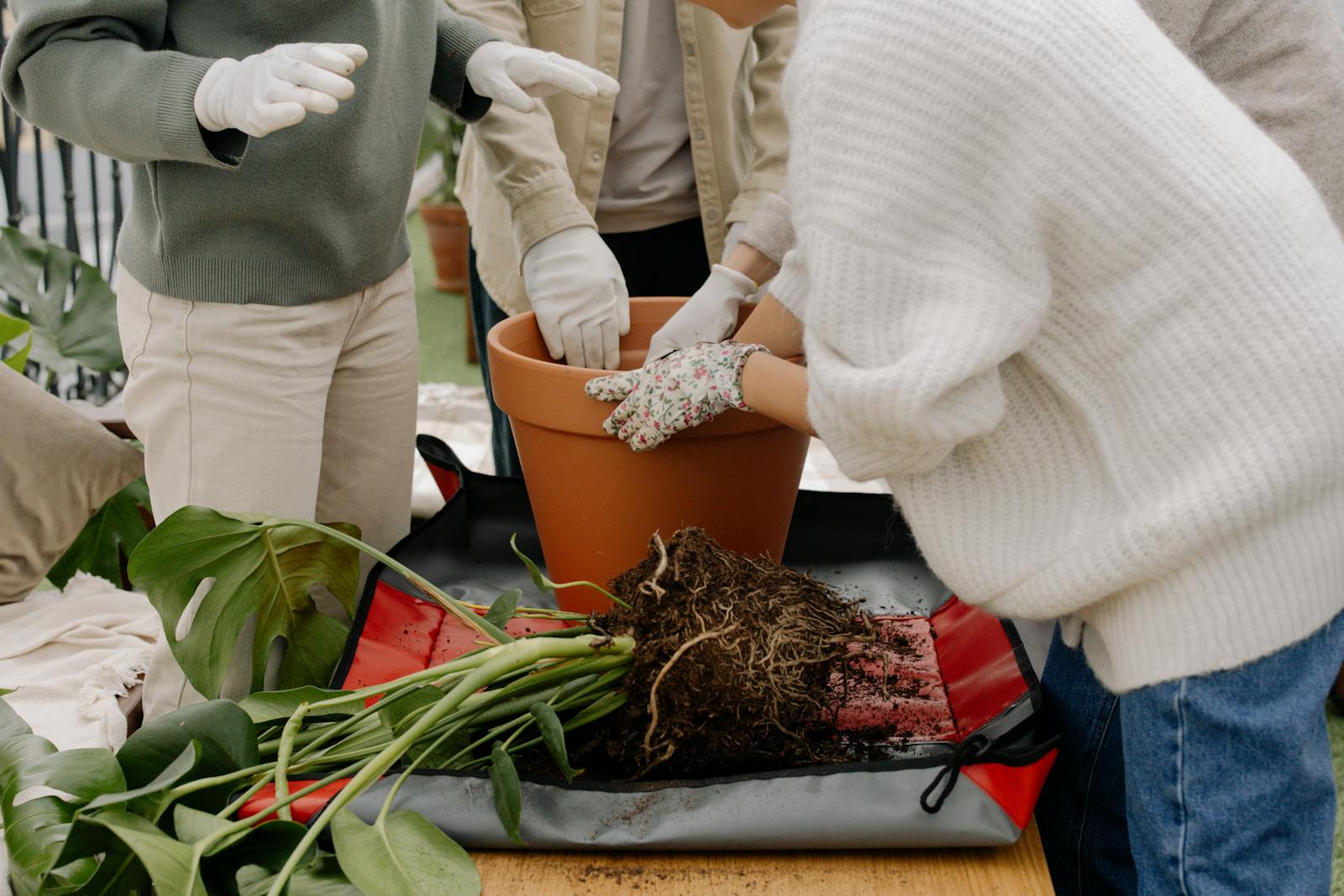
The fix: water the plant the day before. Squeeze the pot sides to loosen the root ball. Tip the pot sideways and slide the plant out, supporting the base with one hand.
5. Burying the crown
The mistake: Planting too deep, with the crown (where leaves meet roots) below soil level.
Why it matters: the crown rots when buried. Plant looks fine for a couple of weeks, then suddenly collapses.
The fix: position the plant so the top of the root ball is at the same depth as before, or just slightly below the new pot’s rim. Crown should sit above the soil surface.
6. Watering immediately and heavily
The mistake: Watering thoroughly right after repotting to “help the plant settle.”
Why it matters: roots are disturbed and can’t absorb water normally. Heavy watering combined with fresh moist soil overwhelms them, contributing to rot.
The fix: water lightly immediately after repotting to settle the soil. Then let it dry out more than usual before the next watering. Reduce watering frequency by 30-50% for the first 2-4 weeks.
7. Fertilizing too soon after repotting
The mistake: Adding fertilizer right after repotting to “give the plant a boost.”
Why it matters: stressed roots are sensitive to fertilizer salts. The plant is already getting nutrients from fresh potting mix.
The fix: don’t fertilize for at least 6-8 weeks after repotting. Wait until you see clear signs of new growth.
8. Using the wrong soil
The mistake: Using garden soil in a pot, or specialty mix for plants that don’t need it.
Why it matters: garden soil compacts in containers and starves roots of oxygen. Specialty mixes can be wrong for general use – cactus mix dries too fast for tropical plants, for example.
The fix: use a general-purpose potting mix unless you have a specific need (cactus mix for succulents, orchid bark for orchids). See choosing potting mix.
The right repotting workflow
- Water the plant the day before.
- Prepare the new pot – one or two inches larger, with drainage holes, mesh over holes.
- Add a layer of fresh potting mix to the bottom (no gravel).
- Gently remove the plant from its old pot.
- Lightly loosen any heavily circling roots.
- Position the plant so the crown sits at the same depth as before.
- Fill around with fresh potting mix, pressing gently.
- Water lightly to settle.
- Place in moderate light (not full sun) for the first week.
- Reduce watering frequency for 2-4 weeks.
- Wait 6-8 weeks before fertilizing.
For the full process, see how to repot a plant.
Recovery after repotting
Some signs of recovery to watch for:
- New leaf growth within 4-6 weeks.
- The plant standing fully upright again.
- Roots emerging from new drainage holes within a few months (sign of root regrowth).
If the plant continues to decline, suspect one of the mistakes above and act accordingly.
The bottom line
Repotting is straightforward when done right and catastrophic when done wrong. The biggest single rule: go up gradually, don’t overwater after, and don’t fertilize for weeks. Avoid the mistakes above and the plant transitions smoothly to its new home.
For broader plant troubleshooting, see 15 beginner gardening mistakes.
The acclimation period after repotting
Repotted plants need a recovery period. What’s normal during this time:
- Mild drooping for the first few days (transplant shock).
- Loss of 1-3 lower leaves over 2-3 weeks.
- Slower growth for 4-6 weeks.
- Plant looking generally “settled” rather than thriving.
What’s not normal:
- Continuous wilting for over a week.
- Loss of more than 1/3 of leaves.
- Soft mushy stems.
- No new growth after 8 weeks.
Concerning signs usually trace back to one of the repotting mistakes – typically over-watering, fertilizing too soon, or burying the crown.
The “repot less often than you think” principle
New plant owners often over-repot. Most plants don’t need annual repotting:
- Slow growers (snake plant, ZZ): every 3-4 years.
- Moderate growers (most houseplants): every 2 years.
- Fast growers (vegetables, some herbs): yearly or seasonally.
- Some plants (peace lily, jade) actively bloom better when slightly cramped.
Watch the plant for actual signs of needing more room (roots emerging from drainage holes, water draining through too fast). Repot in response to real signals, not on a schedule.